Shandong Provincial Key Laboratory of Ophthalmology, Shandong Eye Institute, Shandong Academy of Medical Sciences, Qingdao 266071, China.
Mediators Inflamm. 2012;2012:248574. doi: 10.1155/2012/248574. Epub 2012 May 17.
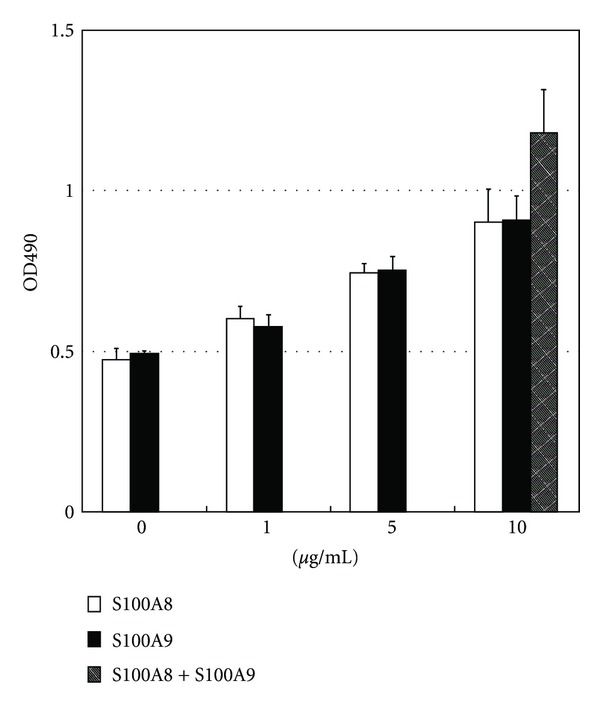
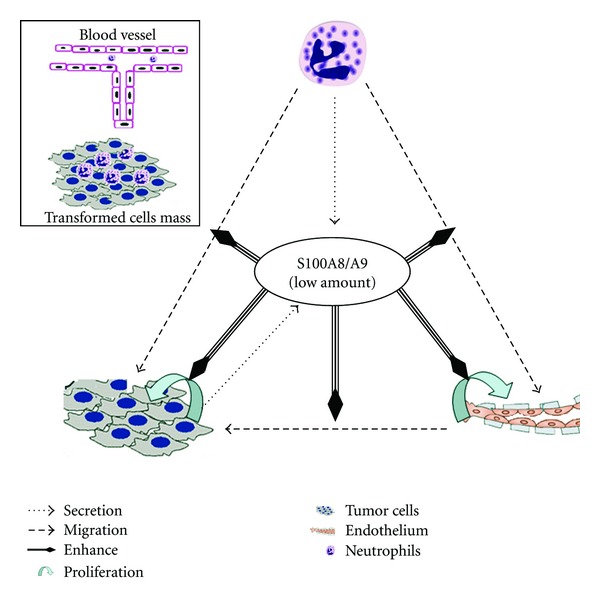
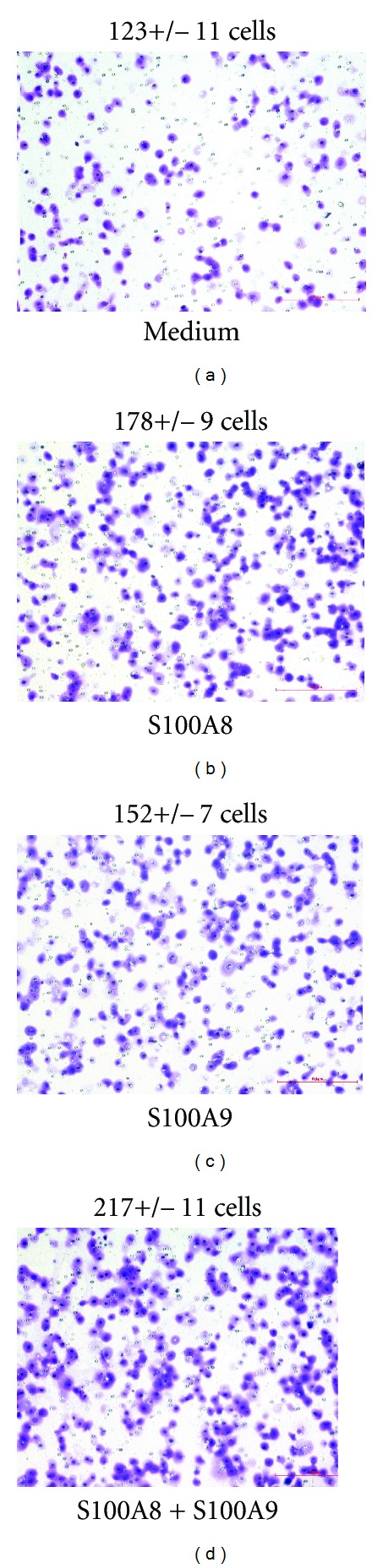
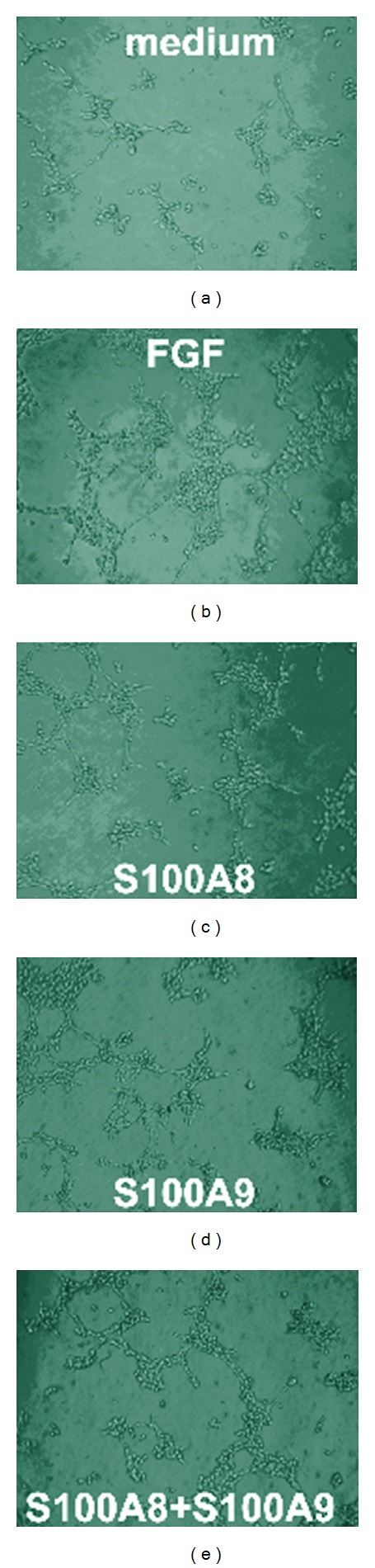
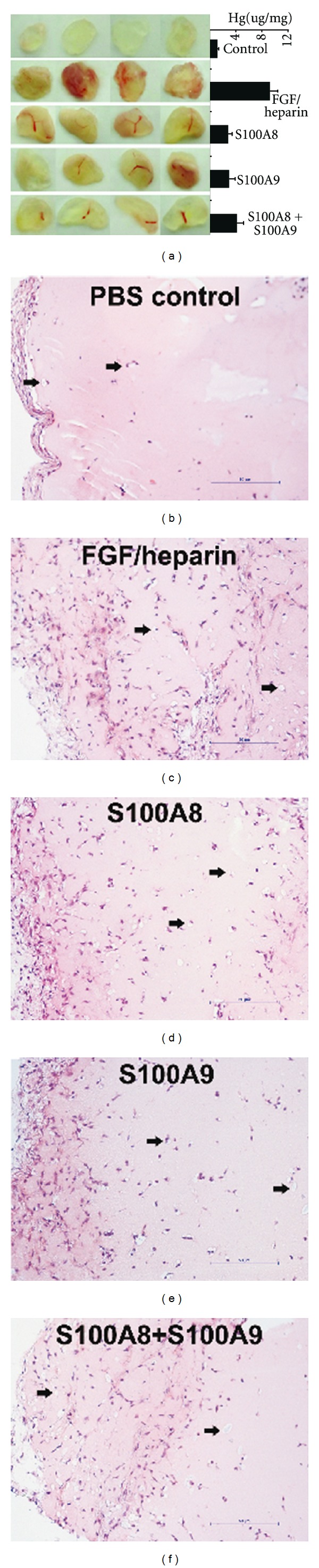
Previous studies showed that several members of the S100A family are involved in neovascularization and tumor development. This study checked whether low concentrations of S100A8 or S100A9 has any effect on the behaviour of vascular endothelial cells. A human umbilical vascular endothelial cell (HUVEC) line was used to measure vascular endothelial cell bioactivity related to angiogenesis, such as cell proliferation, migration, and vessel formation. In the low concentration range up to 10 μg/mL, either each alone or in combination, S100A8 and S100A9 proteins promoted proliferation of HUVEC cells in a dose-dependent manner. The presence of both proteins in culture showed additive effects over each single protein. Both proteins enhanced HUVEC cells to migrate across the transwell membrane and to form tube-like structures on the Matrigel surface. When mixed in Matrigel and injected subcutaneously in Balb/c mice, both proteins increased vessel development in the gel plugs. Microarray assay of HUVEC cells treated with 10 μg/mL S100A8 revealed that ribosome pathway, pathogenic Escherichia coli infection pathway, apoptosis, and stress response genes were modulated by S100A8 treatment. We propose that S100A8 and S100A9 proteins from either infiltrating inflammatory cells or tumor cells play an important role in the interplay among inflammation, angiogenesis, and tumorigenesis.
先前的研究表明,S100A 家族的几个成员参与了新血管生成和肿瘤的发展。本研究检查了低浓度的 S100A8 或 S100A9 是否会对血管内皮细胞的行为产生影响。使用人脐静脉内皮细胞(HUVEC)系来测量与血管生成相关的血管内皮细胞生物活性,如细胞增殖、迁移和血管形成。在低浓度范围内(最高 10μg/mL),S100A8 和 S100A9 蛋白单独或联合使用,以剂量依赖的方式促进 HUVEC 细胞的增殖。在培养物中存在两种蛋白时,表现出相加效应,超过每种单一蛋白的作用。这两种蛋白均增强了 HUVEC 细胞穿过 Transwell 膜的迁移能力,并在 Matrigel 表面形成管状结构。当两种蛋白混合在 Matrigel 中并皮下注射到 Balb/c 小鼠中时,均可增加凝胶塞中的血管生成。用 10μg/mL S100A8 处理的 HUVEC 细胞的微阵列分析表明,核糖体途径、致病性大肠杆菌感染途径、细胞凋亡和应激反应基因均受 S100A8 处理的调节。我们提出,来自浸润性炎症细胞或肿瘤细胞的 S100A8 和 S100A9 蛋白在炎症、血管生成和肿瘤发生之间的相互作用中发挥重要作用。