Departamento de Parasitologia, ICB, Universidade de São Paulo, São Paulo, São Paulo, Brasil.
PLoS One. 2012;7(6):e38385. doi: 10.1371/journal.pone.0038385. Epub 2012 Jun 7.
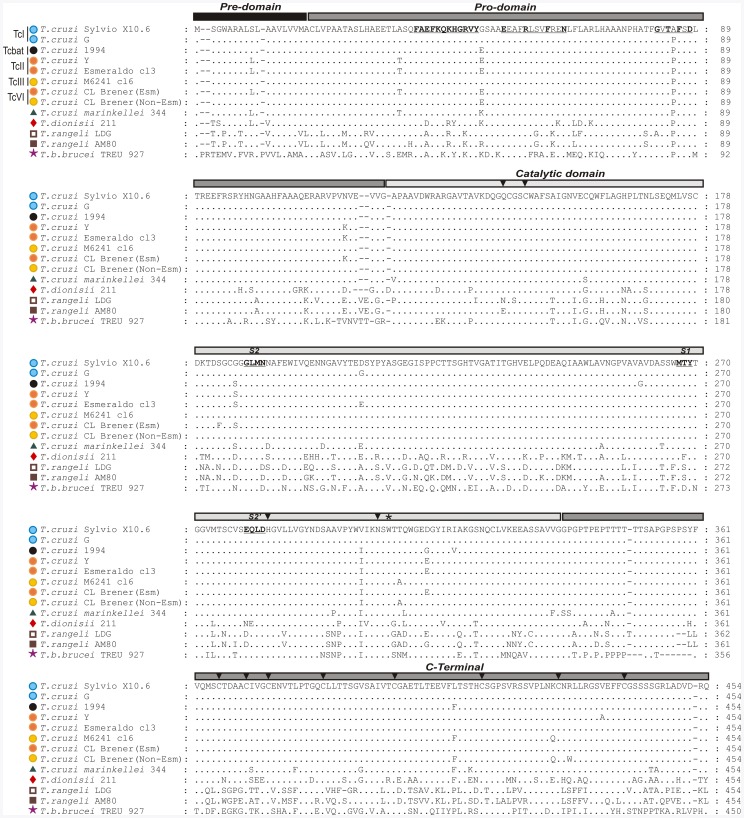
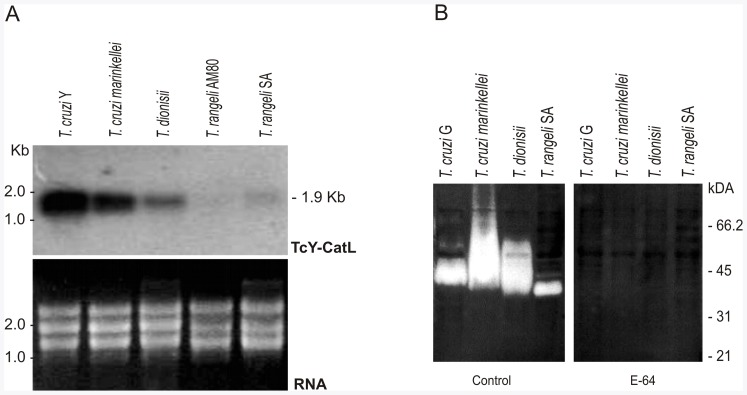
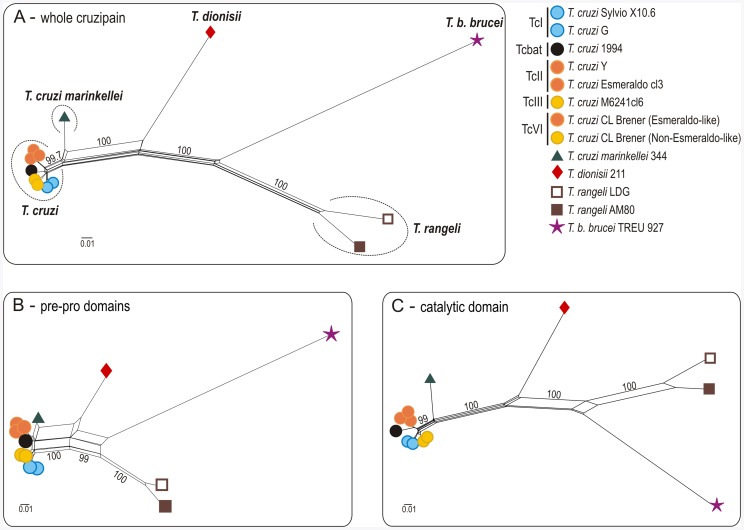
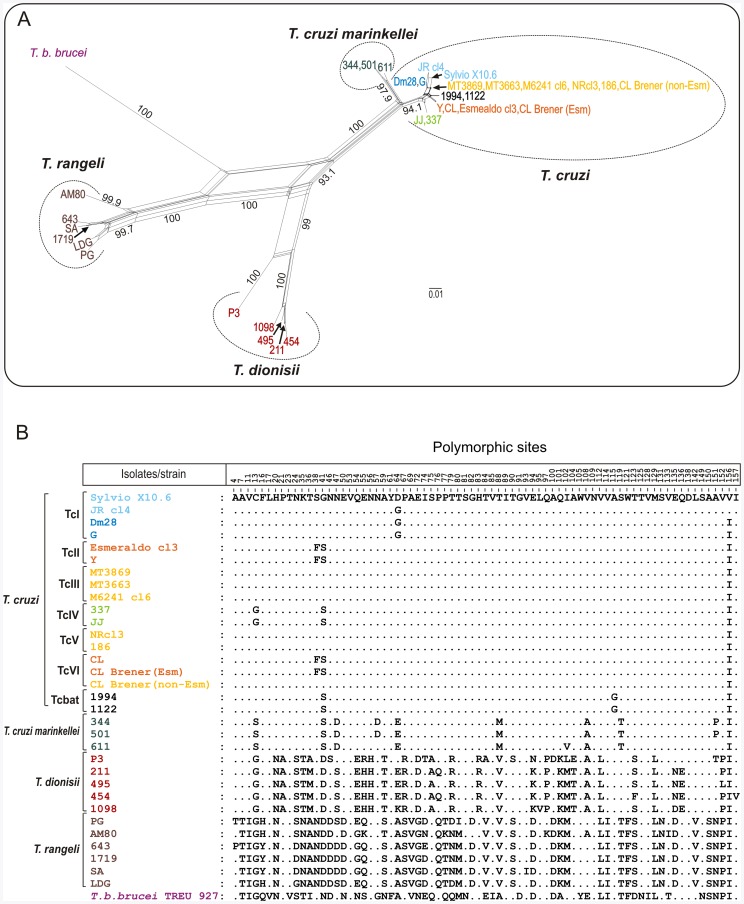
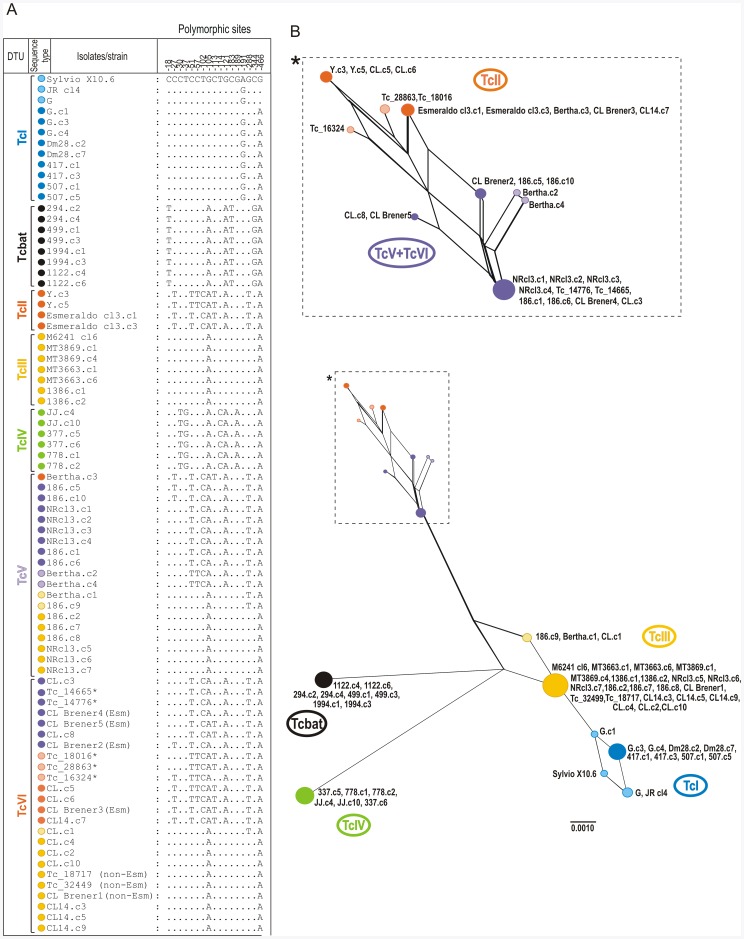
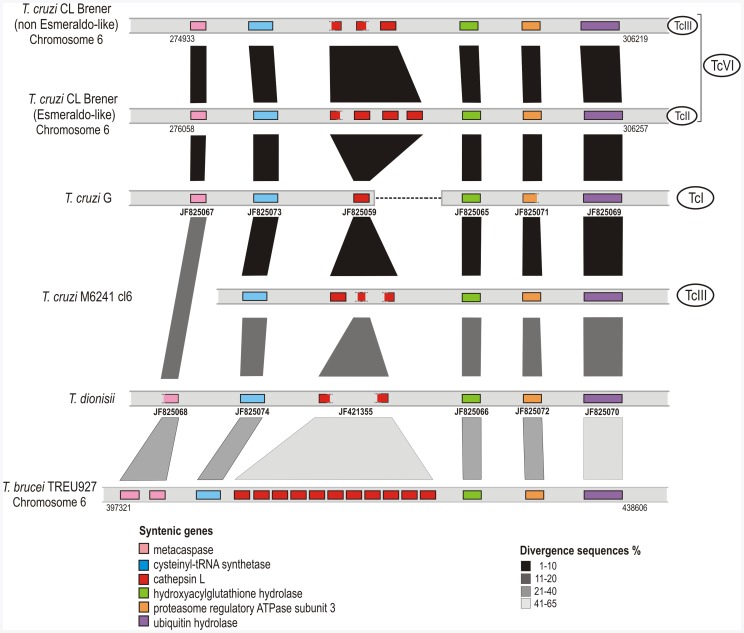
Trypanosoma cruzi, the agent of Chagas disease, is a complex of genetically diverse isolates highly phylogenetically related to T. cruzi-like species, Trypanosoma cruzi marinkellei and Trypanosoma dionisii, all sharing morphology of blood and culture forms and development within cells. However, they differ in hosts, vectors and pathogenicity: T. cruzi is a human pathogen infective to virtually all mammals whilst the other two species are non-pathogenic and bat restricted. Previous studies suggest that variations in expression levels and genetic diversity of cruzipain, the major isoform of cathepsin L-like (CATL) enzymes of T. cruzi, correlate with levels of cellular invasion, differentiation, virulence and pathogenicity of distinct strains. In this study, we compared 80 sequences of genes encoding cruzipain from 25 T. cruzi isolates representative of all discrete typing units (DTUs TcI-TcVI) and the new genotype Tcbat and 10 sequences of homologous genes from other species. The catalytic domain repertoires diverged according to DTUs and trypanosome species. Relatively homogeneous sequences are found within and among isolates of the same DTU except TcV and TcVI, which displayed sequences unique or identical to those of TcII and TcIII, supporting their origin from the hybridization between these two DTUs. In network genealogies, sequences from T. cruzi clustered tightly together and closer to T. c. marinkellei than to T. dionisii and largely differed from homologues of T. rangeli and T. b. brucei. Here, analysis of isolates representative of the overall biological and genetic diversity of T. cruzi and closest T. cruzi-like species evidenced DTU- and species-specific polymorphisms corroborating phylogenetic relationships inferred with other genes. Comparison of both phylogenetically close and distant trypanosomes is valuable to understand host-parasite interactions, virulence and pathogenicity. Our findings corroborate cruzipain as valuable target for drugs, vaccine, diagnostic and genotyping approaches.
克氏锥虫,恰加斯病的病原体,是一组遗传上高度多样化的分离株,与克氏锥虫样物种、马里凯莱锥虫和迪翁西锥虫密切相关,它们都具有血液和培养形式的形态以及细胞内的发育。然而,它们在宿主、媒介和致病性方面存在差异:克氏锥虫是一种感染几乎所有哺乳动物的人类病原体,而另外两种是非致病性的,且局限于蝙蝠。先前的研究表明,克氏锥虫主要同工酶组织蛋白酶 L 样(CATL)酶- cruzipain 的表达水平和遗传多样性的变化与不同菌株的细胞入侵、分化、毒力和致病性水平相关。在这项研究中,我们比较了 25 个克氏锥虫分离株的 80 个 cruzipain 基因序列,这些分离株代表了所有离散型单位(DTU TcI-TcVI)和新基因型 Tcbat,以及来自其他物种的 10 个同源基因序列。根据 DTU 和锥虫物种的不同,催化结构域的谱发生了分歧。在同一 DTU 的不同分离株中发现了相对同质的序列,但 TcV 和 TcVI 除外,它们显示出与 TcII 和 TcIII 独特或相同的序列,支持它们源自这两个 DTU 之间的杂交。在网络系统发生中,来自克氏锥虫的序列紧密聚集在一起,与马里凯莱锥虫比与迪翁西锥虫更接近,并且与 T. rangeli 和 T. b. brucei 的同源物有很大的不同。在这里,对代表克氏锥虫总体生物和遗传多样性以及最接近的克氏锥虫样物种的分离株进行分析,证实了与其他基因推断的系统发育关系相一致的 DTU 和种特异性多态性。比较系统发育上密切和遥远的锥虫对于理解宿主-寄生虫相互作用、毒力和致病性是有价值的。我们的发现证实了 cruzipain 作为药物、疫苗、诊断和基因分型方法的有价值的靶标。