University Bordeaux, UMR 1332 de Biologie du Fruit et Pathologie, Villenave d'Ornon, France.
PLoS One. 2012;7(6):e38793. doi: 10.1371/journal.pone.0038793. Epub 2012 Jun 7.
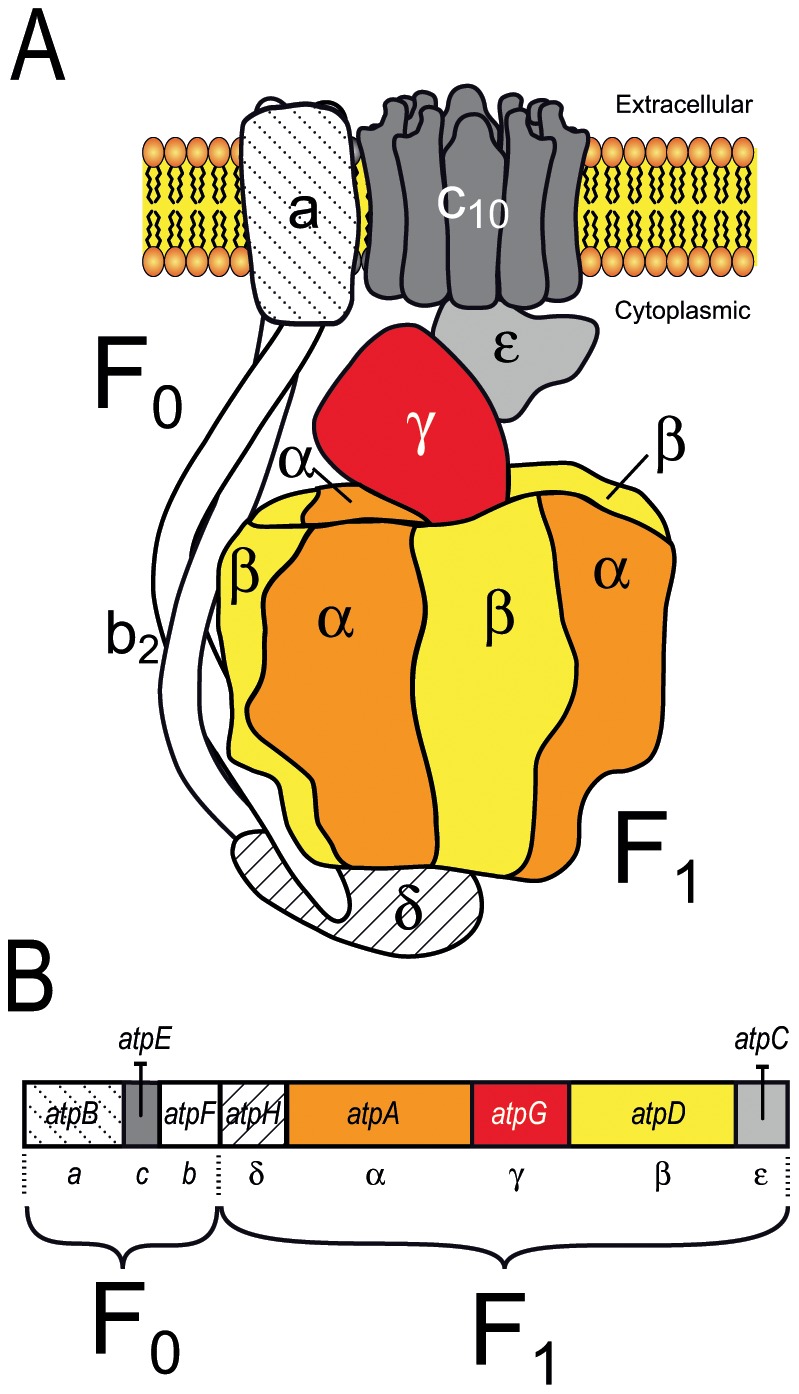
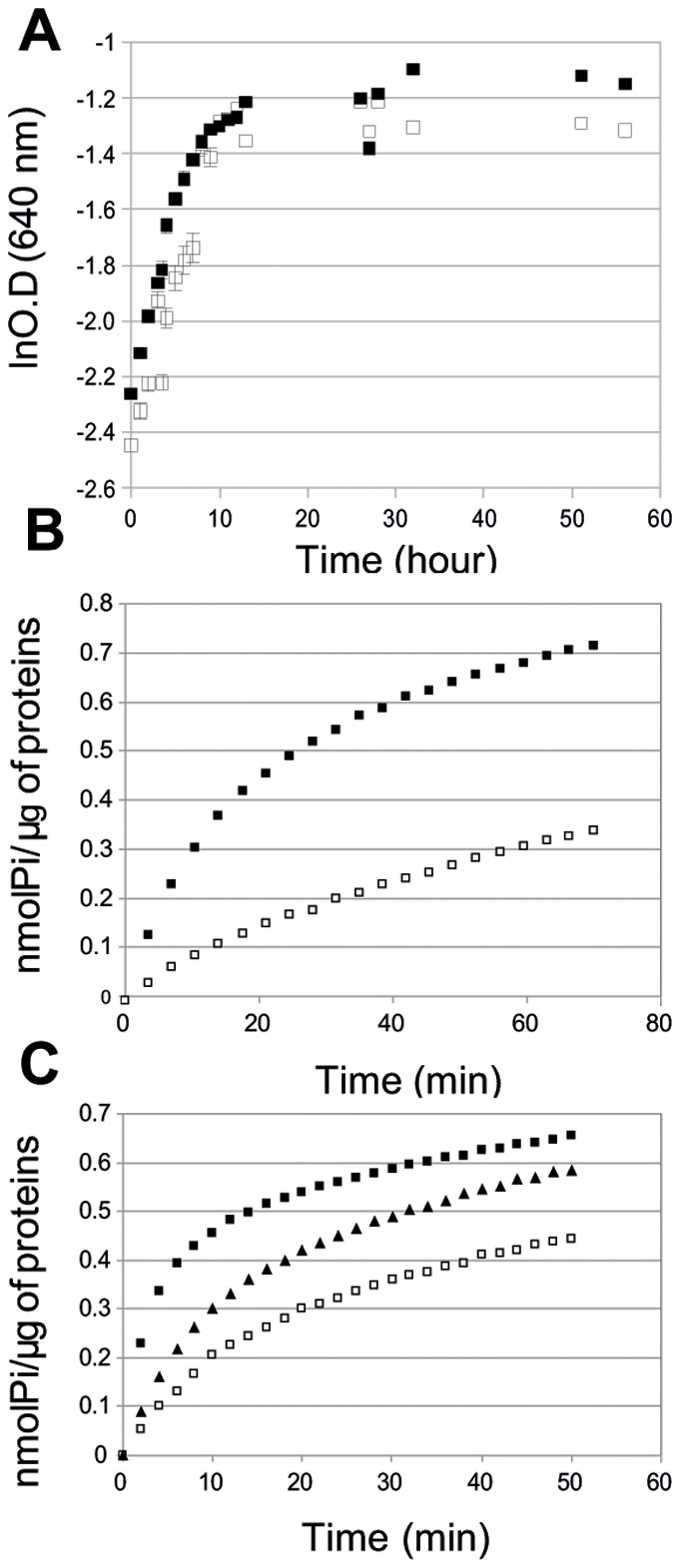
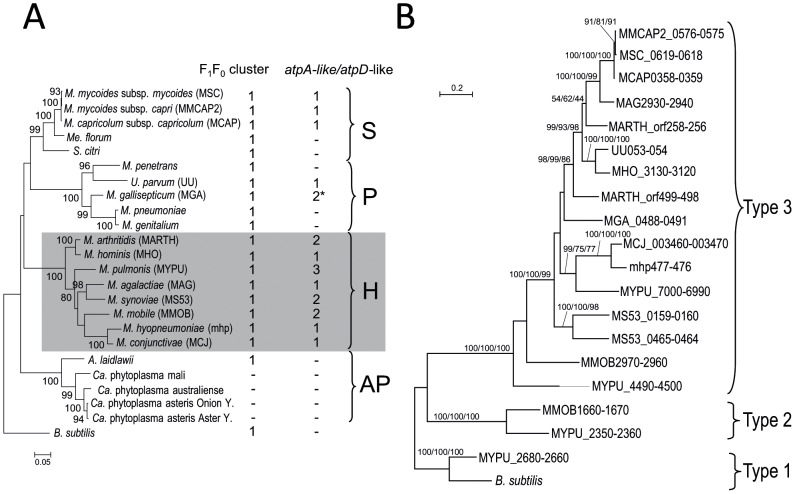
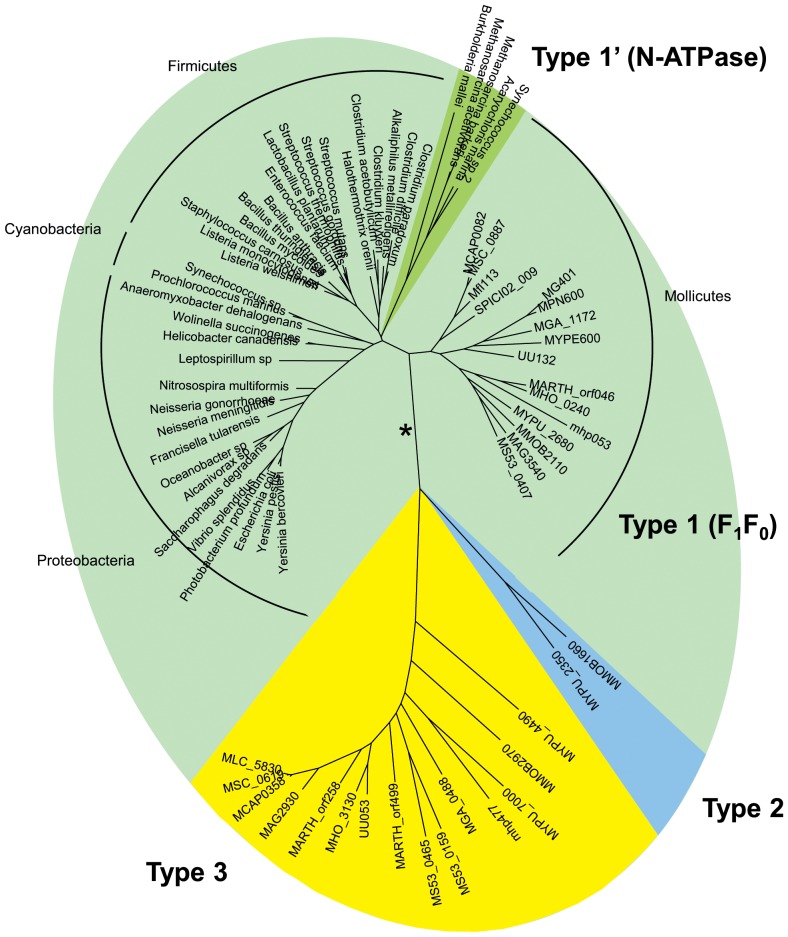
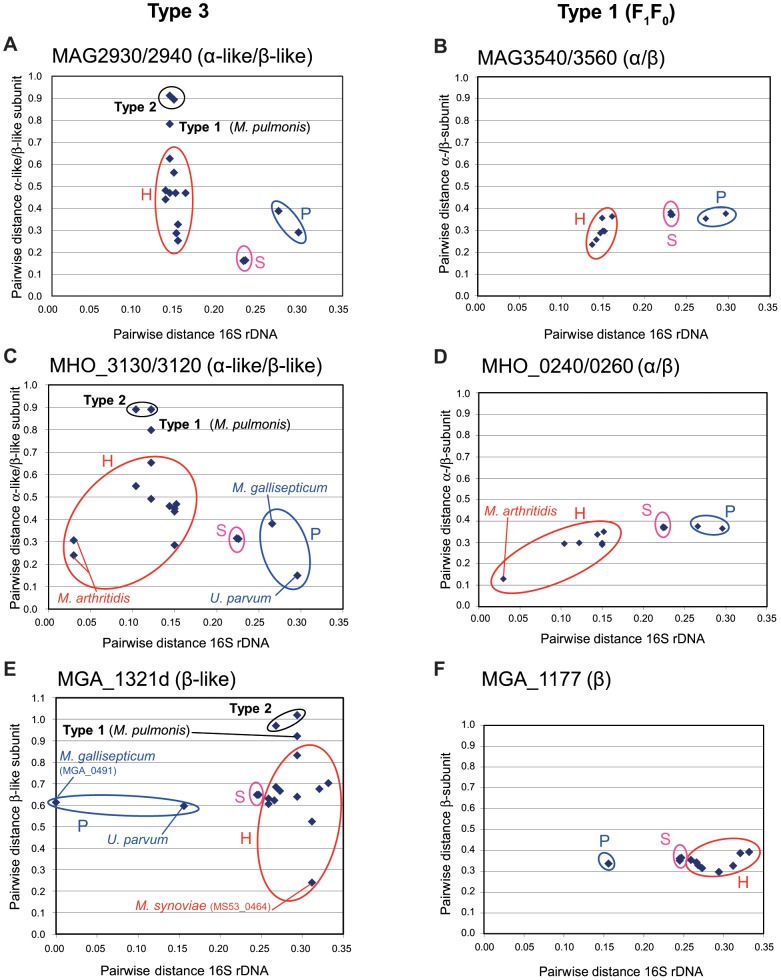
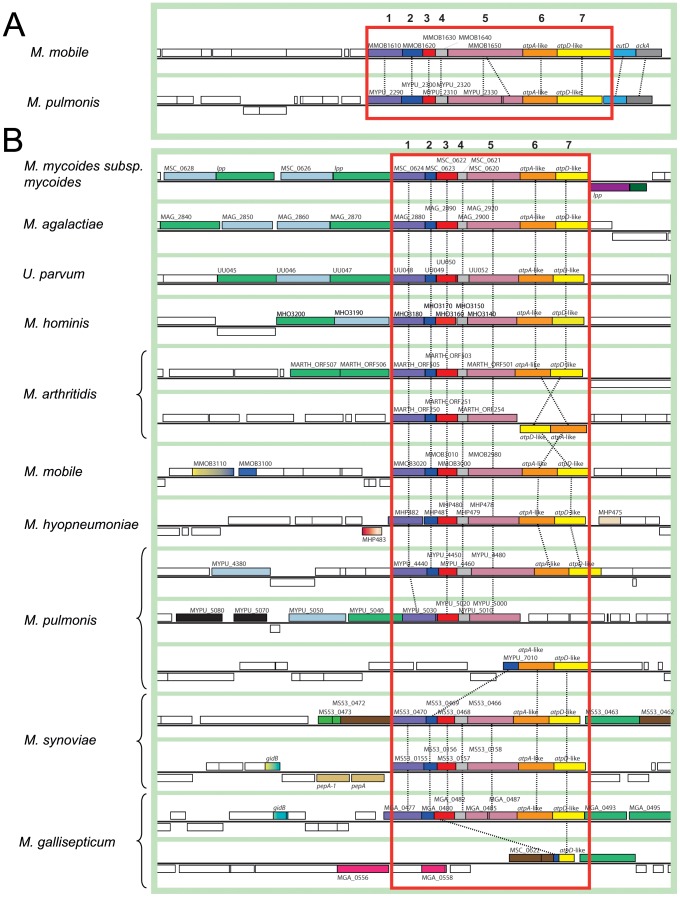
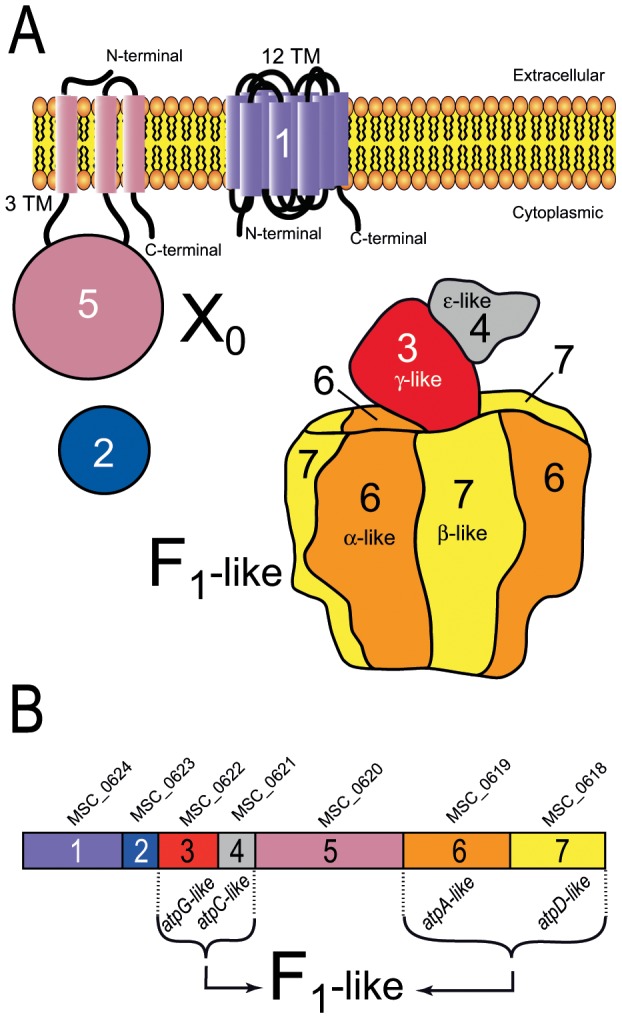
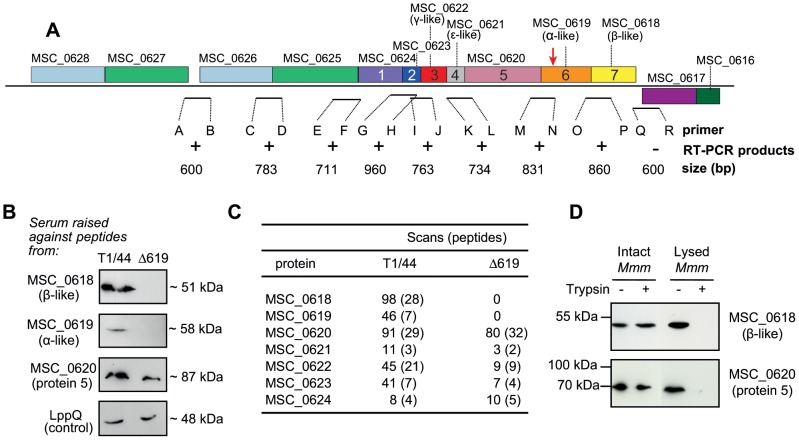
F(1)F(0) ATPases have been identified in most bacteria, including mycoplasmas which have very small genomes associated with a host-dependent lifestyle. In addition to the typical operon of eight genes encoding genuine F(1)F(0) ATPase (Type 1), we identified related clusters of seven genes in many mycoplasma species. Four of the encoded proteins have predicted structures similar to the α, β, γ and ε subunits of F(1) ATPases and could form an F(1)-like ATPase. The other three proteins display no similarity to any other known proteins. Two of these proteins are probably located in the membrane, as they have three and twelve predicted transmembrane helices. Phylogenomic studies identified two types of F(1)-like ATPase clusters, Type 2 and Type 3, characterized by a rapid evolution of sequences with the conservation of structural features. Clusters encoding Type 2 and Type 3 ATPases were assumed to originate from the Hominis group of mycoplasmas. We suggest that Type 3 ATPase clusters may spread to other phylogenetic groups by horizontal gene transfer between mycoplasmas in the same host, based on phylogeny and genomic context. Functional analyses in the ruminant pathogen Mycoplasma mycoides subsp. mycoides showed that the Type 3 cluster genes were organized into an operon. Proteomic analyses demonstrated that the seven encoded proteins were produced during growth in axenic media. Mutagenesis and complementation studies demonstrated an association of the Type 3 cluster with a major ATPase activity of membrane fractions. Thus, despite their tendency toward genome reduction, mycoplasmas have evolved and exchanged specific F(1)-like ATPases with no known equivalent in other bacteria. We propose a model, in which the F(1)-like structure is associated with a hypothetical X(0) sector located in the membrane of mycoplasma cells.
F(1)F(0) 型 ATP 合酶已在大多数细菌中被发现,包括具有与宿主依赖性生活方式相关的非常小基因组的支原体。除了编码真正 F(1)F(0)ATP 酶(Type 1)的八个基因的典型操纵子外,我们还在许多支原体物种中鉴定了相关的七个基因簇。编码的四种蛋白质具有与 F(1)ATP 酶的α、β、γ和ε亚基相似的预测结构,可能形成类似 F(1)的 ATP 酶。其他三种蛋白质与任何其他已知蛋白质都没有相似之处。这两种蛋白质可能位于膜中,因为它们有三个和十二个预测的跨膜螺旋。基因组学研究鉴定了两种类型的 F(1)-样 ATP 酶簇,Type 2 和 Type 3,其特点是序列快速进化,结构特征保守。编码 Type 2 和 Type 3 ATP 酶的簇被认为起源于支原体的 Hominis 组。我们假设,基于系统发育和基因组背景,Type 3 ATP 酶簇可能通过同一宿主中支原体之间的水平基因转移传播到其他系统发育群。在反刍动物病原体支原体 mycoides 亚种的功能分析表明,Type 3 簇基因被组织成一个操纵子。蛋白质组学分析表明,这七种编码蛋白在无细胞培养基中生长时会被产生。诱变和互补研究表明,Type 3 簇与膜部分的主要 ATP 酶活性有关。因此,尽管支原体倾向于基因组减少,但它们已经进化并交换了特定的 F(1)-样 ATP 酶,而其他细菌中没有已知的等效物。我们提出了一个模型,其中 F(1)-样结构与位于支原体细胞膜中的假设 X(0) 区室相关联。