College of Life Science, Northeast Agricultural University of China, Harbin, China.
PLoS One. 2012;7(6):e38807. doi: 10.1371/journal.pone.0038807. Epub 2012 Jun 7.
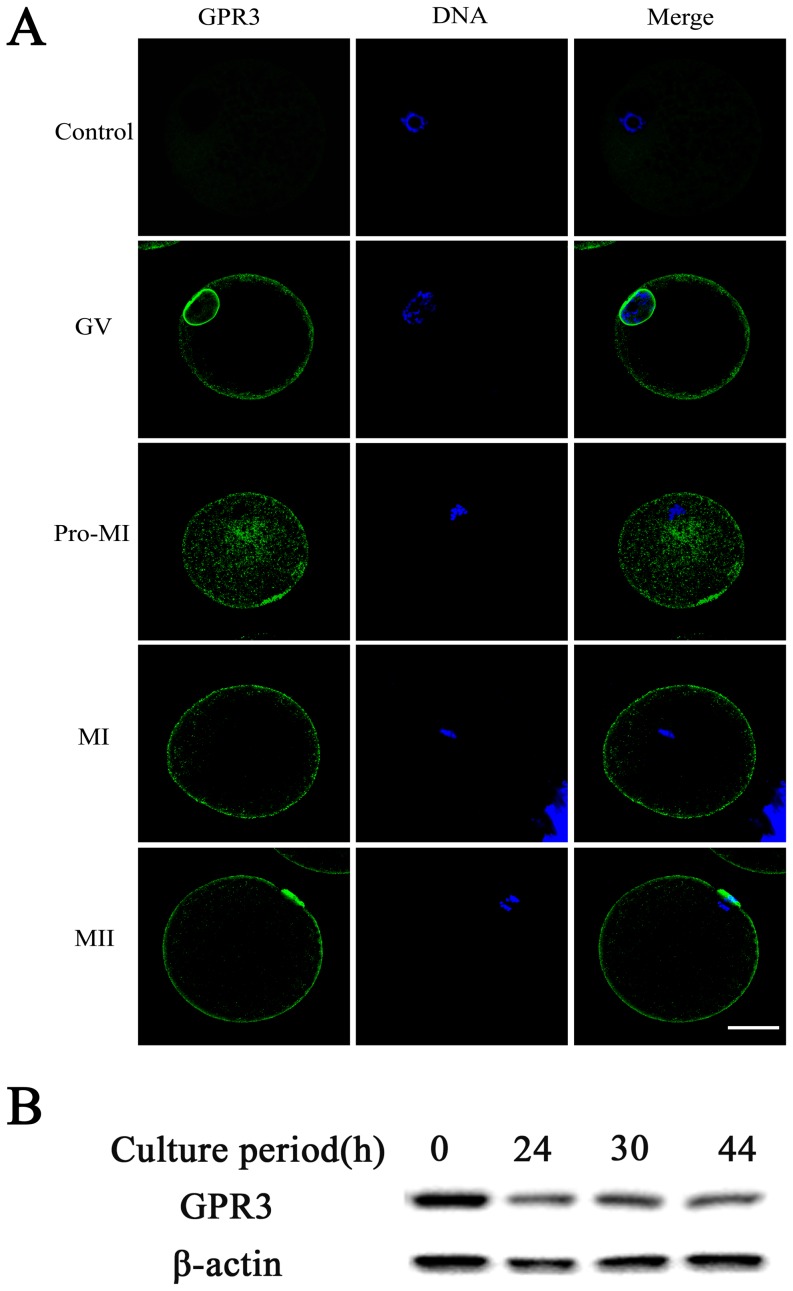
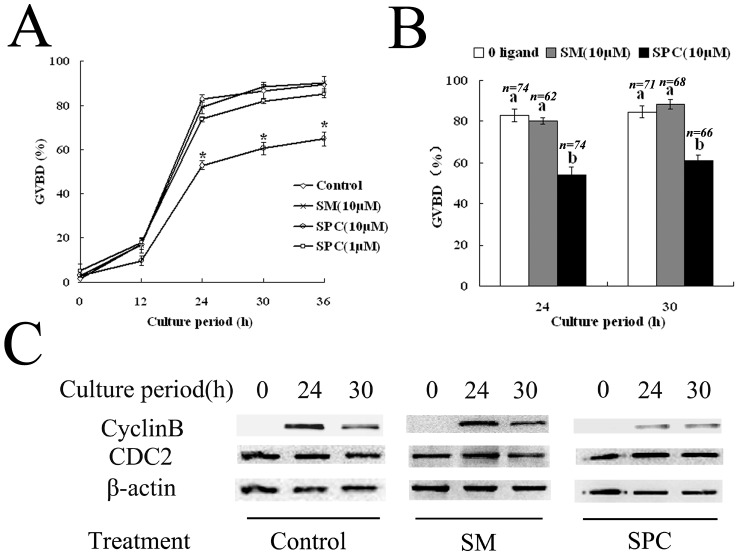
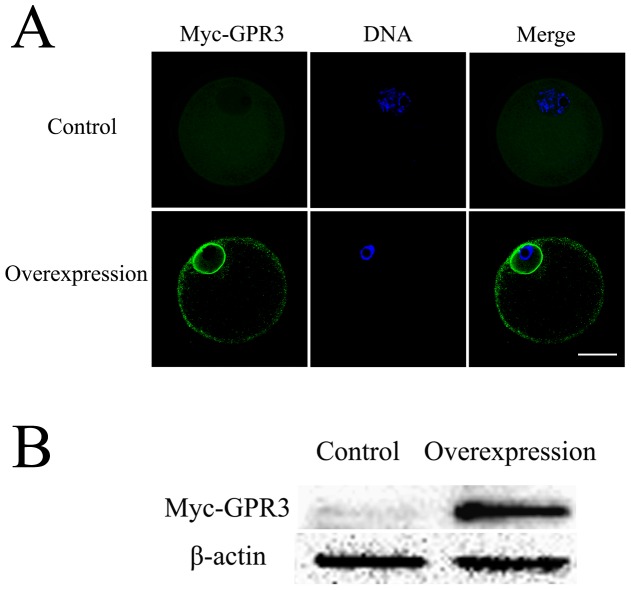
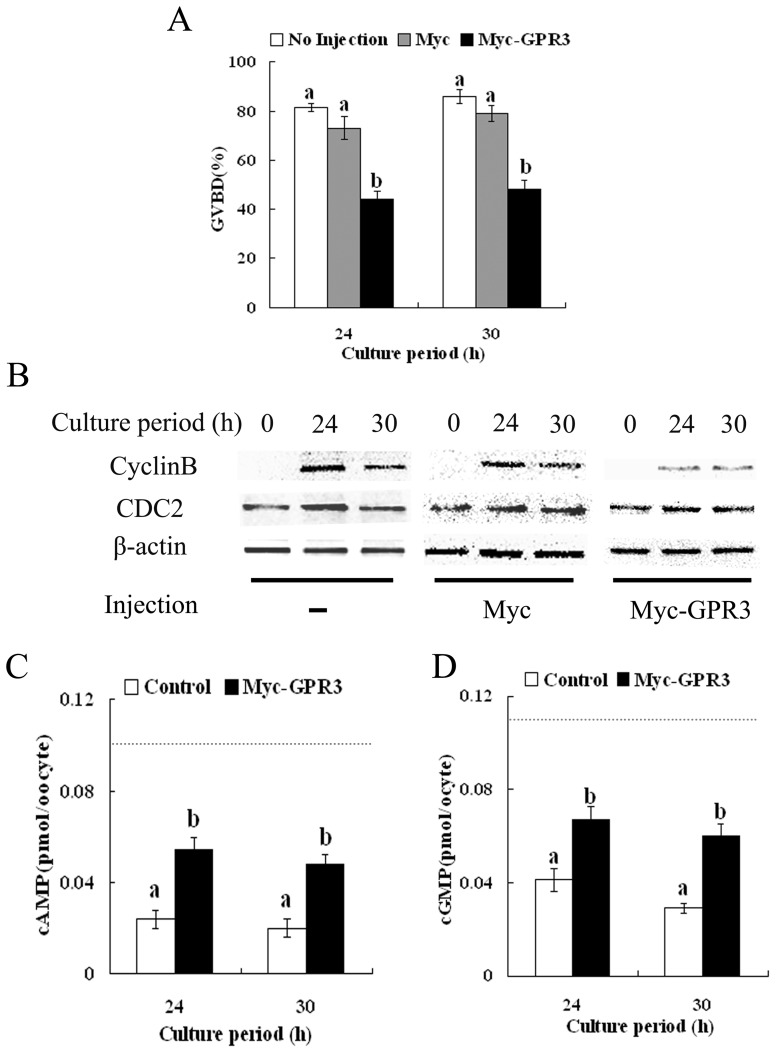
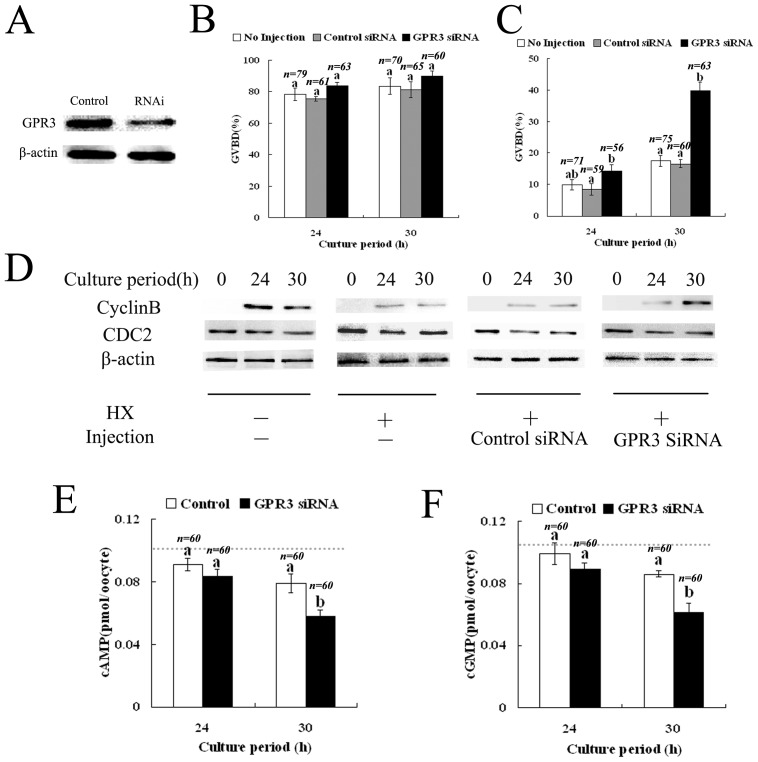
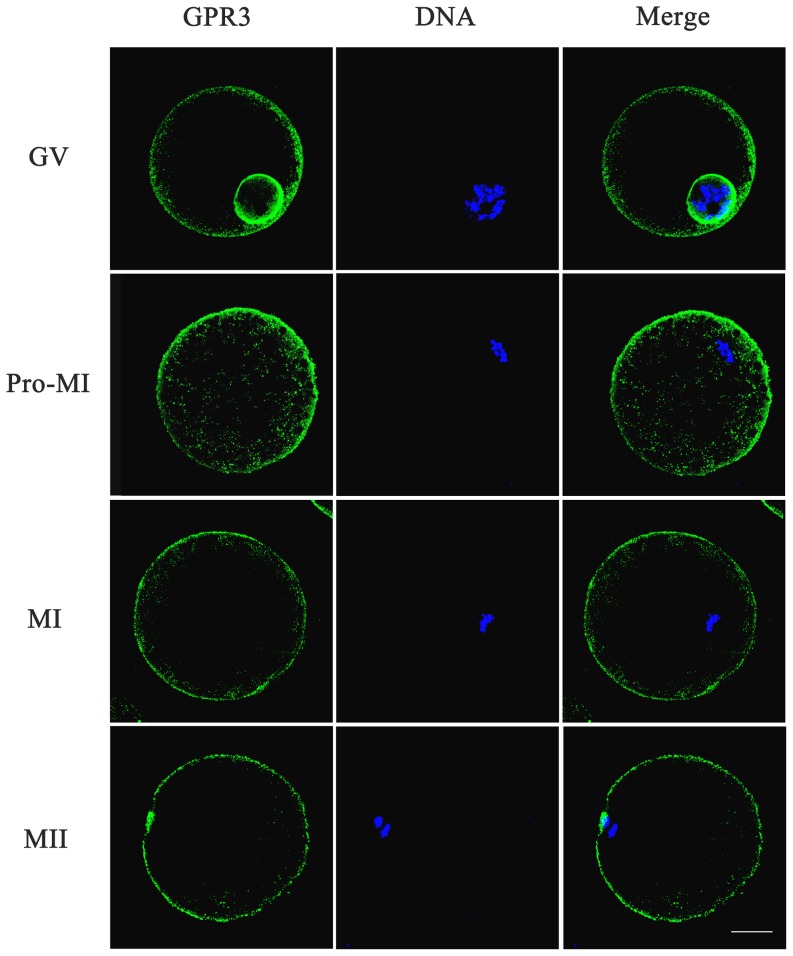
The arrest of meiotic prophase in mammalian oocytes within fully grown follicles is dependent on cyclic adenosine monophosphate (cAMP) regulation. A large part of cAMP is produced by the Gs-linked G-protein-coupled receptor (GPR) pathway. In the present study, we examined whether GPR3 is involved in the maintenance of meiotic arrest in porcine oocytes. Expression and distribution of GPR3 were examined by western blot and immunofluorescence microscopy, respectively. The results showed that GPR3 was expressed at various stages during porcine oocyte maturation. At the germinal vesicle (GV) stage, GPR3 displayed a maximal expression level, and its expression remained stable from pro-metaphase I (MI) to metaphase II (MII). Immunofluorescence staining showed that GPR3 was mainly distributed at the nuclear envelope during the GV stage and localized to the plasma membrane at pro-MI, MI and MII stages. RNA interference (RNAi) was used to knock down the GPR3 expression within oocytes. Injection of small interfering double-stranded RNA (siRNA) targeting GPR3 stimulated meiotic resumption of oocytes. On the other hand, overexpression of GPR3 inhibited meiotic maturation of porcine oocytes, which was caused by increase of cGMP and cAMP levels and inhibition of cyclin B accumulation. Furthermore, incubation of porcine oocytes with the GPR3 ligand sphingosylphosphorylcholine (SPC) inhibited oocyte maturation. We propose that GPR3 is required for maintenance of meiotic arrest in porcine oocytes through pathways involved in the regulation of cAMP and cGMP.
在完全成熟的卵泡中,哺乳动物卵母细胞减数分裂前期的阻滞依赖于环腺苷酸单磷酸(cAMP)的调节。cAMP 的很大一部分是由 Gs 连接的 G 蛋白偶联受体(GPR)途径产生的。在本研究中,我们研究了 GPR3 是否参与猪卵母细胞减数分裂阻滞的维持。通过 Western blot 和免疫荧光显微镜分别检测 GPR3 的表达和分布。结果表明,GPR3 在猪卵母细胞成熟的各个阶段都有表达。在生发泡(GV)期,GPR3 表达水平最高,从前期 I(MI)到中期 II(MII)保持稳定。免疫荧光染色显示,GPR3 在 GV 期主要分布在核膜上,在前期 MI、MI 和 MII 期定位于质膜。RNA 干扰(RNAi)用于敲低卵母细胞中的 GPR3 表达。注射靶向 GPR3 的小干扰双链 RNA(siRNA)刺激卵母细胞减数分裂恢复。另一方面,GPR3 的过表达抑制了猪卵母细胞的减数成熟,这是由于 cGMP 和 cAMP 水平的增加以及细胞周期蛋白 B 积累的抑制所致。此外,用 GPR3 配体鞘氨醇磷酸胆碱(SPC)孵育猪卵母细胞可抑制卵母细胞成熟。我们提出,GPR3 通过参与调节 cAMP 和 cGMP 的途径,对猪卵母细胞减数分裂阻滞的维持是必需的。