Comito Donatella, Romano Claudio
Pediatric Department, University of Messina, 98125 Messina, Italy.
Int J Inflam. 2012;2012:687143. doi: 10.1155/2012/687143. Epub 2012 May 20.
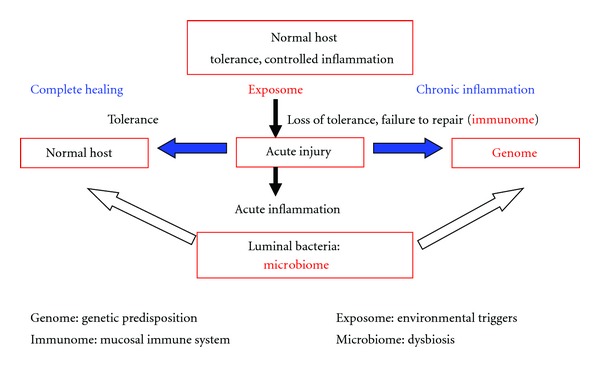
Inflammatory bowel diseases (IBDs) are chronic inflammatory conditions of the gastrointestinal tract that occur in genetically susceptible individuals. Crohn's disease (CD) and ulcerative colitis (UC) are two major types of IBD. In about 20-25% of patients, disease onset is during childhood and pediatric IBD can be considered the best model for studying immunopathogentic mechanisms. The fundamentals of IBD pathogenesis are considered a defective innate immunity and bacterial killing with overaggressive adaptive immune response. A condition of "dysbiosis", with alterations of the gut microbial composition, is regarded as the basis of IBD pathogenesis. The human gastrointestinal (GI) microbial population is a complex, dynamic ecosystem and consists of up to one thousand different bacterial species. In healthy individuals, intestinal microbiota have a symbiotic relationship with the host organism and carry out important metabolic, "barrier," and immune functions. Microbial dysbiosis in IBD with lack of beneficial bacteria, together with genetic predisposition, is the most relevant conditions in the pathogenesis of the pediatric IBD.
炎症性肠病(IBD)是发生在遗传易感性个体中的胃肠道慢性炎症性疾病。克罗恩病(CD)和溃疡性结肠炎(UC)是IBD的两种主要类型。约20%-25%的患者在儿童期发病,儿童IBD可被视为研究免疫致病机制的最佳模型。IBD发病机制的基础被认为是先天性免疫缺陷和细菌杀伤,同时伴有过度活跃的适应性免疫反应。肠道微生物组成改变的“生态失调”状态被视为IBD发病机制的基础。人类胃肠道(GI)微生物群体是一个复杂的动态生态系统,由多达一千种不同的细菌物种组成。在健康个体中,肠道微生物群与宿主生物体存在共生关系,并执行重要的代谢、“屏障”和免疫功能。IBD中有益细菌缺乏导致的微生物生态失调,与遗传易感性一起,是儿童IBD发病机制中最相关的因素。