IDIBAPS, Liver Unit-Hospital Clinic, and Department of Cell Death and Proliferation, IIBB-CSIC, 08036-Barcelona, Spain.
J Hepatol. 2012 Oct;57(4):852-9. doi: 10.1016/j.jhep.2012.05.024. Epub 2012 Jun 9.
BACKGROUND & AIMS: Steatohepatitis (SH) is associated with mitochondrial dysfunction and excessive production of superoxide, which can then be converted into H(2)O(2) by SOD2. Since mitochondrial GSH (mGSH) plays a critical role in H(2)O(2) reduction, we explored the interplay between superoxide, H(2)O(2), and mGSH in nutritional and genetic models of SH, which exhibit mGSH depletion.
We used isolated mitochondria and primary hepatocytes, as well as in vivo SH models showing mGSH depletion to test the consequences of superoxide scavenging.
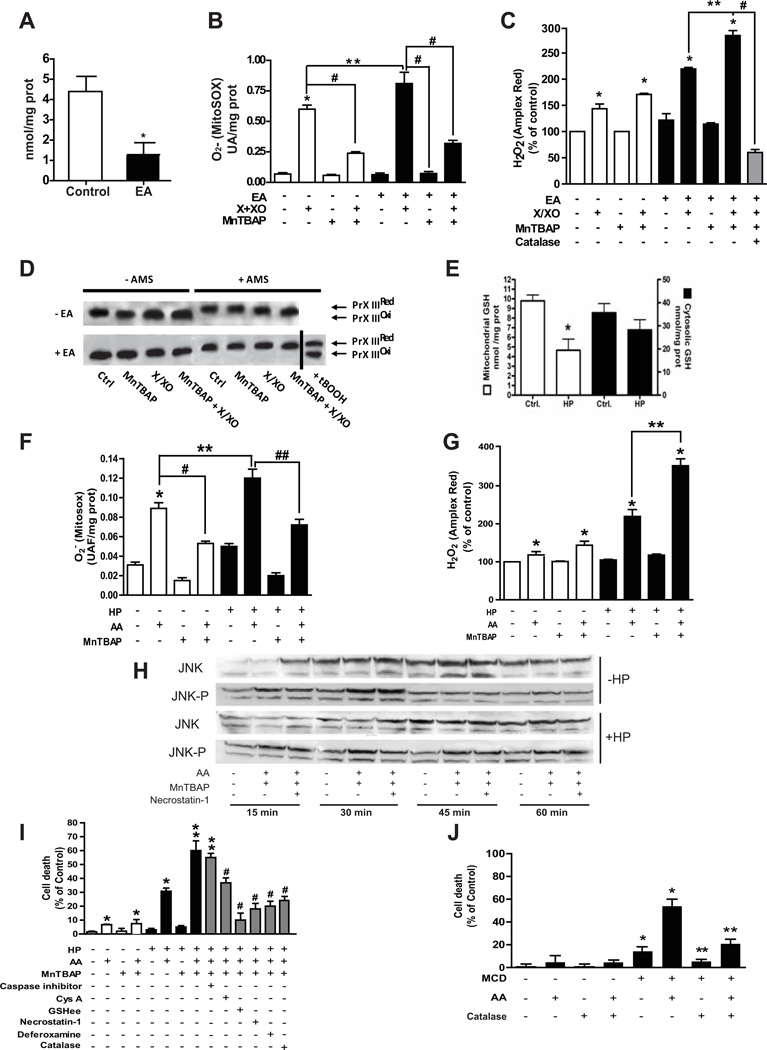
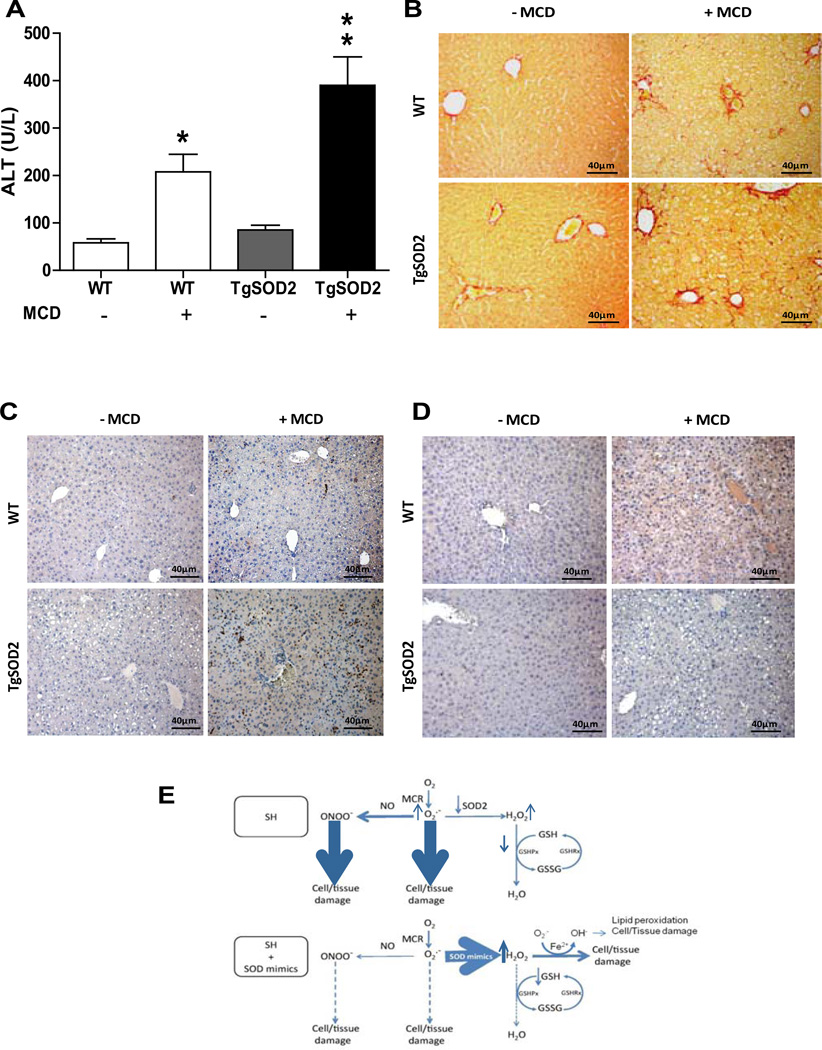
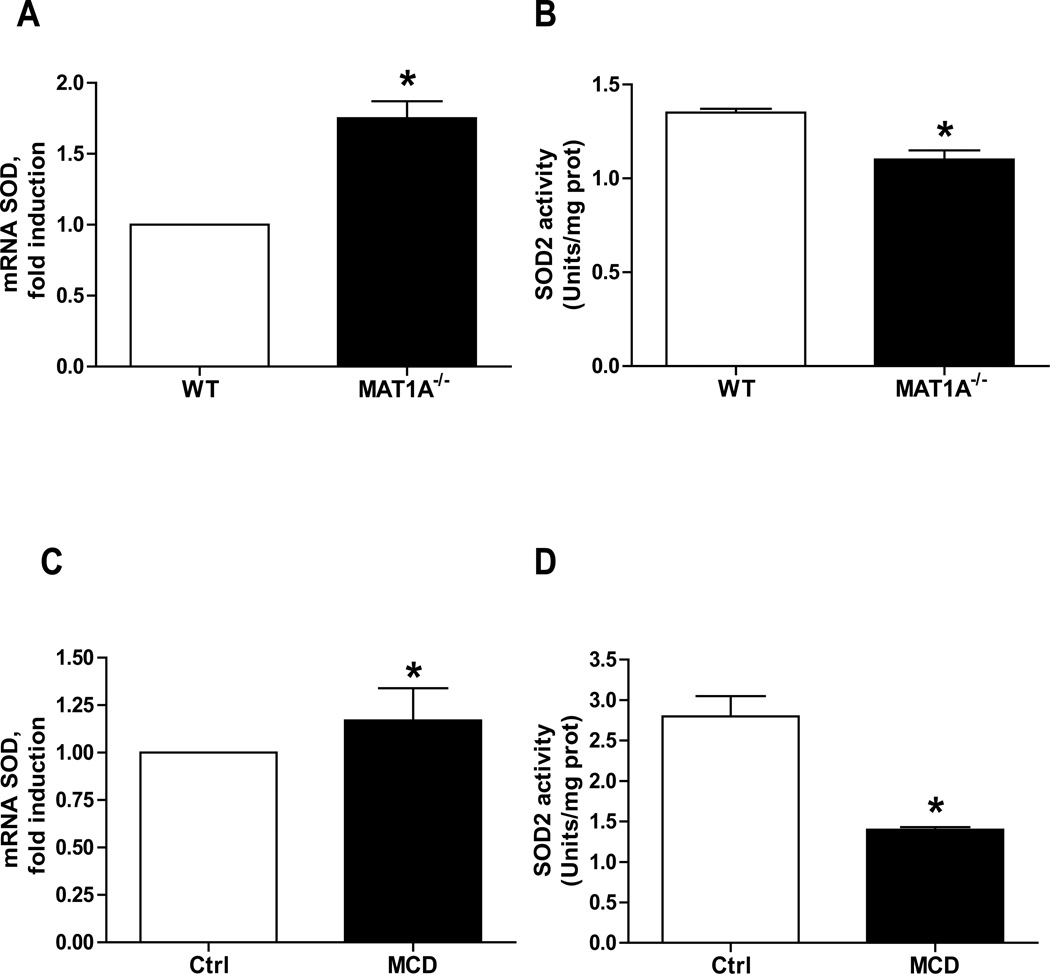
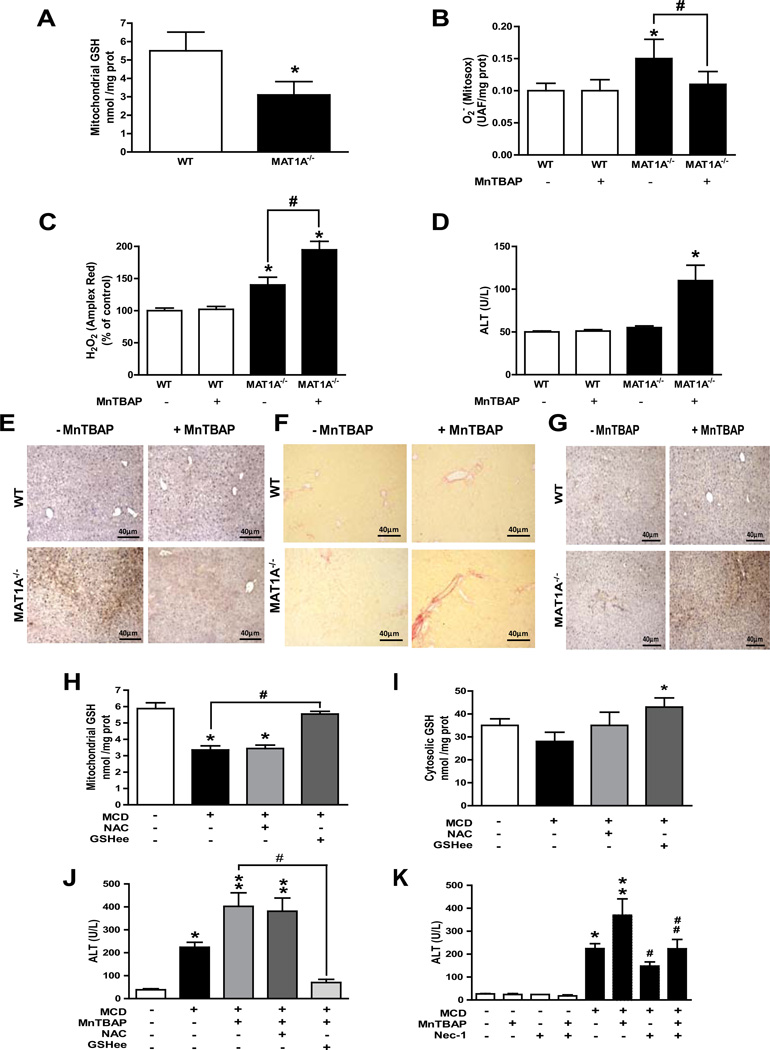
In isolated mitochondria and primary hepatocytes, superoxide scavenging by SOD mimetics or purified SOD decreased superoxide and peroxynitrite generation but increased H(2)O(2) following mGSH depletion, despite mitochondrial peroxiredoxin/thioredoxin defense. Selective mGSH depletion sensitized hepatocytes to cell death induced by SOD mimetics, and this was prevented by RIP1 kinase inhibition with necrostatin-1 or GSH repletion with GSH ethyl ester (GSHee). Mice fed the methionine-choline deficient (MCD) diet or MAT1A(-/-) mice exhibited reduced SOD2 activity; in vivo treatment with SOD mimetics increased liver damage, inflammation, and fibrosis, despite a decreased superoxide and 3-nitrotyrosine immunoreactivity, effects that were ameliorated by mGSH replenishment with GSHee, but not NAC. As a proof-of-principle of the detrimental role of superoxide scavenging when mGSH was depleted transgenic mice overexpressing SOD2 exhibited enhanced susceptibility to MCD-mediated SH.
These findings underscore a critical role for mGSH in the therapeutic potential of superoxide scavenging in SH, and suggest that the combined approach of superoxide scavenging with mGSH replenishment may be important in SH.
脂肪性肝炎(SH)与线粒体功能障碍和超氧化物的过度产生有关,而过氧化氢酶 2(SOD2)可将超氧化物转化为 H(2)O(2)。由于线粒体谷胱甘肽(mGSH)在 H(2)O(2)还原中起着关键作用,我们在表现出 mGSH 耗竭的营养和遗传 SH 模型中探讨了超氧化物、H(2)O(2)和 mGSH 之间的相互作用。
我们使用分离的线粒体和原代肝细胞以及表现出 mGSH 耗竭的体内 SH 模型来测试超氧化物清除的后果。
在分离的线粒体和原代肝细胞中,SOD 模拟物或纯化的 SOD 对超氧化物的清除作用降低了超氧化物和过氧亚硝酸盐的生成,但在 mGSH 耗竭后增加了 H(2)O(2)的生成,尽管线粒体过氧化物酶/硫氧还蛋白防御系统发挥作用。选择性 mGSH 耗竭使肝细胞对 SOD 模拟物诱导的细胞死亡敏感,而 RIP1 激酶抑制剂 necrostatin-1 或 GSH 乙酯(GSHee)的 GSH 补充可预防这种情况。喂食蛋氨酸-胆碱缺乏(MCD)饮食的小鼠或 MAT1A(-/-) 小鼠表现出 SOD2 活性降低;体内用 SOD 模拟物治疗会增加肝损伤、炎症和纤维化,尽管超氧化物和 3-硝基酪氨酸免疫反应性降低,但这些作用可通过 GSHee 补充 mGSH 得到改善,但不能通过 NAC 改善。作为超氧化物清除在 mGSH 耗竭时具有有害作用的原理证明,过表达 SOD2 的转基因小鼠表现出对 MCD 介导的 SH 的易感性增加。
这些发现强调了 mGSH 在 SH 中超氧化物清除的治疗潜力中的关键作用,并表明超氧化物清除与 mGSH 补充的联合方法在 SH 中可能很重要。