Braunschweig Daniel, Van de Water Judy
Department of Psychiatry, Davis School of Medicine, Sacramento, CA, USA.
Arch Neurol. 2012 Jun;69(6):693-9. doi: 10.1001/archneurol.2011.2506.
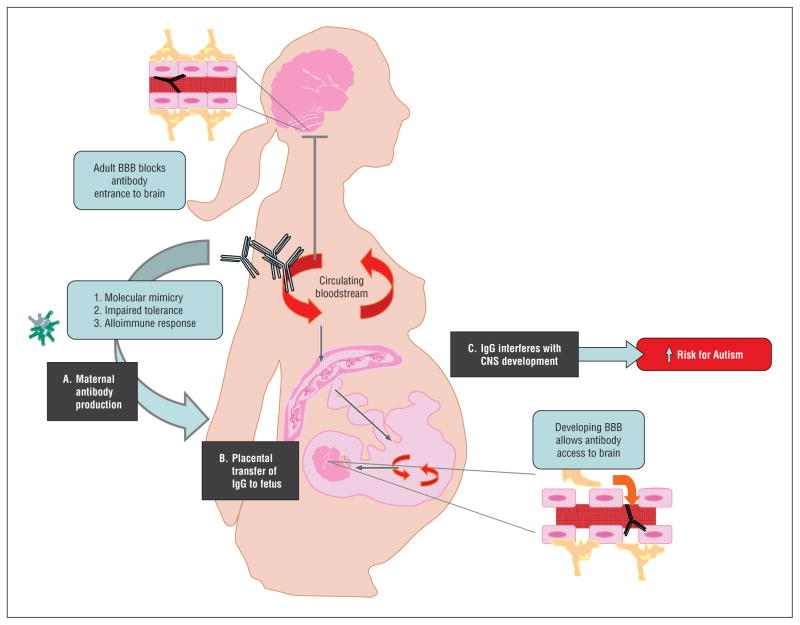
As epidemiologic studies continue to note a striking increase in rates of autism spectrum disorder (ASD) diagnosis around the world, the lack of identified causative agents in most cases remains a major hindrance to the development of treatment and prevention strategies. Published observations of immune system abnormalities in ASD have increased recently, with several groups identifying fetal protein reactive IgG antibodies in plasma from mothers of children with autism. Furthermore, other gestational immune parameters, including maternal infection and dysregulated cytokine signaling, have been found to be associated with ASD in some cases. While detailed pathogenic mechanisms remain to be determined, the hypothesis that some cases of ASD may be influenced, or even caused, by maternal fetal brain-reactive antibodies or other in utero immune-related exposures is an active area of investigation. This article reviews the current literature in this area and proposes several directions for future research.
随着流行病学研究不断指出全球范围内自闭症谱系障碍(ASD)诊断率显著上升,大多数病例中尚未确定致病因素仍然是治疗和预防策略发展的主要障碍。最近关于ASD免疫系统异常的已发表观察结果有所增加,有几个研究小组在自闭症儿童母亲的血浆中发现了胎儿蛋白反应性IgG抗体。此外,在某些情况下,还发现其他妊娠免疫参数,包括母体感染和细胞因子信号失调与ASD有关。虽然详细的致病机制仍有待确定,但某些ASD病例可能受到母体胎儿脑反应性抗体或其他子宫内免疫相关暴露影响甚至导致的假说,是一个活跃的研究领域。本文回顾了该领域的当前文献,并提出了几个未来研究方向。