IEEE Trans Med Imaging. 2012 Nov;31(11):1993-2005. doi: 10.1109/TMI.2012.2202245. Epub 2012 Jun 6.
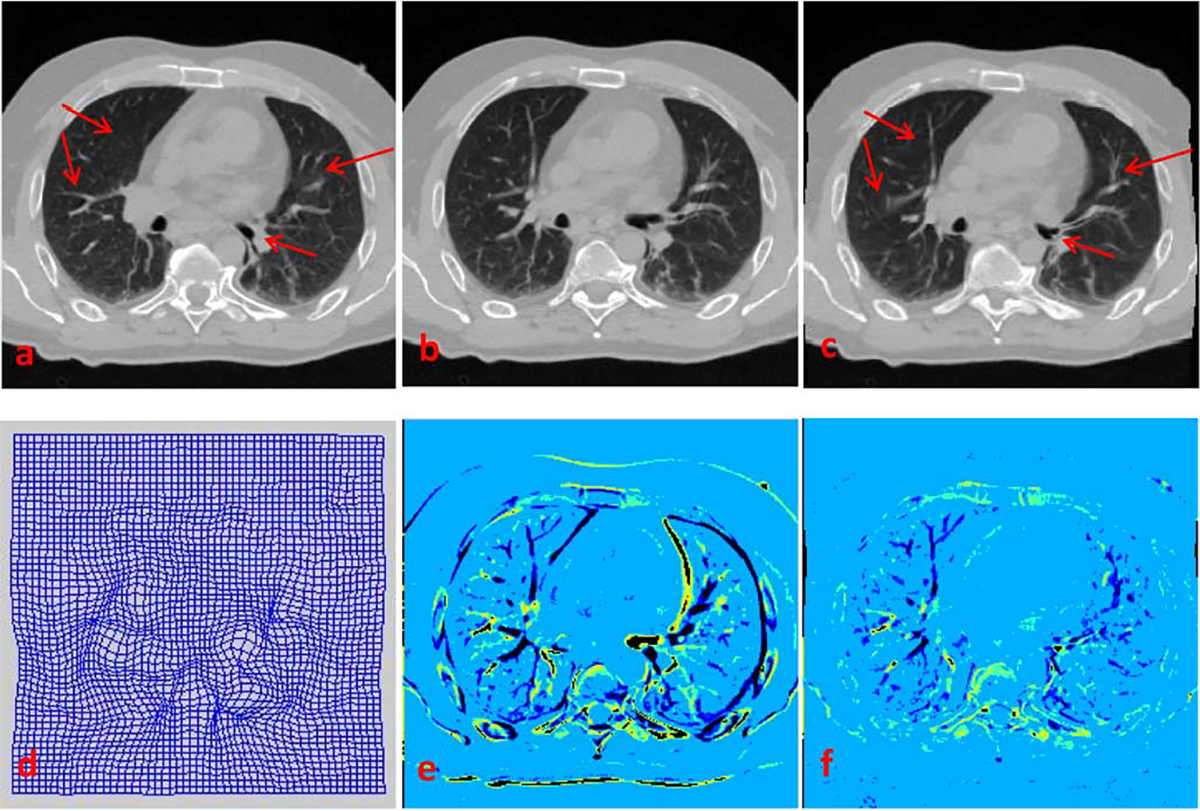
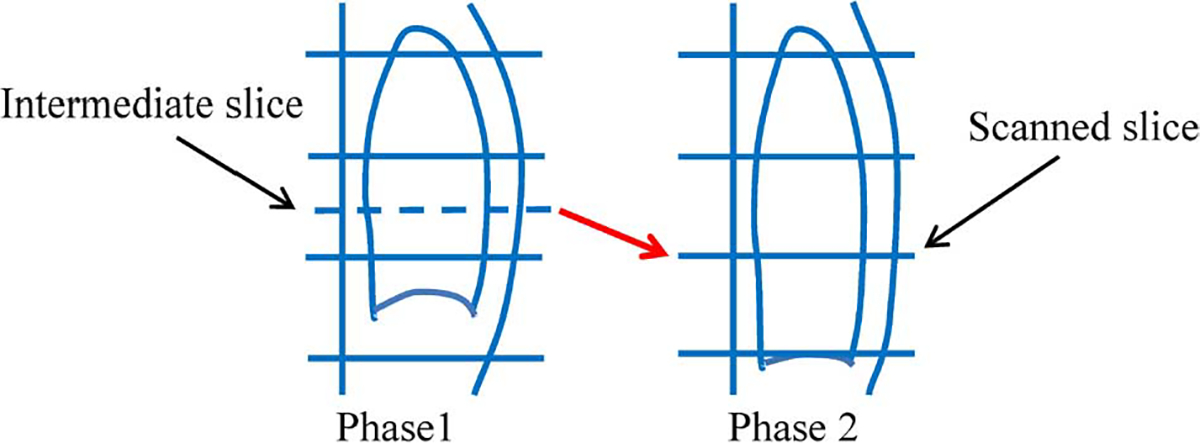
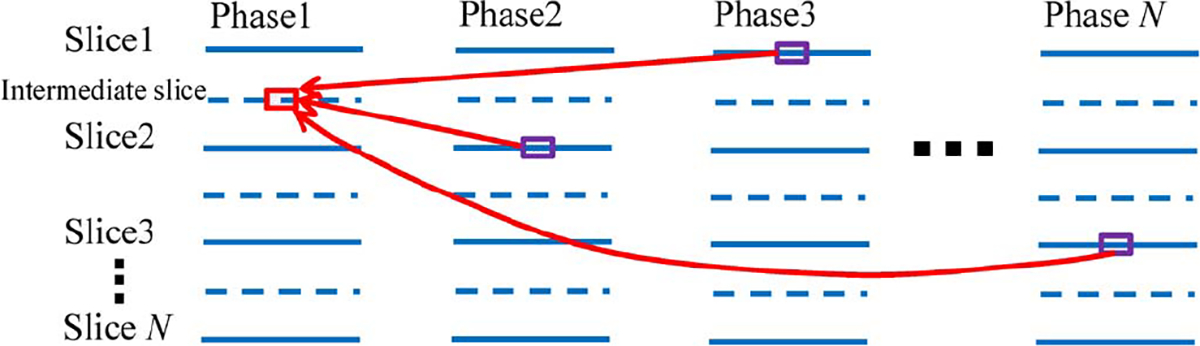
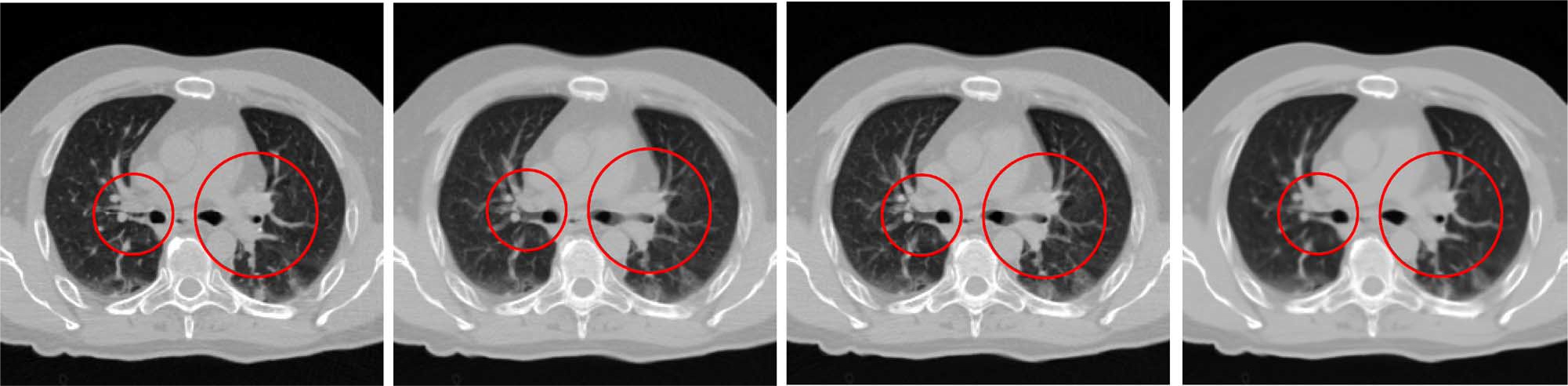
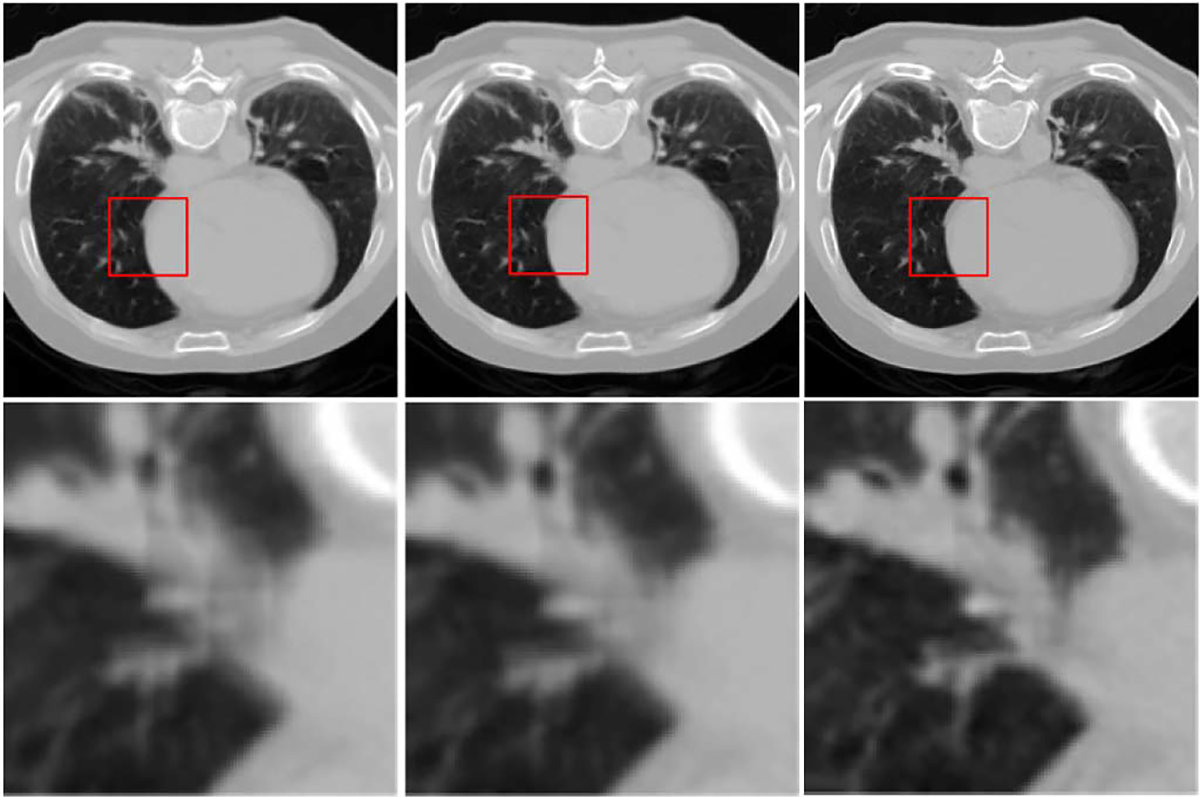
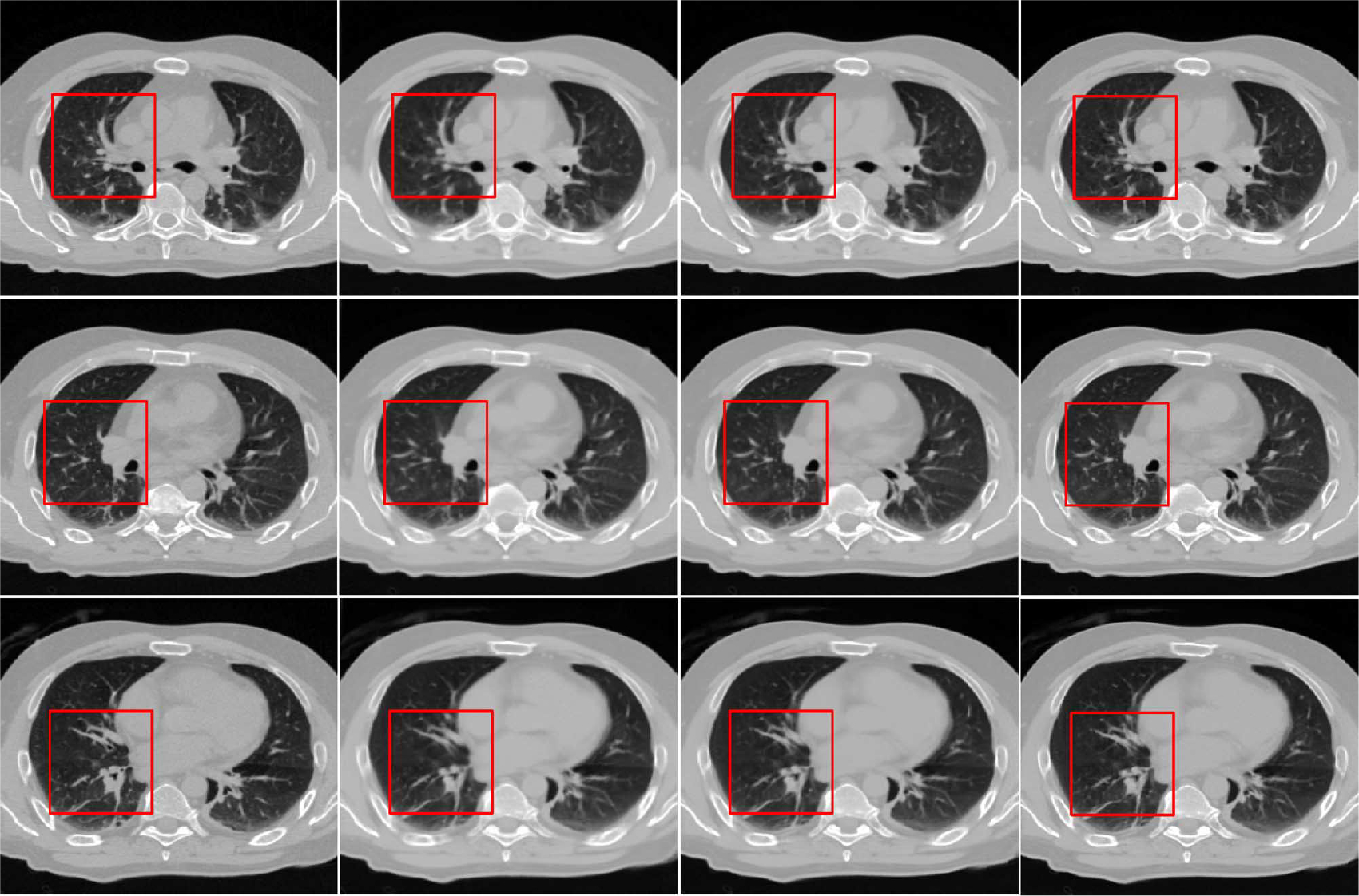
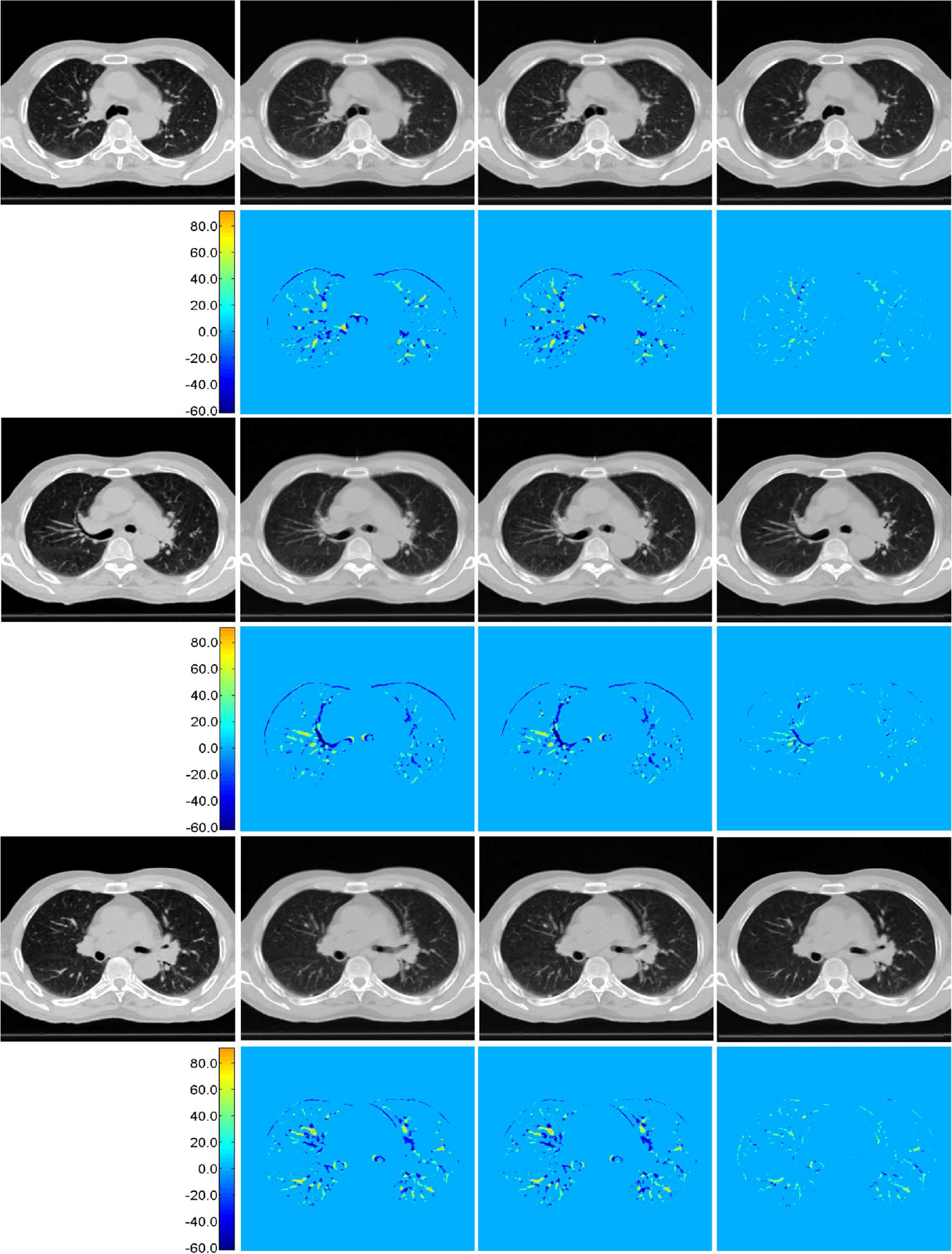
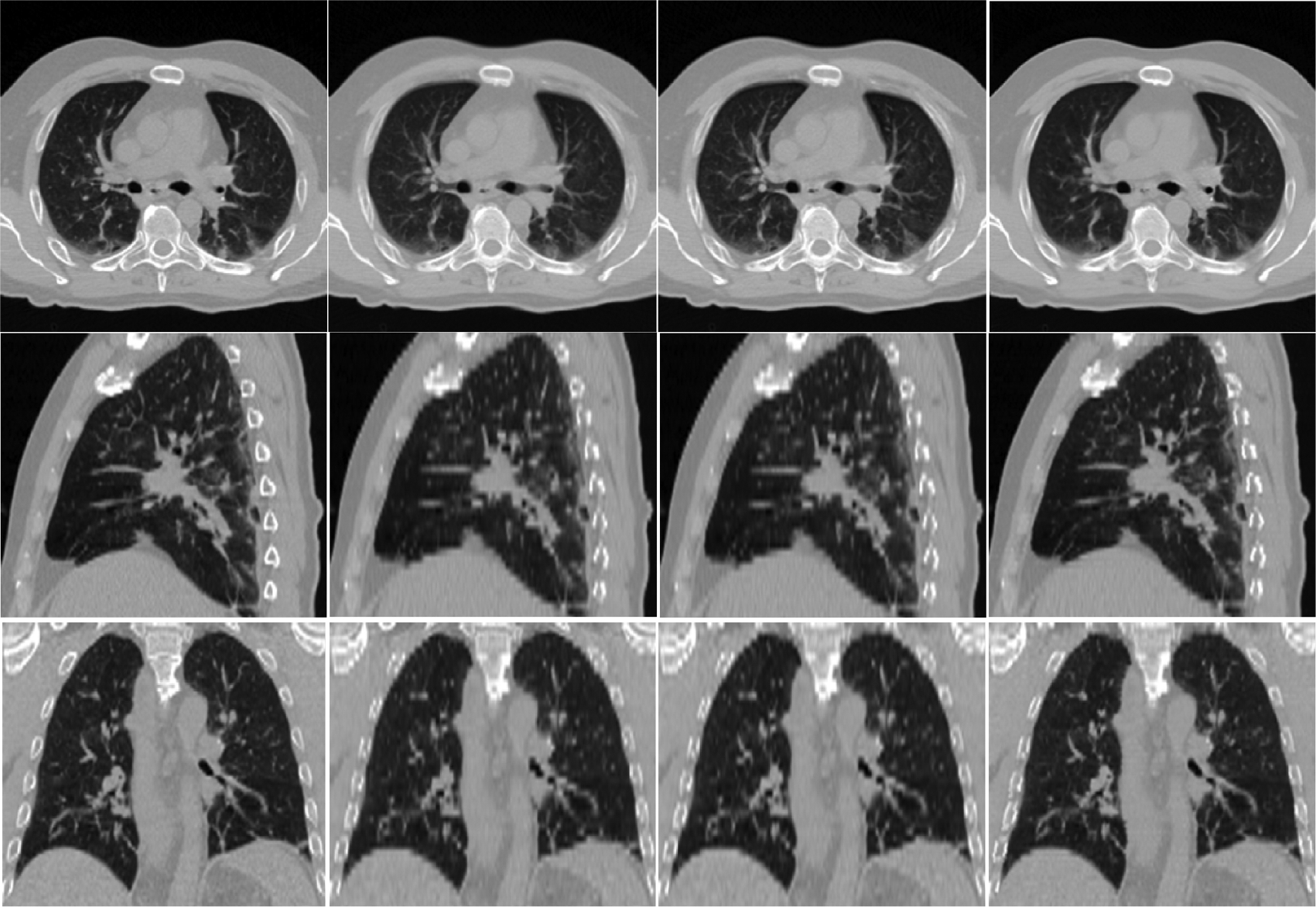
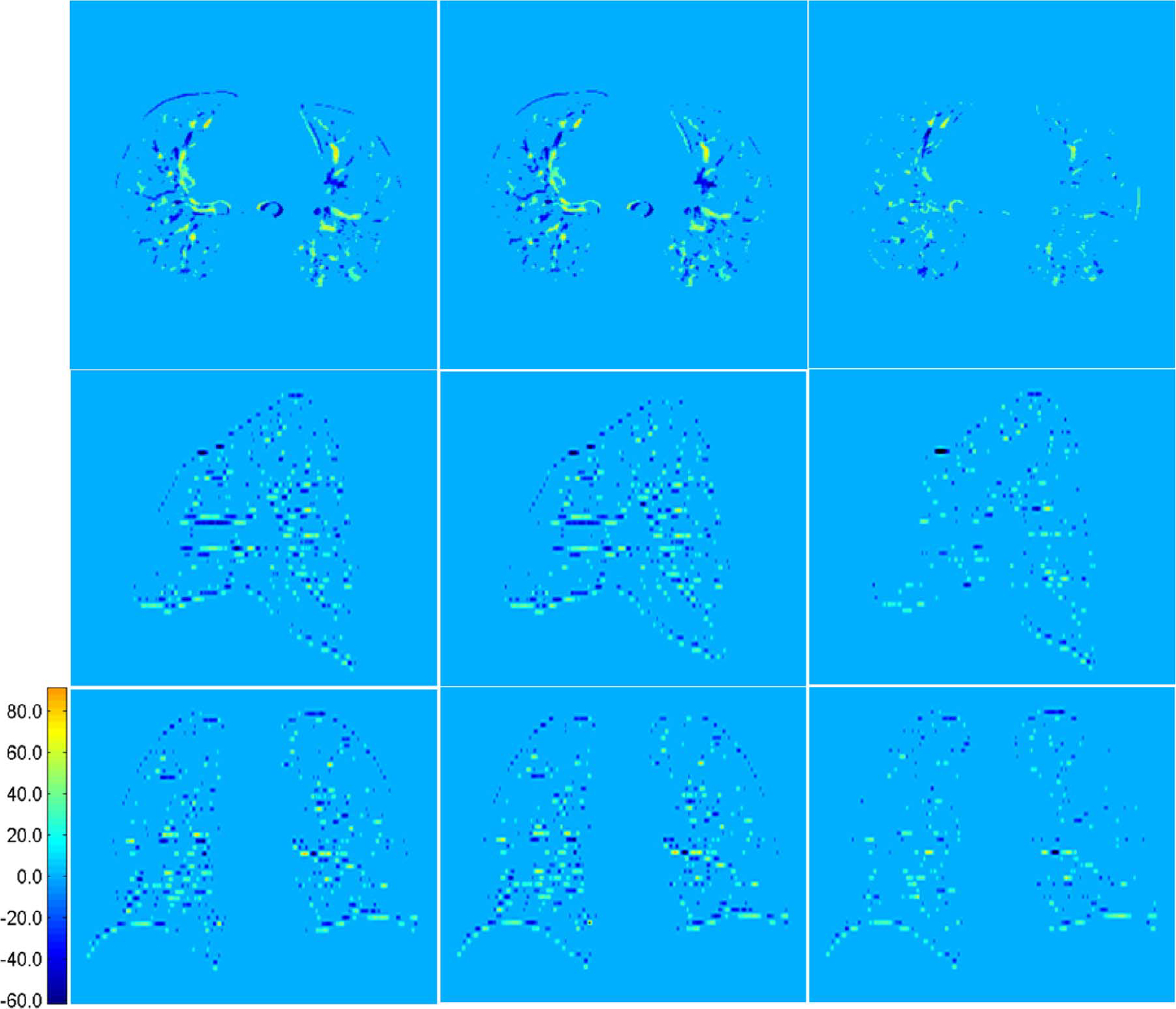
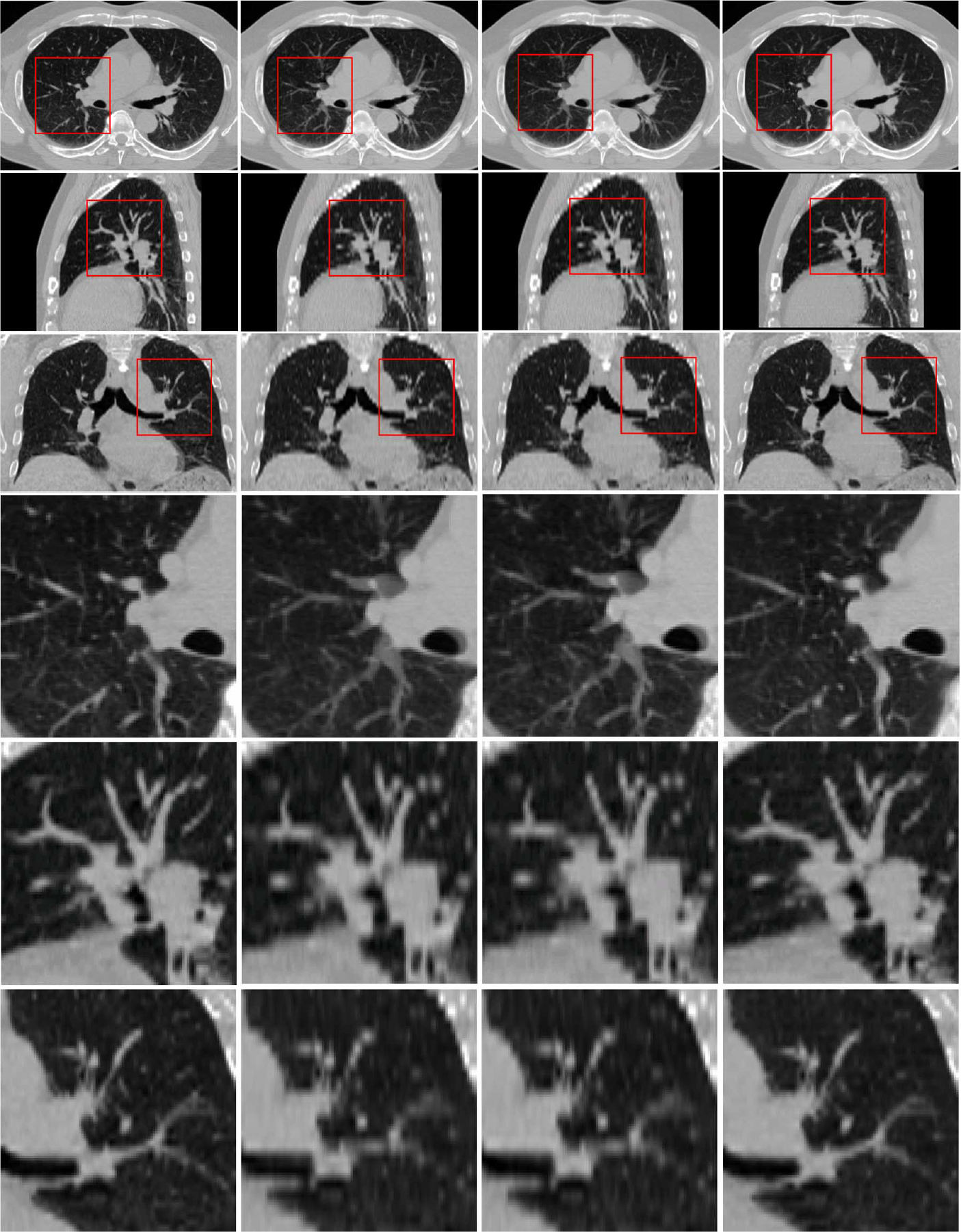
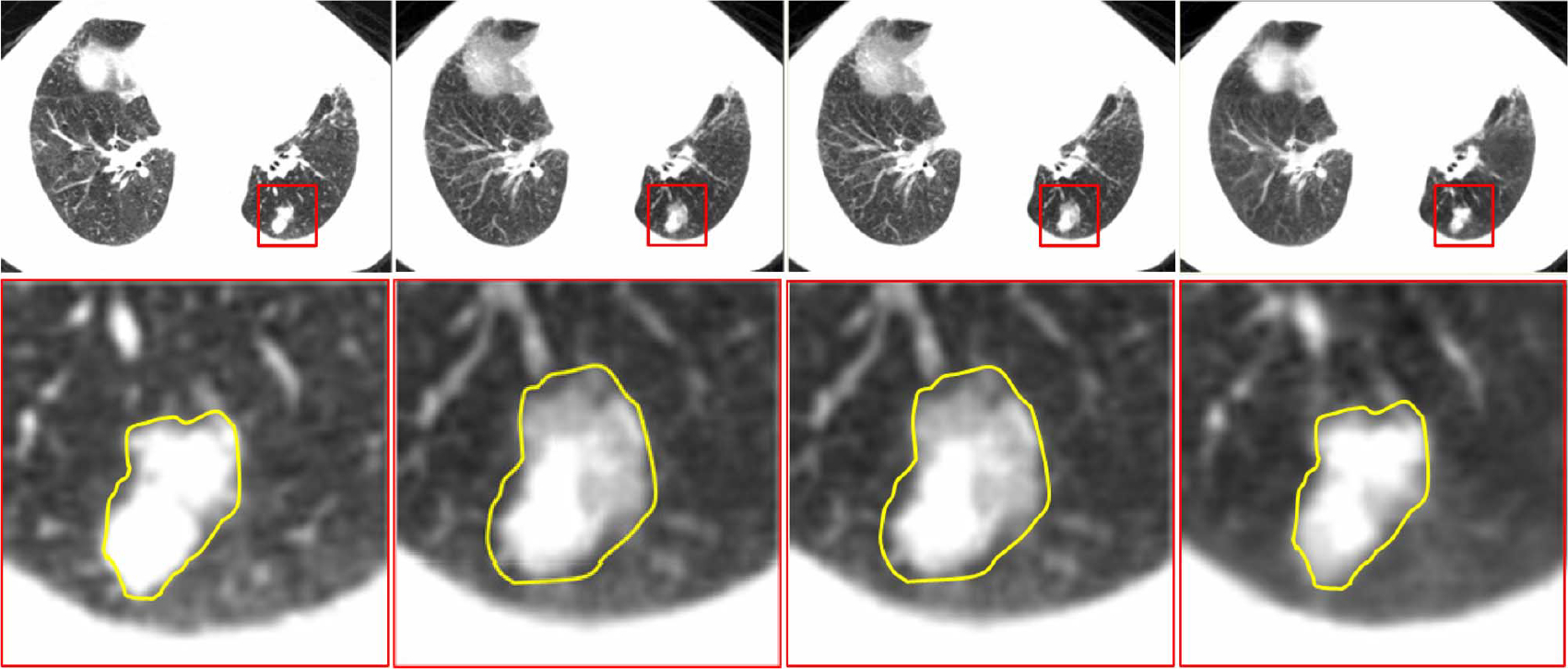
4D-CT plays an important role in lung cancer treatment because of its capability in providing a comprehensive characterization of respiratory motion for high-precision radiation therapy. However, due to the inherent high-dose exposure associated with CT, dense sampling along superior-inferior direction is often not practical, thus resulting in an inter-slice thickness that is much greater than in-plane voxel resolutions. As a consequence, artifacts such as lung vessel discontinuity and partial volume effects are often observed in 4D-CT images, which may mislead dose administration in radiation therapy. In this paper, we present a novel patch-based technique for resolution enhancement of 4D-CT images along the superior-inferior direction. Our working premise is that anatomical information that is missing in one particular phase can be recovered from other phases. Based on this assumption, we employ a hierarchical patch-based sparse representation mechanism to enhance the superior-inferior resolution of 4D-CT by reconstructing additional intermediate CT slices. Specifically, for each spatial location on an intermediate CT slice that we intend to reconstruct, we first agglomerate a dictionary of patches from images of all other phases in the 4D-CT. We then employ a sparse combination of patches from this dictionary, with guidance from neighboring (upper and lower) slices, to reconstruct a series of patches, which we progressively refine in a hierarchical fashion to reconstruct the final intermediate slices with significantly enhanced anatomical details. Our method was extensively evaluated using a public dataset. In all experiments, our method outperforms the conventional linear and cubic-spline interpolation methods in preserving image details and also in suppressing misleading artifacts, indicating that our proposed method can potentially be applied to better image-guided radiation therapy of lung cancer in the future.
4D-CT 在肺癌治疗中起着重要作用,因为它能够全面描述呼吸运动,从而实现高精度放射治疗。然而,由于 CT 固有的高剂量暴露,沿上下方向进行密集采样通常是不切实际的,因此导致切片间厚度远大于平面体素分辨率。结果,4D-CT 图像中经常观察到肺部血管不连续和部分容积效应等伪影,这可能会导致放射治疗中的剂量给药错误。在本文中,我们提出了一种新颖的基于补丁的技术,用于增强 4D-CT 图像在上下方向上的分辨率。我们的工作前提是,在特定相位中丢失的解剖信息可以从其他相位中恢复。基于此假设,我们采用分层基于补丁的稀疏表示机制,通过重建额外的中间 CT 切片来增强 4D-CT 的上下分辨率。具体来说,对于我们要重建的中间 CT 切片上的每个空间位置,我们首先从 4D-CT 中的所有其他相位的图像中聚集补丁字典。然后,我们使用来自该字典的补丁的稀疏组合,并通过来自上下相邻切片的指导,重建一系列补丁,我们以分层的方式逐步细化这些补丁,以重建具有显著增强解剖细节的最终中间切片。我们的方法在一个公共数据集上进行了广泛评估。在所有实验中,我们的方法在保留图像细节和抑制误导性伪影方面都优于传统的线性和三次样条插值方法,这表明我们提出的方法将来可能会应用于更好的肺癌图像引导放射治疗。