Weigand Kilian, Brost Sylvia, Steinebrunner Niels, Büchler Markus, Schemmer Peter, Müller Martina
Department of Gastroenterology, Endocrinology, Rheumatology and Infectious Diseases, University Hospital Regensburg, D-93053 Regensburg, Germany.
HPB Surg. 2012;2012:176723. doi: 10.1155/2012/176723. Epub 2012 May 30.
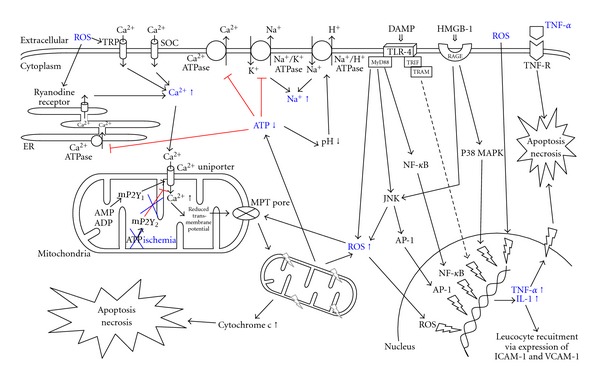
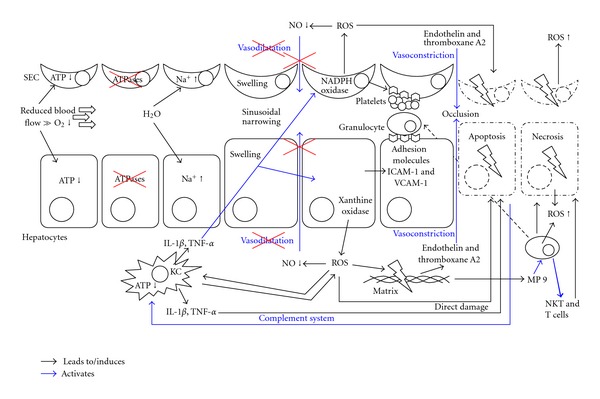
Liver ischemia/reperfusion (IR) injury is caused by a heavily toothed network of interactions of cells of the immune system, cytokine production, and reduced microcirculatory blood flow in the liver. These complex networks are further elaborated by multiple intracellular pathways activated by cytokines, chemokines, and danger-associated molecular patterns. Furthermore, intracellular ionic disturbances and especially mitochondrial disorders play an important role leading to apoptosis and necrosis of hepatocytes in IR injury. Overall, enhanced production of reactive oxygen species, found very early in IR injury, plays an important role in liver tissue damage at several points within these complex networks. Many contributors to IR injury are only incompletely understood so far. This paper tempts to give an overview of the different mechanisms involved in the formation of IR injury. Only by further elucidation of these complex mechanisms IR injury can be understood and possible therapeutic strategies can be improved or be developed.
肝脏缺血/再灌注(IR)损伤是由免疫系统细胞、细胞因子产生以及肝脏微循环血流减少之间相互作用的复杂网络所引起的。这些复杂网络通过细胞因子、趋化因子和危险相关分子模式激活的多种细胞内途径进一步细化。此外,细胞内离子紊乱,尤其是线粒体功能障碍在导致IR损伤中肝细胞凋亡和坏死方面发挥着重要作用。总体而言,在IR损伤早期就发现的活性氧生成增加,在这些复杂网络中的多个环节对肝组织损伤起着重要作用。到目前为止,许多导致IR损伤的因素仍未被完全理解。本文试图概述IR损伤形成过程中涉及的不同机制。只有进一步阐明这些复杂机制,才能理解IR损伤,并改进或开发可能的治疗策略。