Tan Shenglong, Wu Song
Services Computing Technology and System Laboratory, Cluster and Grid Computing Laboratory, School of Computer Science and Technology, Huazhong University of Science & Technology (HUST), Luoyu Road 1037, Wuhan 430074, China.
Comp Funct Genomics. 2012;2012:418208. doi: 10.1155/2012/418208. Epub 2012 May 28.
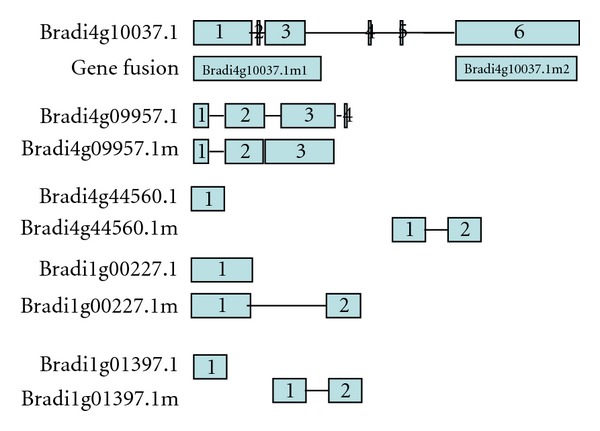
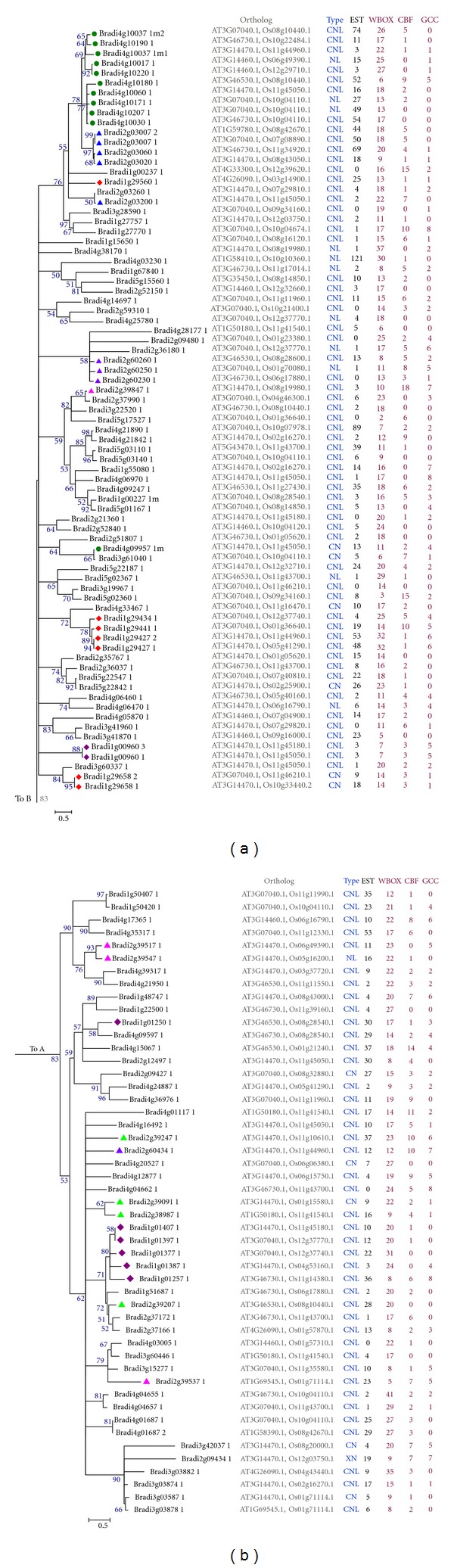
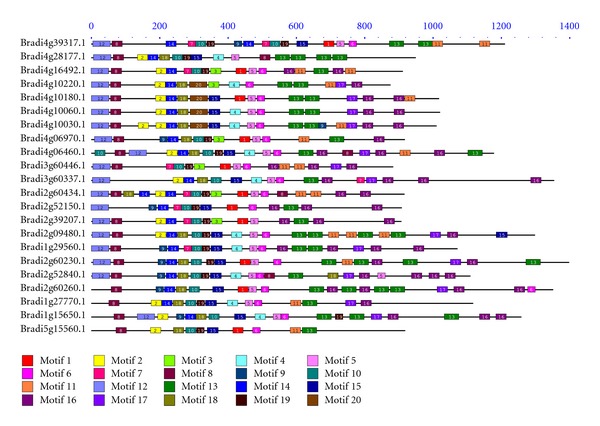
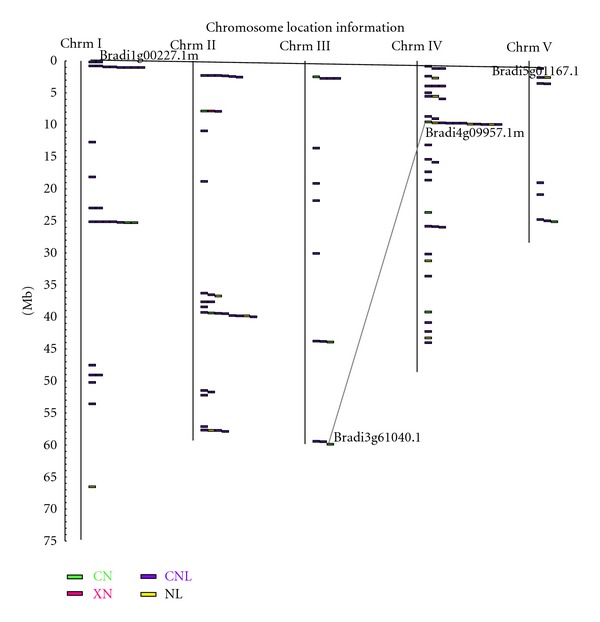
Nucleotide-binding site (NBS) disease resistance genes play an important role in defending plants from a variety of pathogens and insect pests. Many R-genes have been identified in various plant species. However, little is known about the NBS-encoding genes in Brachypodium distachyon. In this study, using computational analysis of the B. distachyon genome, we identified 126 regular NBS-encoding genes and characterized them on the bases of structural diversity, conserved protein motifs, chromosomal locations, gene duplications, promoter region, and phylogenetic relationships. EST hits and full-length cDNA sequences (from Brachypodium database) of 126 R-like candidates supported their existence. Based on the occurrence of conserved protein motifs such as coiled-coil (CC), NBS, leucine-rich repeat (LRR), these regular NBS-LRR genes were classified into four subgroups: CC-NBS-LRR, NBS-LRR, CC-NBS, and X-NBS. Further expression analysis of the regular NBS-encoding genes in Brachypodium database revealed that these genes are expressed in a wide range of libraries, including those constructed from various developmental stages, tissue types, and drought challenged or nonchallenged tissue.
核苷酸结合位点(NBS)抗病基因在保护植物免受多种病原体和害虫侵害方面发挥着重要作用。在各种植物物种中已经鉴定出许多抗病基因(R基因)。然而,关于二穗短柄草中编码NBS的基因却知之甚少。在本研究中,通过对二穗短柄草基因组进行计算分析,我们鉴定出126个常规的编码NBS的基因,并基于结构多样性、保守蛋白基序、染色体定位、基因复制、启动子区域和系统发育关系对它们进行了表征。126个类R候选基因的EST匹配序列和全长cDNA序列(来自二穗短柄草数据库)证实了它们的存在。基于卷曲螺旋(CC)、NBS、富含亮氨酸重复序列(LRR)等保守蛋白基序的出现情况,这些常规的NBS-LRR基因被分为四个亚组:CC-NBS-LRR、NBS-LRR、CC-NBS和X-NBS。对二穗短柄草数据库中常规编码NBS的基因进行的进一步表达分析表明,这些基因在广泛的文库中表达,包括从不同发育阶段、组织类型以及干旱处理或未处理的组织构建的文库。