Department of Microbiology and Medical Zoology, University of Puerto Rico Medical Sciences Campus, San Juan, Puerto Rico.
PLoS One. 2012;7(5):e36571. doi: 10.1371/journal.pone.0036571. Epub 2012 May 31.
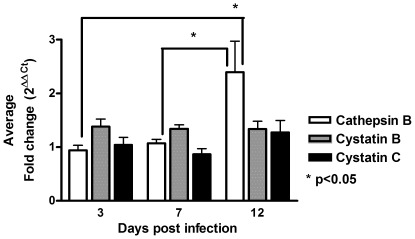
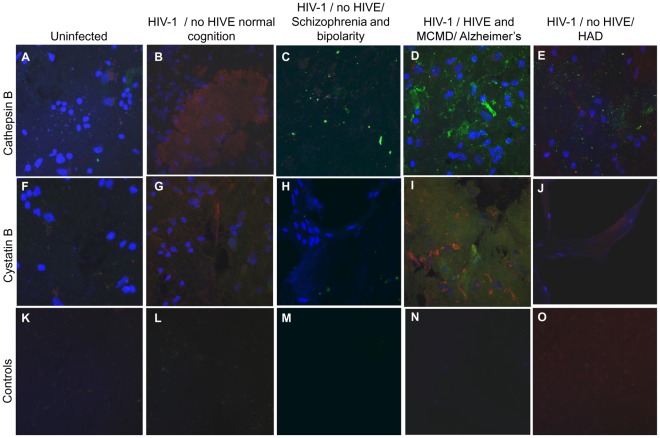
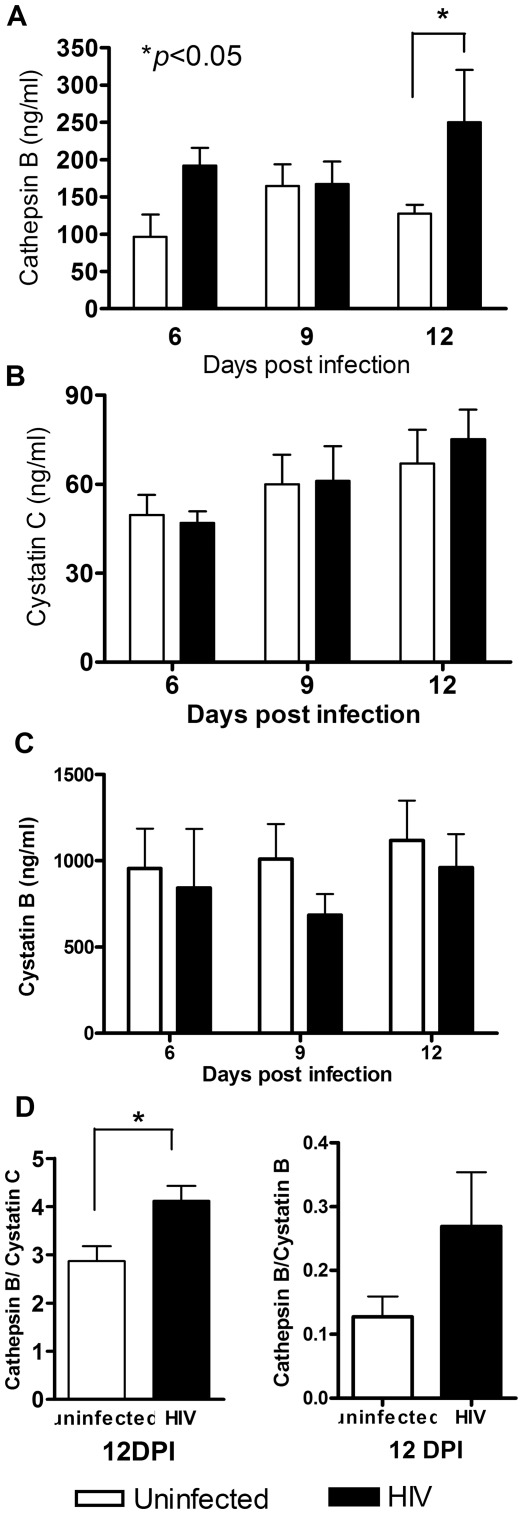
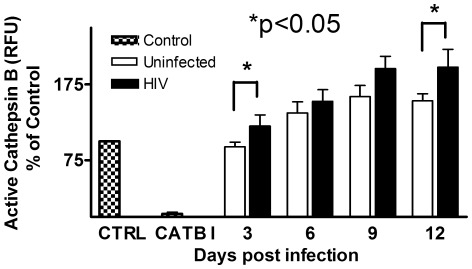
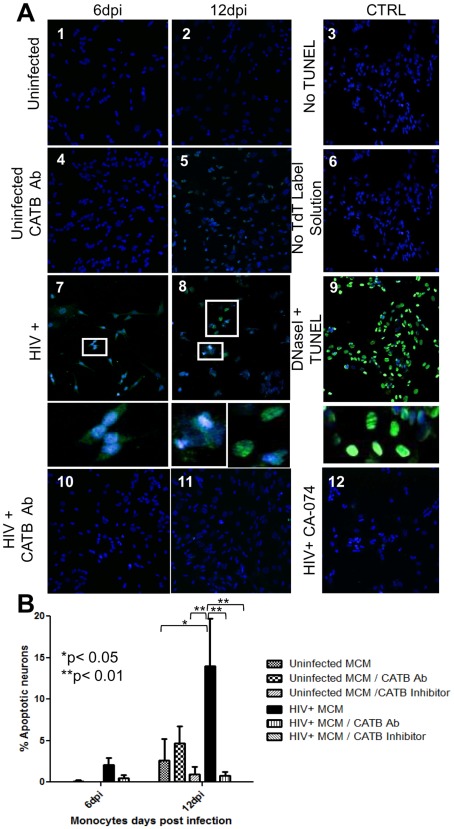
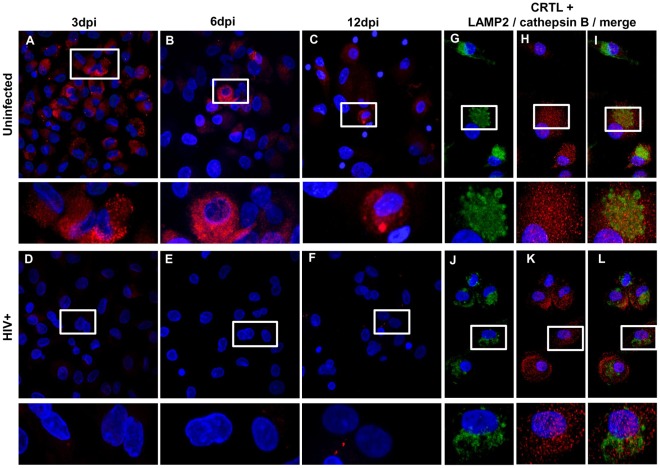
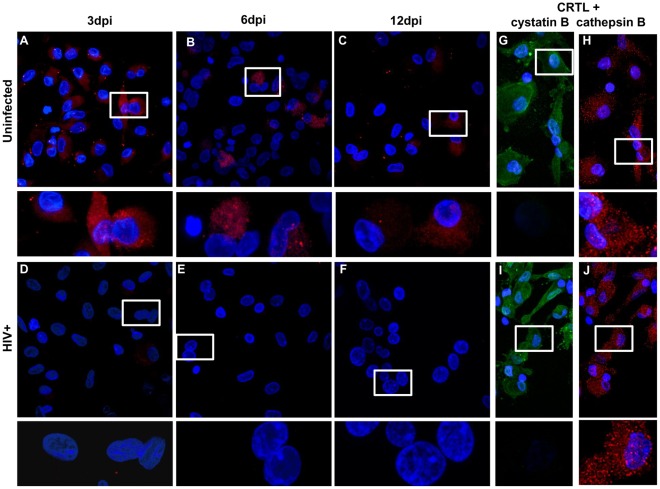
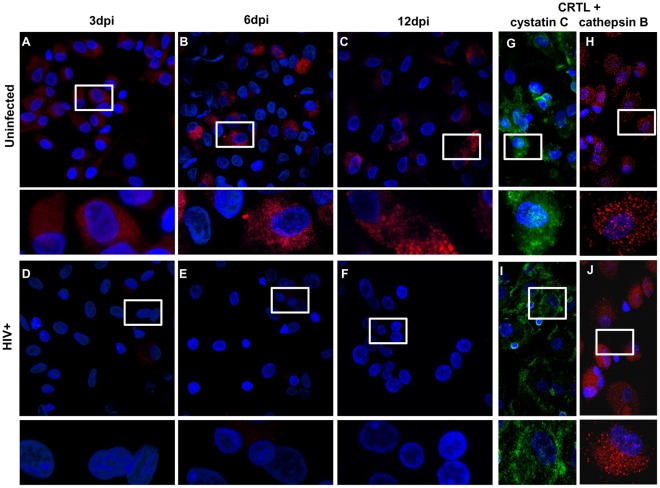
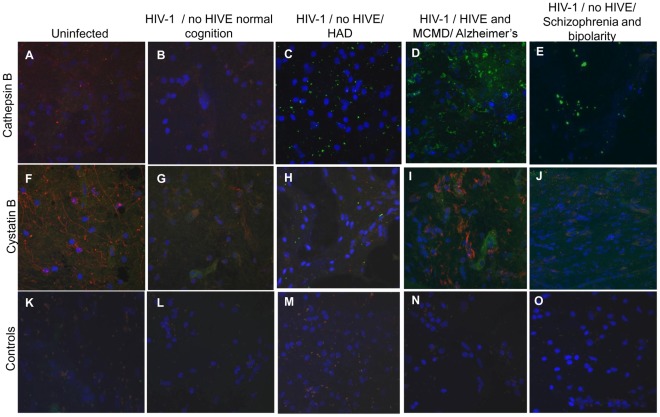
Chronic HIV infection leads to the development of cognitive impairments, designated as HIV-associated neurocognitive disorders (HAND). The secretion of soluble neurotoxic factors by HIV-infected macrophages plays a central role in the neuronal dysfunction and cell death associated with HAND. One potentially neurotoxic protein secreted by HIV-1 infected macrophages is cathepsin B. To explore the potential role of cathepsin B in neuronal cell death after HIV infection, we cultured HIV-1(ADA) infected human monocyte-derived macrophages (MDM) and assayed them for expression and activity of cathepsin B and its inhibitors, cystatins B and C. The neurotoxic activity of the secreted cathepsin B was determined by incubating cells from the neuronal cell line SK-N-SH with MDM conditioned media (MCM) from HIV-1 infected cultures. We found that HIV-1 infected MDM secreted significantly higher levels of cathepsin B than did uninfected cells. Moreover, the activity of secreted cathepsin B was significantly increased in HIV-infected MDM at the peak of viral production. Incubation of neuronal cells with supernatants from HIV-infected MDM resulted in a significant increase in the numbers of apoptotic neurons, and this increase was reversed by the addition of either the cathepsin B inhibitor CA-074 or a monoclonal antibody to cathepsin B. In situ proximity ligation assays indicated that the increased neurotoxic activity of the cathepsin B secreted by HIV-infected MDM resulted from decreased interactions between the enzyme and its inhibitors, cystatins B and C. Furthermore, preliminary in vivo studies of human post-mortem brain tissue suggested an upregulation of cathepsin B immunoreactivity in the hippocampus and basal ganglia in individuals with HAND. Our results demonstrate that HIV-1 infection upregulates cathepsin B in macrophages, increases cathepsin B activity, and reduces cystatin-cathepsin interactions, contributing to neuronal apoptosis. These findings provide new evidence for the role of cathepsin B in neuronal cell death induced by HIV-infected macrophages.
慢性 HIV 感染会导致认知障碍的发展,被称为 HIV 相关神经认知障碍(HAND)。HIV 感染的巨噬细胞分泌可溶性神经毒性因子在 HAND 相关的神经元功能障碍和细胞死亡中发挥核心作用。HIV-1 感染的巨噬细胞分泌的一种潜在神经毒性蛋白是组织蛋白酶 B。为了探索组织蛋白酶 B 在 HIV 感染后神经元细胞死亡中的潜在作用,我们培养了 HIV-1(ADA)感染的人单核细胞衍生的巨噬细胞(MDM),并检测了它们的组织蛋白酶 B 及其抑制剂胱抑素 B 和 C 的表达和活性。通过将神经元细胞系 SK-N-SH 与来自 HIV-1 感染培养物的巨噬细胞条件培养基(MCM)孵育,测定分泌的组织蛋白酶 B 的神经毒性活性。我们发现,HIV-1 感染的 MDM 分泌的组织蛋白酶 B 水平明显高于未感染的细胞。此外,在 HIV 感染的 MDM 病毒产量达到高峰时,分泌的组织蛋白酶 B 的活性显著增加。用来自 HIV 感染的 MDM 的上清液孵育神经元细胞会导致凋亡神经元数量显著增加,而这种增加可被组织蛋白酶 B 抑制剂 CA-074 或组织蛋白酶 B 的单克隆抗体逆转。原位接近连接测定表明,HIV 感染的 MDM 分泌的组织蛋白酶 B 的神经毒性活性增加是由于酶与其抑制剂胱抑素 B 和 C 之间的相互作用减少所致。此外,对人类死后脑组织的初步体内研究表明,HAND 个体的海马体和基底神经节中组织蛋白酶 B 免疫反应性上调。我们的研究结果表明,HIV-1 感染上调巨噬细胞中的组织蛋白酶 B,增加组织蛋白酶 B 活性,并减少胱抑素-组织蛋白酶相互作用,导致神经元凋亡。这些发现为 HIV 感染的巨噬细胞诱导的神经元细胞死亡中组织蛋白酶 B 的作用提供了新的证据。