Division of Nephrology/Department of Medicine, Baylor College of Medicine, Houston, Texas, United States of America.
PLoS One. 2012;7(5):e36994. doi: 10.1371/journal.pone.0036994. Epub 2012 May 31.
We have previously shown increased cardiac stanniocalcin-1 (STC1) in patients with idiopathic dilated cardiomyopathy. STC1 localizes to the inner mitochondrial membrane and transgenic over-expression of STC1 is associated with increased energy utilization.
We examined the hypothesis that STC1 uncouples mitochondrial oxidative phosphorylation--to suppress superoxide generation and modulate neurohormonal effects on cardiomyocytes.
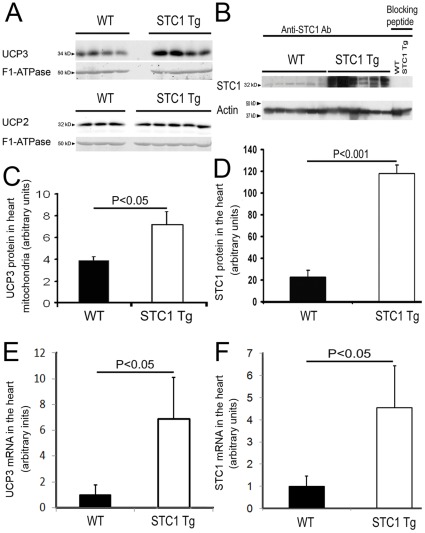
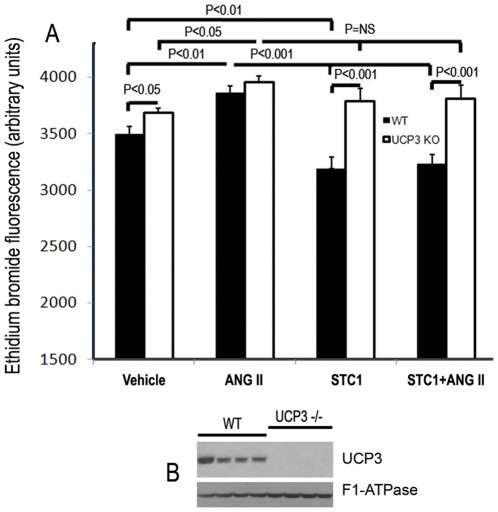
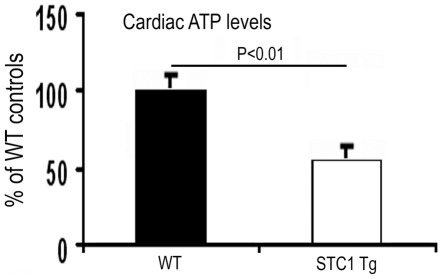
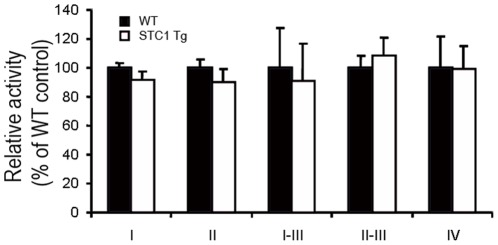
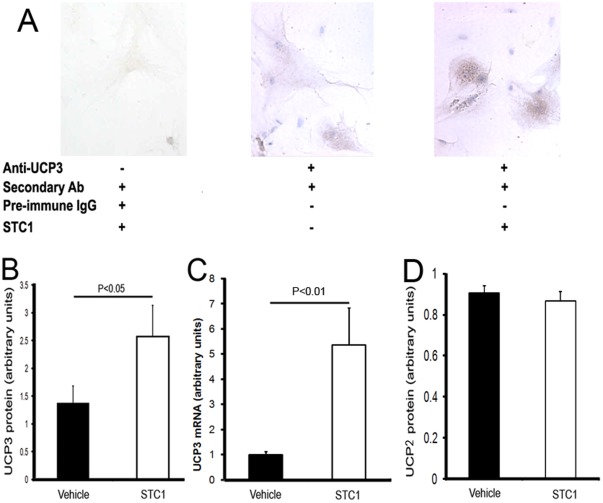
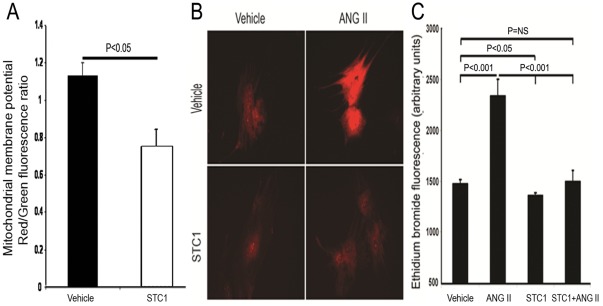
Compared to WT mouse heart, STC1 Tg heart displays: 2-fold higher uncoupling protein 3 (UCP3) levels, but no effect on UCP2 protein; 40% lower ATP levels; but similar activities of respiratory chain complexes I-IV. In cultured adult rat and freshly-isolated mouse cardiomyocytes, rSTC1 induces UCP3, but not UCP2. Treatment of cardiomyocytes with STC1 decreases mitochondrial membrane potential and suppresses baseline and angiotensin II (Ang II)-induced superoxide generation. Furthermore, baseline superoxide generation is higher in freshly-isolated adult UCP3(-/-) mouse cardiomyocytes compared to WT, suggesting an important role for UCP3 in regulating cardiomyocyte ROS under physiologic conditions. Treatment of UCP3(-/-) cardiomyocytes with rSTC1 failed to suppress superoxide generation, suggesting that the effects of STC1 on superoxide generation in cardiomyocytes are UCP3-dependent.
STC1 activates a novel anti-oxidant pathway in cardiac myocytes through induction of UCP3, and may play an important role in suppressing ROS in the heart under normal physiologic conditions and ameliorate the deleterious effects of Ang II-mediated cardiac injury. Importantly, our data point to a critical role for the mitochondria in regulating ROS generation in response to Ang II.
我们之前已经证明,特发性扩张型心肌病患者的心脏中存在较多的骨化三醇结合蛋白 1(STC1)。STC1 定位于线粒体内膜,过表达 STC1 与增加能量利用有关。
我们检验了以下假设,即 STC1 解偶联线粒体氧化磷酸化,从而抑制超氧化物生成并调节神经激素对心肌细胞的影响。
与 WT 小鼠心脏相比,STC1 Tg 心脏显示:解偶联蛋白 3(UCP3)水平高 2 倍,但 UCP2 蛋白无影响;ATP 水平低 40%;但呼吸链复合物 I-IV 的活性相似。在培养的成年大鼠和新鲜分离的小鼠心肌细胞中,rSTC1 诱导 UCP3,但不诱导 UCP2。用 STC1 处理心肌细胞可降低线粒体膜电位,并抑制基础状态和血管紧张素 II(Ang II)诱导的超氧化物生成。此外,与 WT 相比,新鲜分离的成年 UCP3(-/-)小鼠心肌细胞的基础超氧化物生成水平更高,这表明 UCP3 在调节生理条件下心肌细胞 ROS 中起着重要作用。用 rSTC1 处理 UCP3(-/-)心肌细胞未能抑制超氧化物生成,表明 STC1 对心肌细胞中超氧化物生成的作用依赖于 UCP3。
STC1 通过诱导 UCP3 激活心肌细胞中的新型抗氧化途径,并且在正常生理条件下可能在抑制心脏中的 ROS 方面发挥重要作用,并改善 Ang II 介导的心脏损伤的有害影响。重要的是,我们的数据表明,线粒体在调节 Ang II 反应中 ROS 生成方面起着关键作用。