Department of Immunology, University of Toronto, Toronto, Ontario, Canada.
PLoS One. 2012;7(5):e37052. doi: 10.1371/journal.pone.0037052. Epub 2012 May 31.
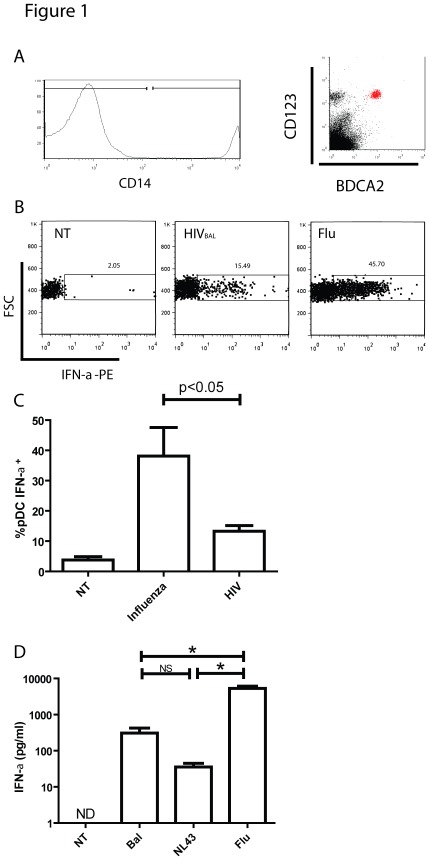
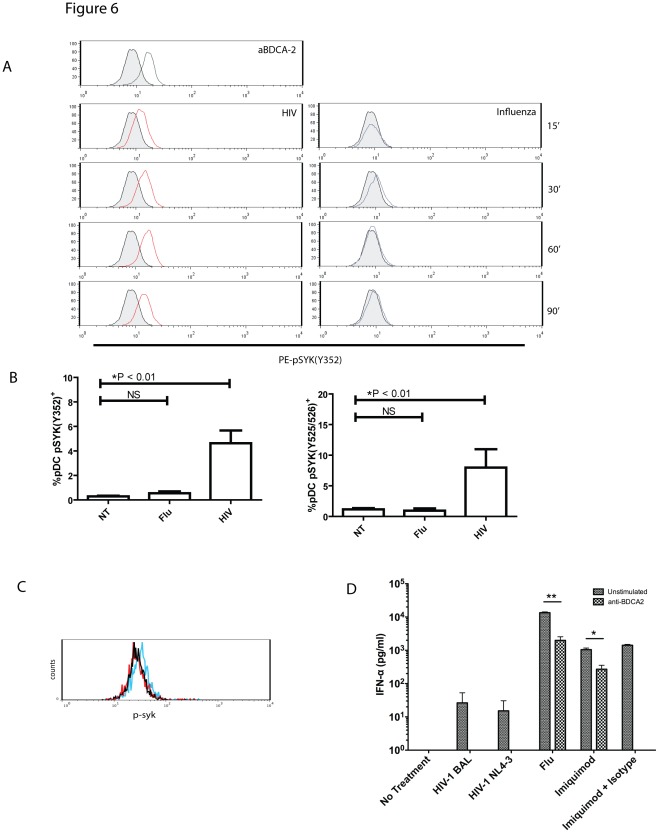
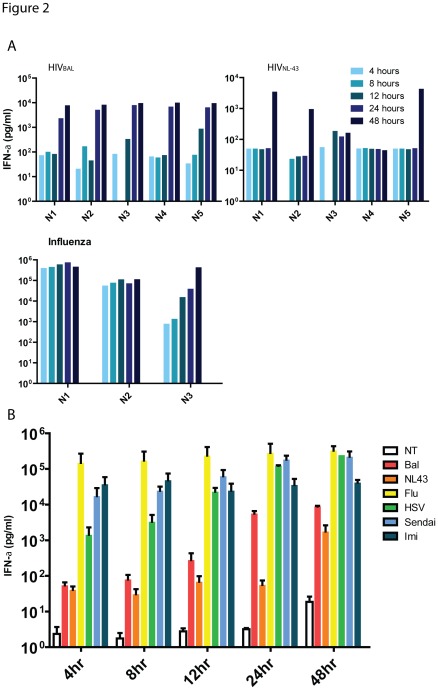
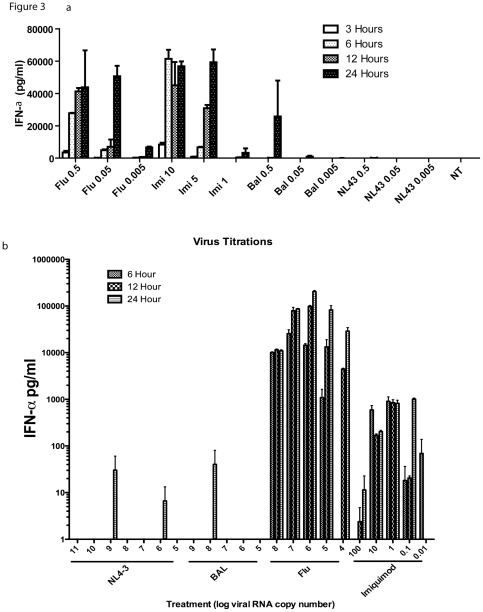
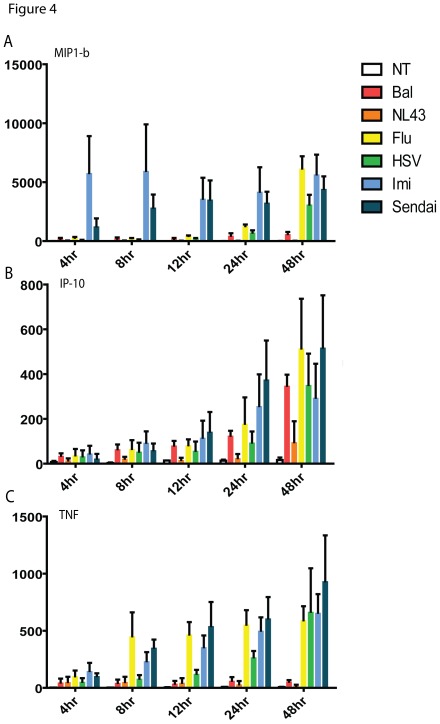
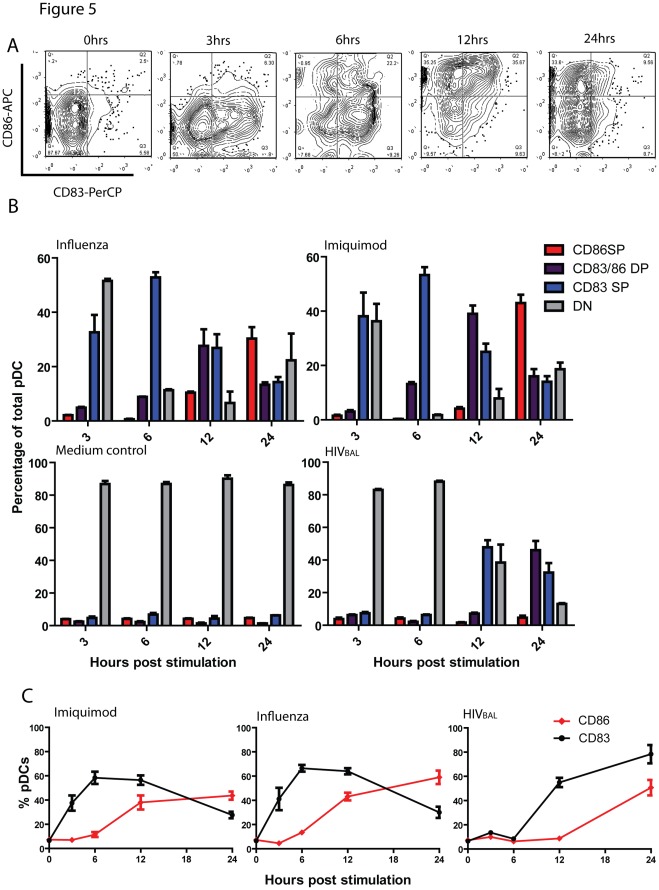
Plasmacytoid dendritic cells (pDC) are the major producers of type I interferons (IFNs) in humans and rapidly produce IFN-α in response to virus exposure. Although HIV infection is associated with pDC activation, it is unclear why the innate immune response is unable to effectively control viral replication. We systematically compared the effect of HIV, Influenza, Sendai, and HSV-2 at similar target cell multiplicity of infection (M.O.I.) on human pDC function. We found that Influenza, Sendai, HSV-2 and imiquimod are able to rapidly induce IFN-α production within 4 hours to maximal levels, whereas HIV had a delayed induction that was maximal only after 24 hours. In addition, maximal IFN-α induction by HIV was at least 10 fold less than that of the other viruses in the panel. HIV also induced less TNF-α and MIP-1β but similar levels of IP-10 compared to other viruses, which was also mirrored by delayed upregulation of pDC activation markers CD83 and CD86. BDCA-2 has been identified as an inhibitory receptor on pDC, signaling through a pathway that involves SYK phosphorylation. We find that compared to Influenza, HIV induces the activation of the SYK pathway. Thus, HIV delays pDC IFN-α production and pDC activation via SYK phosphorylation, allowing establishment of viral populations.
浆细胞样树突状细胞(pDC)是人类Ⅰ型干扰素(IFN)的主要产生细胞,能迅速对病毒暴露产生 IFN-α。尽管 HIV 感染与 pDC 激活有关,但尚不清楚为什么先天免疫反应无法有效控制病毒复制。我们系统地比较了 HIV、流感、仙台病毒和单纯疱疹病毒 2(HSV-2)在类似的靶细胞感染复数(MOI)下对人 pDC 功能的影响。我们发现流感、仙台病毒、HSV-2 和咪喹莫特能够在 4 小时内迅速诱导 IFN-α产生,达到最大水平,而 HIV 的诱导则延迟,只有在 24 小时后才达到最大水平。此外,HIV 诱导的 IFN-α最大诱导水平比该组中其他病毒至少低 10 倍。与其他病毒相比,HIV 还诱导产生较少的 TNF-α和 MIP-1β,但 IP-10 水平相似,这也反映了 pDC 激活标志物 CD83 和 CD86 的上调延迟。BDCA-2 已被鉴定为 pDC 上的抑制性受体,通过涉及 SYK 磷酸化的途径传递信号。我们发现与流感相比,HIV 诱导了 SYK 途径的激活。因此,HIV 通过 SYK 磷酸化延迟 pDC IFN-α 产生和 pDC 激活,从而允许病毒种群的建立。