Department of Medical Psychology, University Medical Center Hamburg-Eppendorf, Hamburg, Germany.
BMC Psychiatry. 2012 Jun 13;12:61. doi: 10.1186/1471-244X-12-61.
Chronic depression represents a substantial portion of depressive disorders and is associated with severe consequences. This review examined whether the combination of pharmacological treatments and psychotherapy is associated with higher effectiveness than pharmacotherapy alone via meta-analysis; and identified possible treatment effect modifiers via meta-regression-analysis.
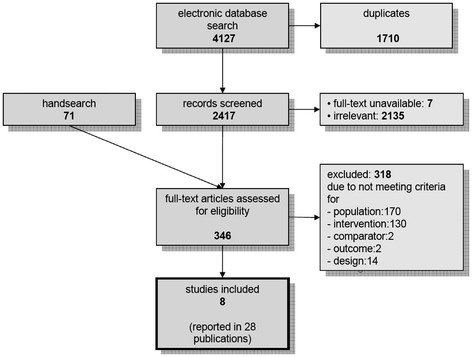
A systematic search was conducted in the following databases: Cochrane Central Register of Controlled Trials (CENTRAL), MEDLINE, EMBASE, ISI Web of Science, BIOSIS, PsycINFO, and CINAHL. Primary efficacy outcome was a response to treatment; primary acceptance outcome was dropping out of the study. Only randomized controlled trials were considered.
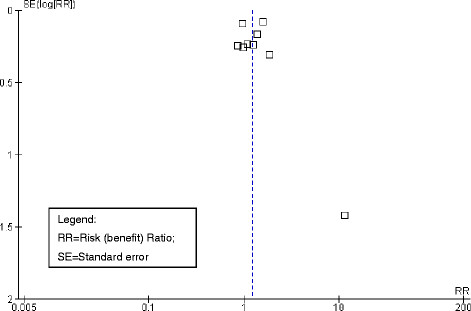
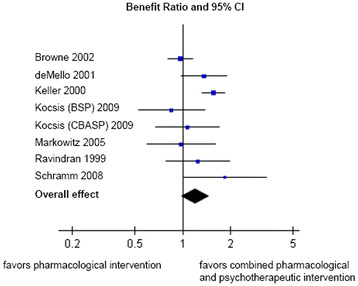
We identified 8 studies with a total of 9 relevant comparisons. Our analysis revealed small, but statistically not significant effects of combined therapies on outcomes directly related to depression (BR = 1.20) with substantial heterogeneity between studies (I² = 67%). Three treatment effect modifiers were identified: target disorders, the type of psychotherapy and the type of pharmacotherapy. Small but statistically significant effects of combined therapies on quality of life (SMD = 0.18) were revealed. No differences in acceptance rates and the long-term effects between combined treatments and pure pharmacological interventions were observed.
This systematic review could not provide clear evidence for the combination of pharmacotherapy and psychotherapy. However, due to the small amount of primary studies further research is needed for a conclusive decision.
慢性抑郁症是抑郁症的主要类型之一,与严重后果相关。本综述通过荟萃分析检查了药物治疗和心理治疗联合治疗是否比单纯药物治疗更有效;并通过元回归分析确定了可能的治疗效果调节剂。
在以下数据库中进行了系统搜索: Cochrane 对照试验中心注册库(CENTRAL)、MEDLINE、EMBASE、ISI Web of Science、BIOSIS、PsycINFO 和 CINAHL。主要疗效结局是治疗反应;主要退出研究的结局。仅考虑随机对照试验。
我们确定了 8 项研究,共有 9 项相关比较。我们的分析显示,联合治疗对与抑郁直接相关的结局有较小但统计学上无显著影响(BR = 1.20),但研究之间存在很大的异质性(I² = 67%)。确定了 3 个治疗效果调节剂:目标疾病、心理治疗类型和药物治疗类型。联合治疗对生活质量有较小但统计学上显著的影响(SMD = 0.18)。联合治疗和纯药物干预在接受率和长期效果方面没有差异。
本系统综述不能为药物治疗和心理治疗联合治疗提供明确的证据。然而,由于初级研究的数量较少,需要进一步的研究才能做出明确的决定。