Daffner Kirk R, Tarbi Elise C, Haring Anna E, Zhuravleva Tatyana Y, Sun Xue, Rentz Dorene M, Holcomb Phillip J
Center for Brain/Mind Medicine, Division of Cognitive and Behavioral Neurology, Department of Neurology, Brigham and Women's Hospital, Harvard Medical School, Boston MA, USA.
Front Hum Neurosci. 2012 Jun 12;6:167. doi: 10.3389/fnhum.2012.00167. eCollection 2012.
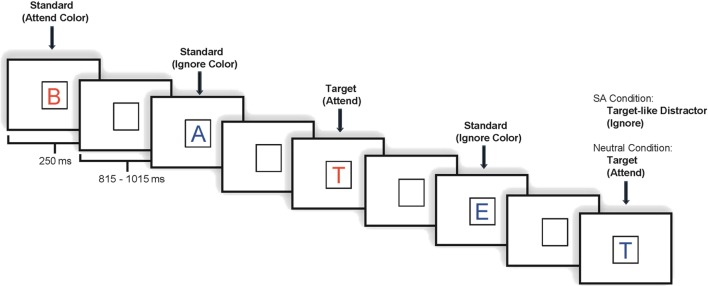
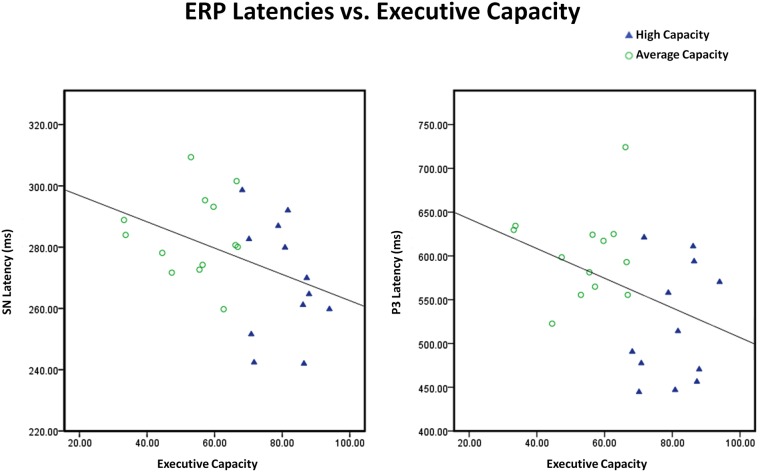
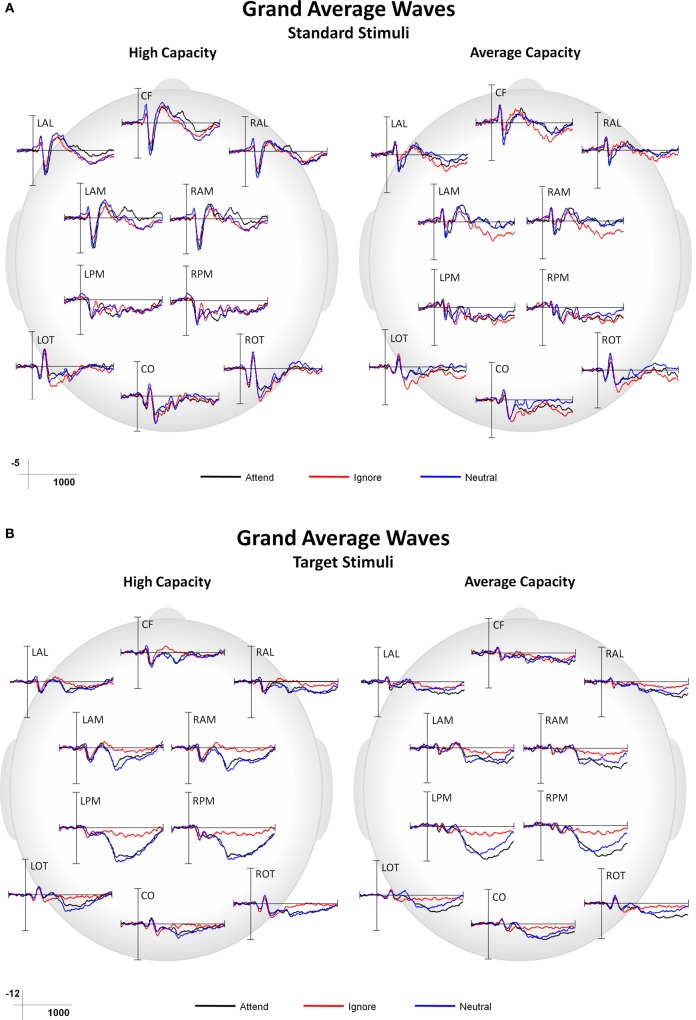
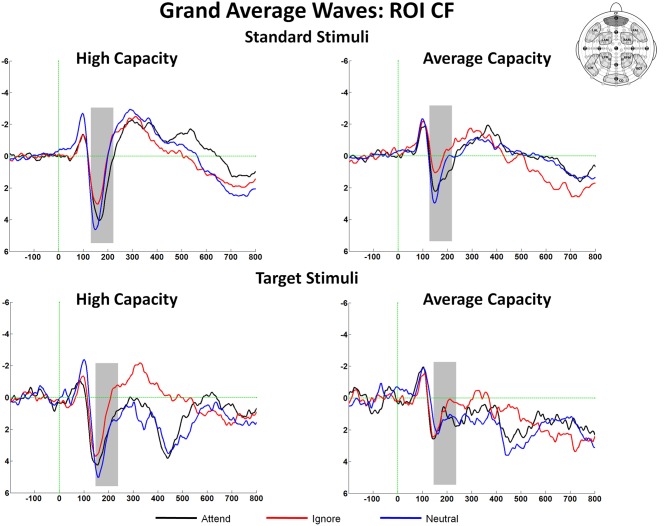
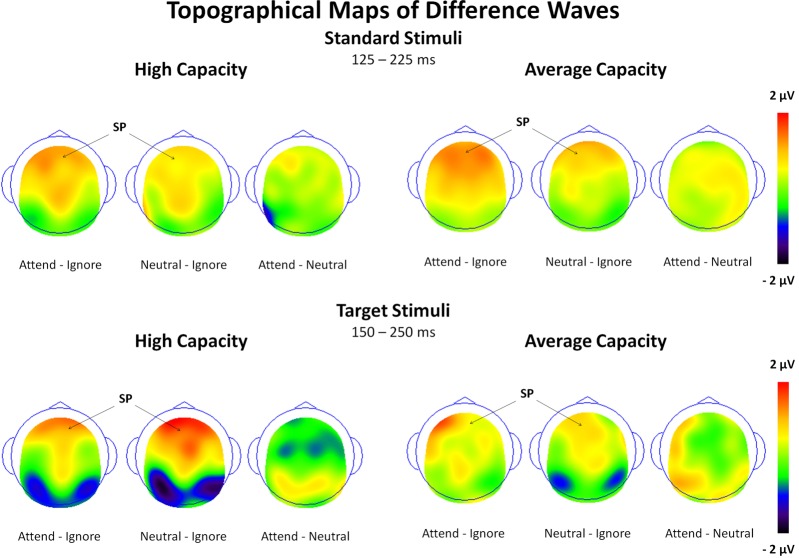
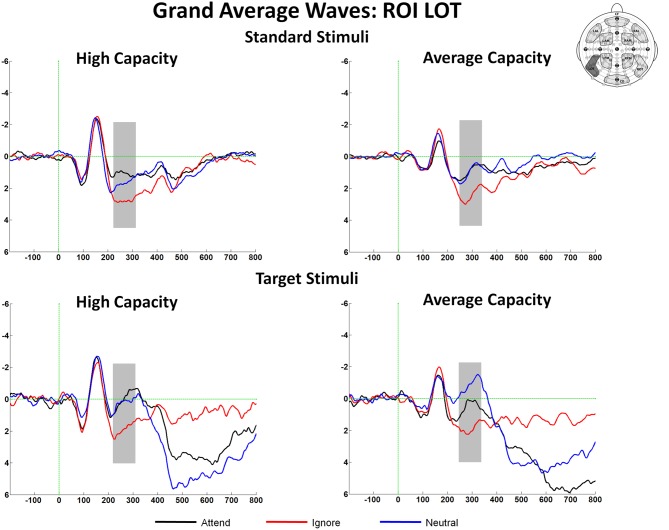
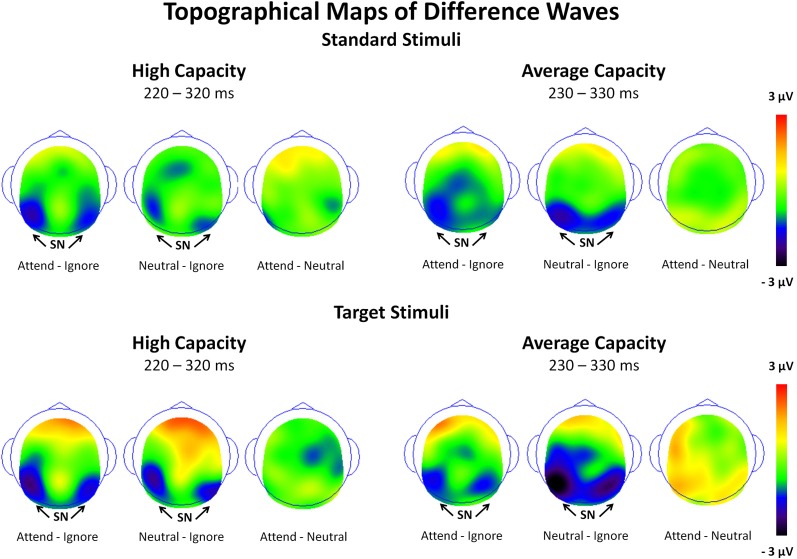
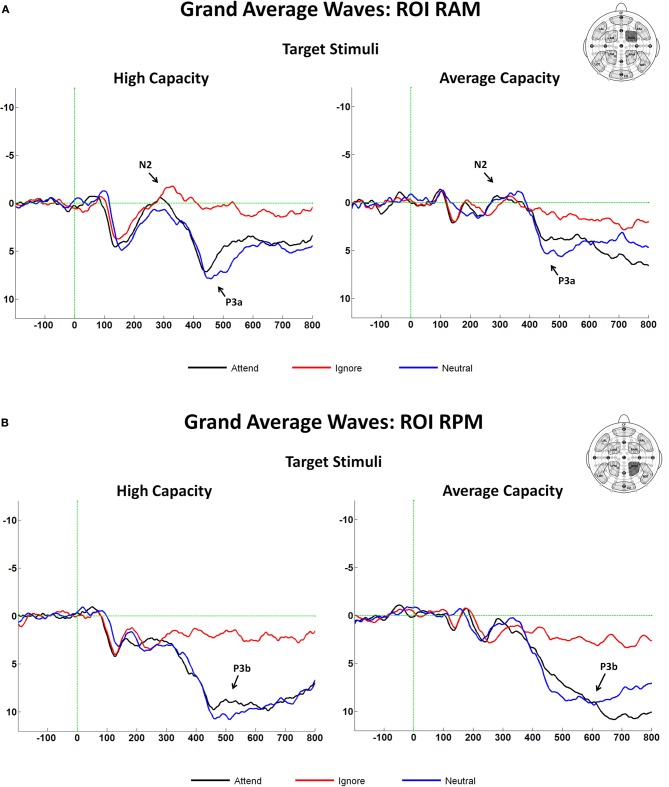
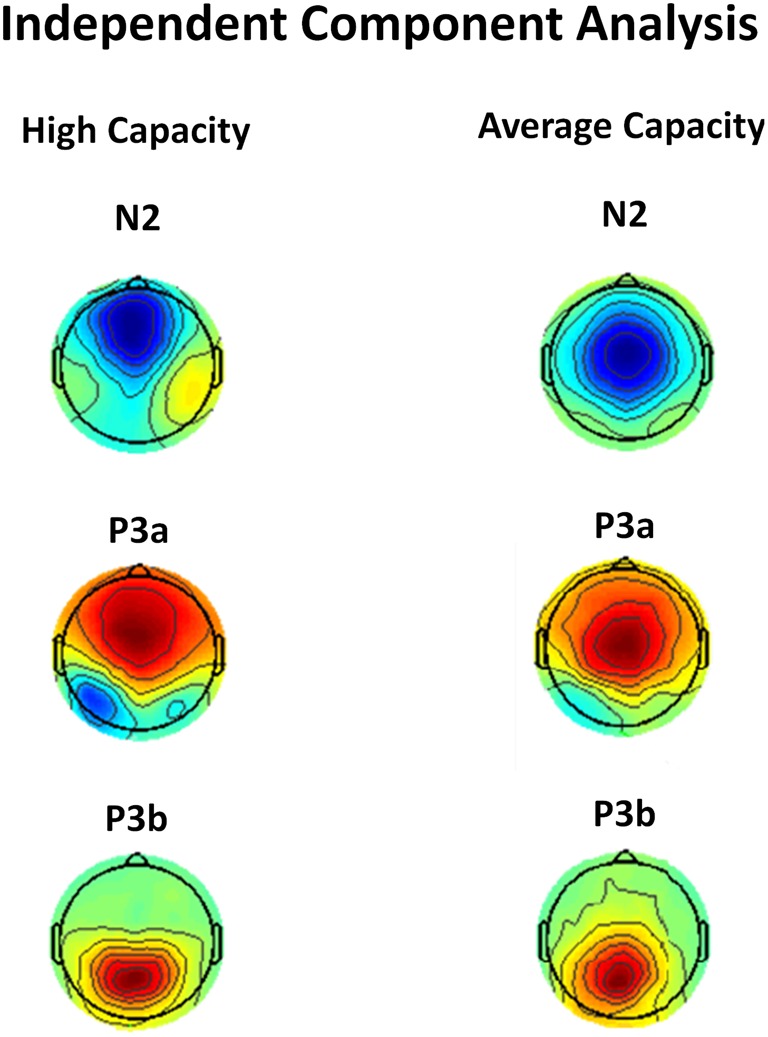
Recent investigations that suggest selective attention (SA) is dependent on top-down control mechanisms lead to the expectation that individuals with high executive capacity (EC) would exhibit more robust neural indices of SA. This prediction was tested by using event-related potentials (ERPs) to examine differences in markers of information processing across 25 subjects divided into two groups based on high vs. average EC, as defined by neuropsychological test scores. Subjects performed an experimental task requiring SA to a specified color. In contrast to expectation, individuals with high and average EC did not differ in the size of ERP indices of SA: the anterior Selection Positivity (SP) and posterior Selection Negativity (SN). However, there were substantial differences between groups in markers of subsequent processing, including the anterior N2 (a measure of attentional control) and the P3a (an index of the orienting of attention). EC predicted speed of processing at both early and late attentional stages. Individuals with lower EC exhibited prolonged SN, P3a, and P3b latencies. However, the delays in carrying out SA operations did not account for subsequent delays in decision making, or explain excessive orienting and reduced attentional control mechanisms in response to stimuli that should have been ignored. SN latency, P3 latency, and the size of the anterior N2 made independent contributions to the variance of EC. In summary, our findings suggest that current views regarding the relationship between top-down control mechanisms and SA may need refinement.
最近的研究表明,选择性注意(SA)依赖于自上而下的控制机制,这使得人们预期具有高执行能力(EC)的个体将表现出更强健的SA神经指标。通过使用事件相关电位(ERP)来检验这一预测,以检查基于神经心理测试分数分为高EC组和平均EC组的25名受试者在信息处理标记上的差异。受试者执行一项需要对特定颜色进行SA的实验任务。与预期相反,高EC个体和平均EC个体在SA的ERP指标大小上没有差异:前部选择正波(SP)和后部选择负波(SN)。然而,两组在后续处理标记上存在显著差异,包括前部N2(注意力控制的一种测量)和P3a(注意力定向的一个指标)。EC预测了早期和晚期注意力阶段的处理速度。低EC个体表现出SN、P3a和P3b潜伏期延长。然而,执行SA操作的延迟并不能解释随后决策的延迟,也不能解释对本应被忽略的刺激的过度定向和注意力控制机制的降低。SN潜伏期、P3潜伏期和前部N2的大小对EC的方差有独立贡献。总之,我们的研究结果表明,目前关于自上而下控制机制与SA之间关系的观点可能需要完善。