Wiskerke Joost, van Mourik Yvar, Schetters Dustin, Schoffelmeer Anton N M, Pattij Tommy
Department of Anatomy and Neurosciences, Neuroscience Campus Amsterdam, VU University Medical Center Amsterdam, The Netherlands.
Front Pharmacol. 2012 Jun 11;3:108. doi: 10.3389/fphar.2012.00108. eCollection 2012.
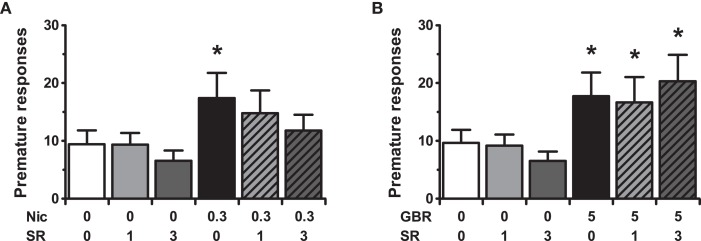
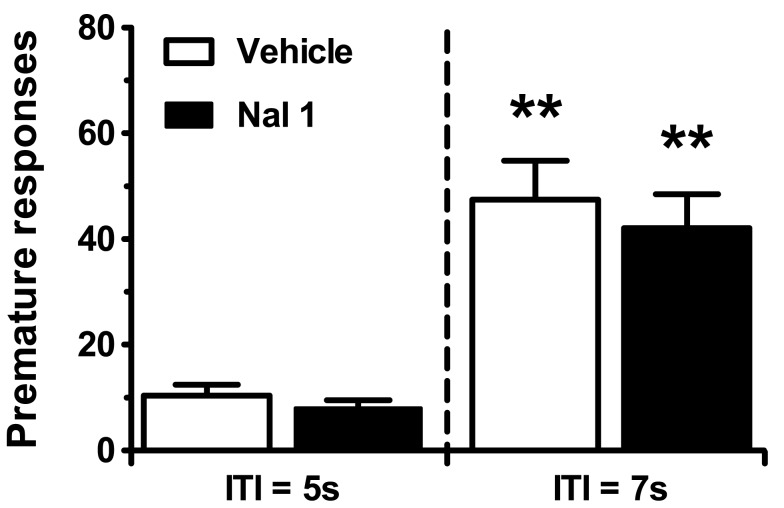
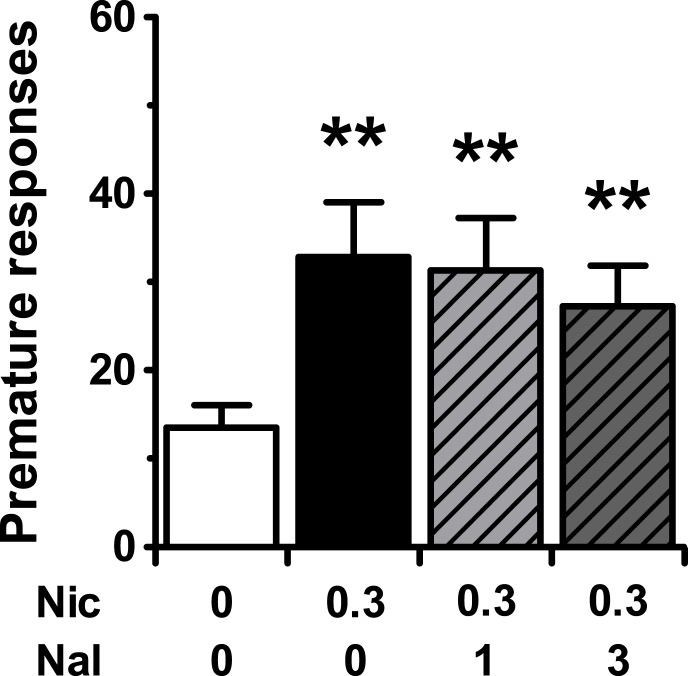
Previous studies using a rat 5-choice serial reaction time task have established a critical role for dopamine D2 receptors in regulating increments in motor impulsivity induced by acute administration of the psychostimulant drugs amphetamine and nicotine. Here we investigated whether cannabinoid CB1 and/or μ-opioid receptors are involved in nicotine-induced impulsivity, given recent findings indicating that both receptor systems mediate amphetamine-induced motor impulsivity. Results showed that the cannabinoid CB1 receptor antagonist SR141716A, but not the opioid receptor antagonist naloxone, reduced nicotine-induced premature responding, indicating that nicotine-induced motor impulsivity is cannabinoid, but not opioid receptor-dependent. In contrast, SR141716A did not affect impulsivity following a challenge with the dopamine transporter inhibitor GBR 12909, a form of drug-induced impulsivity that was previously found to be dependent on μ-opioid receptor activation. Together, these data are consistent with the idea that the endogenous cannabinoid, dopamine, and opioid systems each play important, but distinct roles in regulating (drug-induced) motor impulsivity. The rather complex interplay between these neurotransmitter systems modulating impulsivity will be discussed in terms of the differential involvement of mesocortical and mesolimbic neurocircuitry.
先前使用大鼠5选择连续反应时任务的研究已经证实,多巴胺D2受体在调节由精神兴奋药物苯丙胺和尼古丁急性给药所诱导的运动冲动增加中起关键作用。鉴于最近的研究结果表明,大麻素CB1和μ-阿片受体系统均介导苯丙胺诱导的运动冲动,我们在此研究大麻素CB1和/或μ-阿片受体是否参与尼古丁诱导的冲动。结果显示,大麻素CB1受体拮抗剂SR141716A而非阿片受体拮抗剂纳洛酮可减少尼古丁诱导的过早反应,表明尼古丁诱导的运动冲动依赖于大麻素受体而非阿片受体。相反,SR141716A对多巴胺转运体抑制剂GBR 12909激发后的冲动没有影响,GBR 12909是一种先前发现依赖于μ-阿片受体激活的药物诱导冲动形式。总之,这些数据与内源性大麻素、多巴胺和阿片系统在调节(药物诱导的)运动冲动中各自发挥重要但不同作用的观点一致。这些调节冲动的神经递质系统之间相当复杂的相互作用将从中皮层和中脑边缘神经回路的不同参与角度进行讨论。