Cancer Cell Biology Group, Institut Universitari d'Investigació en Ciències de la Salut (IUNICS), Universitat de les Illes Balears, Illes Balears, Spain.
PLoS One. 2012;7(6):e38770. doi: 10.1371/journal.pone.0038770. Epub 2012 Jun 6.
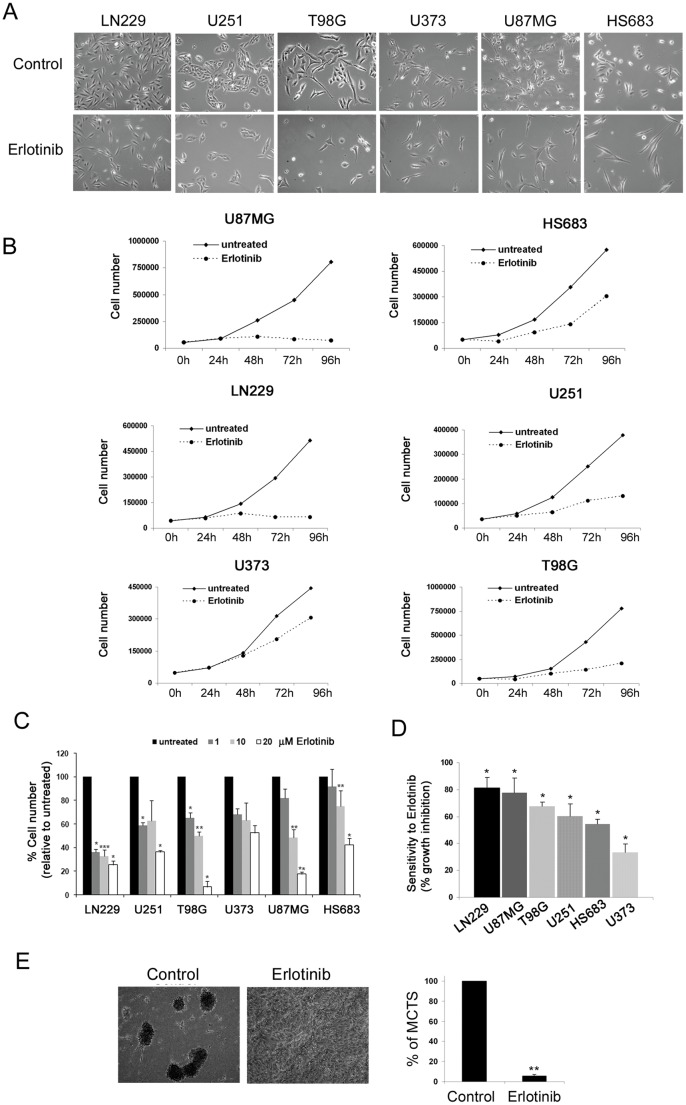
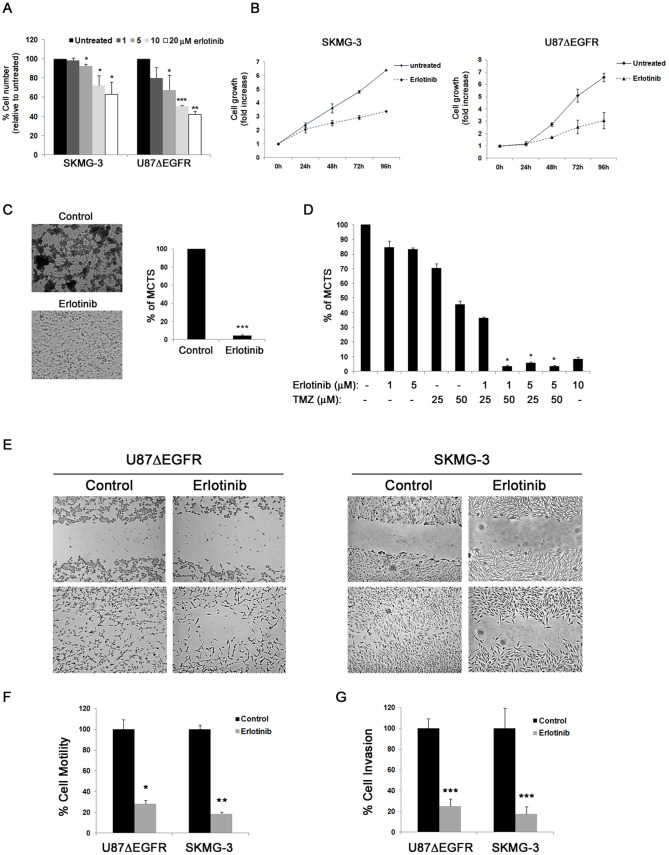
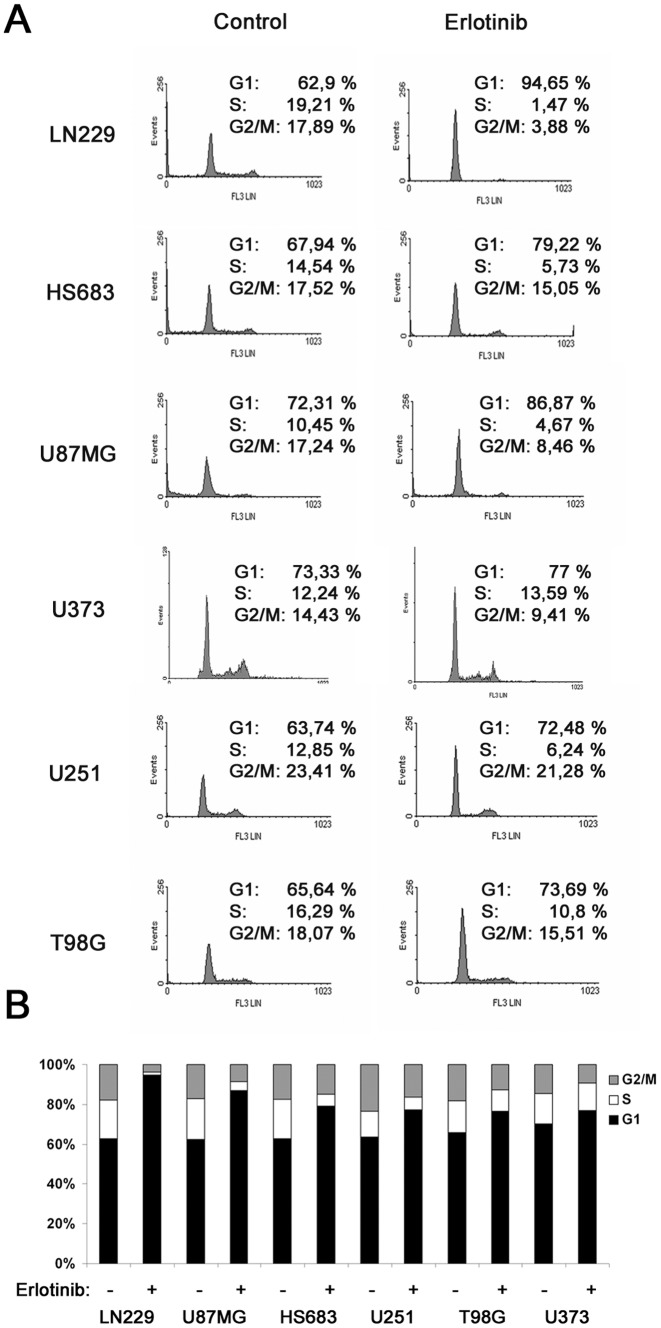
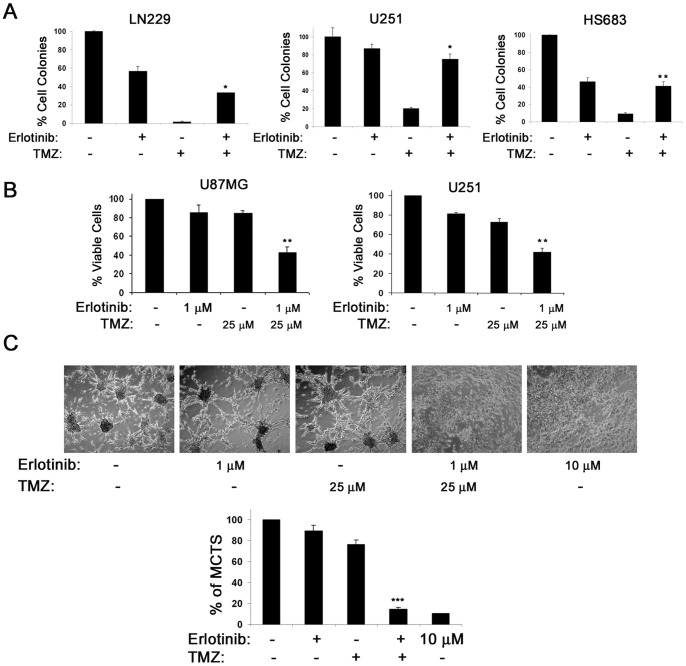
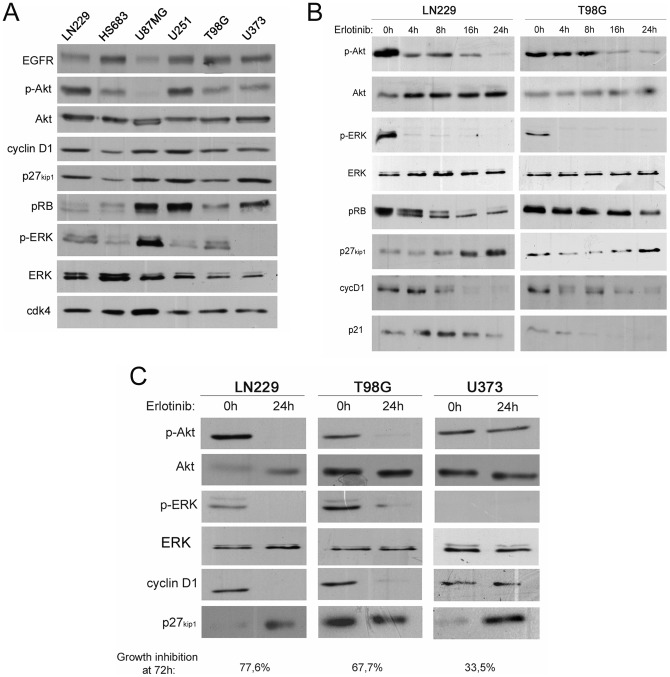
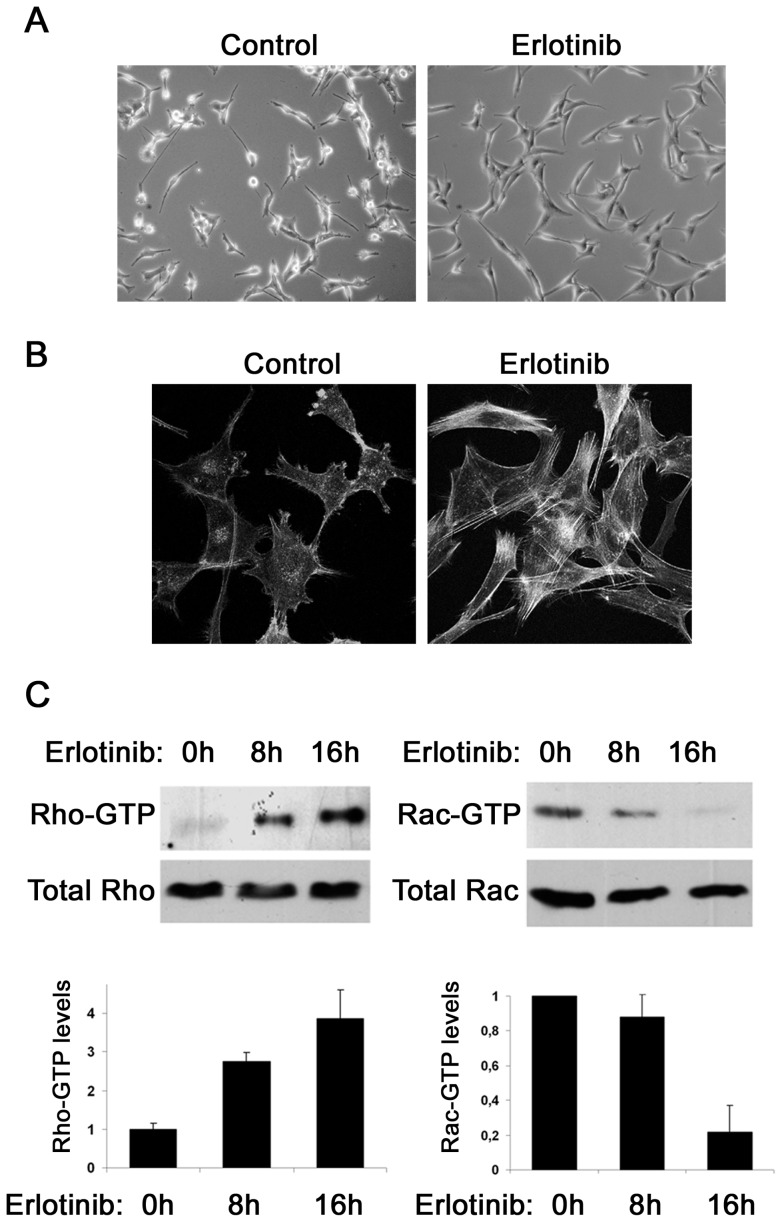
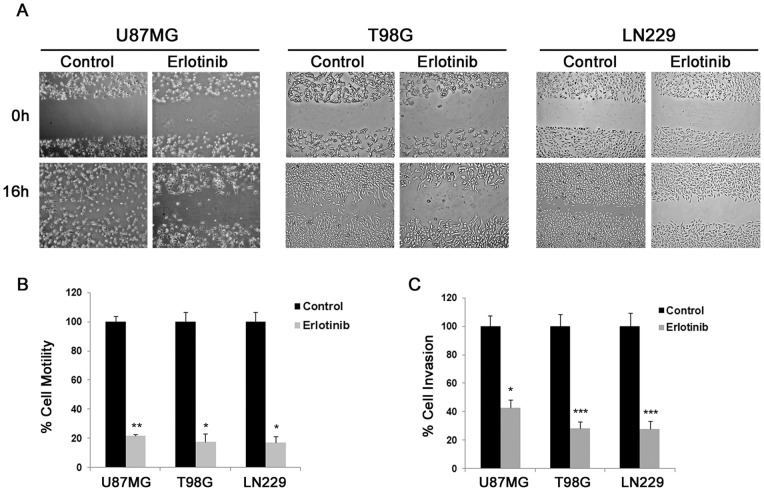
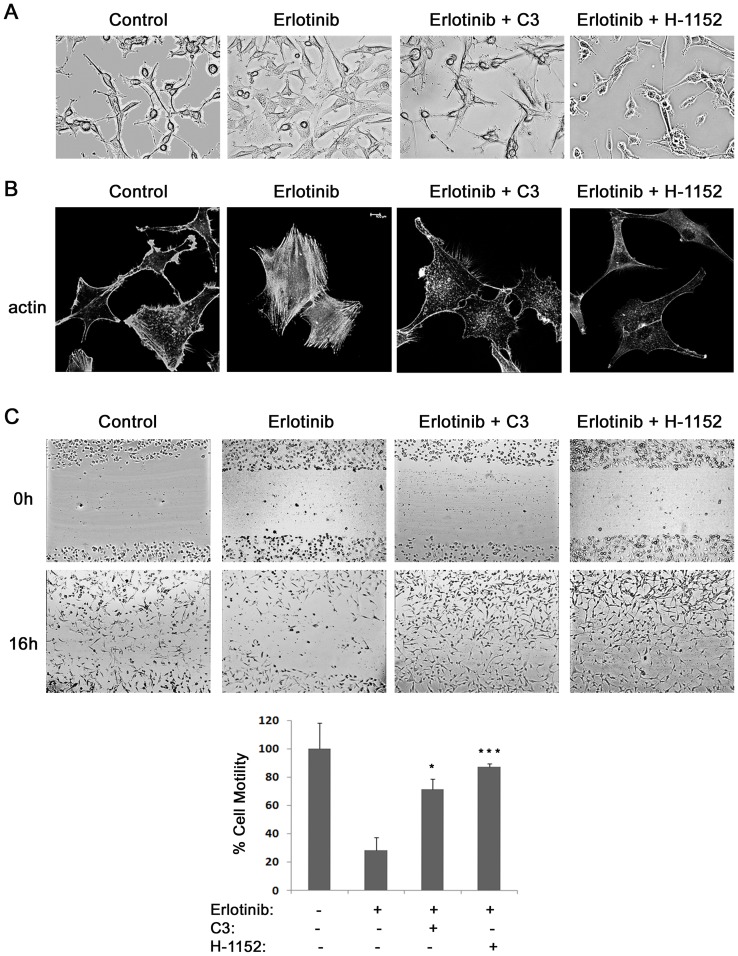
Enforced EGFR activation upon gene amplification and/or mutation is a common hallmark of malignant glioma. Small molecule EGFR tyrosine kinase inhibitors, such as erlotinib (Tarceva), have shown some activity in a subset of glioma patients in recent trials, although the reported data on the cellular basis of glioma cell responsiveness to these compounds have been contradictory. Here we have used a panel of human glioma cell lines, including cells with amplified or mutant EGFR, to further characterize the cellular effects of EGFR inhibition with erlotinib. Dose-response and cellular growth assays indicate that erlotinib reduces cell proliferation in all tested cell lines without inducing cytotoxic effects. Flow cytometric analyses confirm that EGFR inhibition does not induce apoptosis in glioma cells, leading to cell cycle arrest in G(1). Interestingly, erlotinib also prevents spontaneous multicellular tumour spheroid growth in U87MG cells and cooperates with sub-optimal doses of temozolomide (TMZ) to reduce multicellular tumour spheroid growth. This cooperation appears to be schedule-dependent, since pre-treatment with erlotinib protects against TMZ-induced cytotoxicity whereas concomitant treatment results in a cooperative effect. Cell cycle arrest in erlotinib-treated cells is associated with an inhibition of ERK and Akt signaling, resulting in cyclin D1 downregulation, an increase in p27(kip1) levels and pRB hypophosphorylation. Interestingly, EGFR inhibition also perturbs Rho GTPase signaling and cellular morphology, leading to Rho/ROCK-dependent formation of actin stress fibres and the inhibition of glioma cell motility and invasion.
在基因扩增和/或突变的情况下,EGFR 的强制激活是恶性神经胶质瘤的共同特征。小分子 EGFR 酪氨酸激酶抑制剂,如厄洛替尼(特罗凯),在最近的试验中对一些神经胶质瘤患者显示出一定的活性,尽管关于这些化合物对神经胶质瘤细胞反应的细胞基础的报告数据存在矛盾。在这里,我们使用了一组人神经胶质瘤细胞系,包括具有扩增或突变 EGFR 的细胞,以进一步研究厄洛替尼对 EGFR 抑制的细胞效应。剂量反应和细胞生长测定表明,厄洛替尼在所有测试的细胞系中降低细胞增殖而不诱导细胞毒性作用。流式细胞术分析证实,EGFR 抑制不会诱导神经胶质瘤细胞凋亡,导致细胞周期停滞在 G1 期。有趣的是,厄洛替尼还可防止 U87MG 细胞自发形成多细胞肿瘤球体生长,并与亚最佳剂量的替莫唑胺(TMZ)协同减少多细胞肿瘤球体生长。这种协同作用似乎依赖于时间安排,因为厄洛替尼预处理可防止 TMZ 诱导的细胞毒性,而同时处理则产生协同作用。在厄洛替尼处理的细胞中细胞周期停滞与 ERK 和 Akt 信号的抑制有关,导致细胞周期蛋白 D1 的下调、p27(kip1)水平的增加和 pRB 的低磷酸化。有趣的是,EGFR 抑制还会破坏 Rho GTPase 信号和细胞形态,导致 Rho/ROCK 依赖性肌动蛋白应力纤维形成,并抑制神经胶质瘤细胞的迁移和侵袭。