Center for Oncological Research, University of Antwerp, Antwerp, Belgium.
Department of Pathology, Antwerp University Hospital, Antwerp, Belgium.
J Cell Physiol. 2020 Nov;235(11):8085-8097. doi: 10.1002/jcp.29463. Epub 2020 Jan 20.
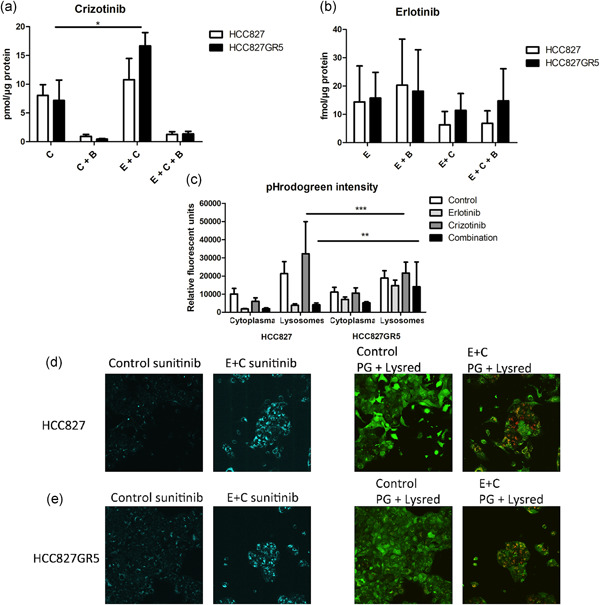
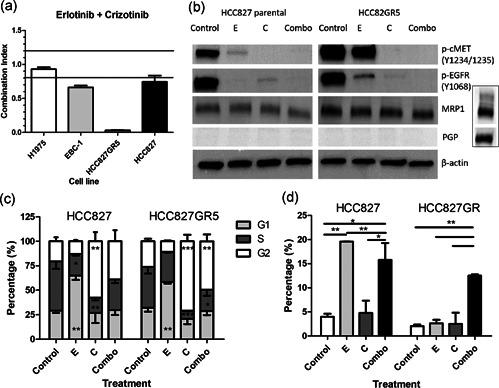
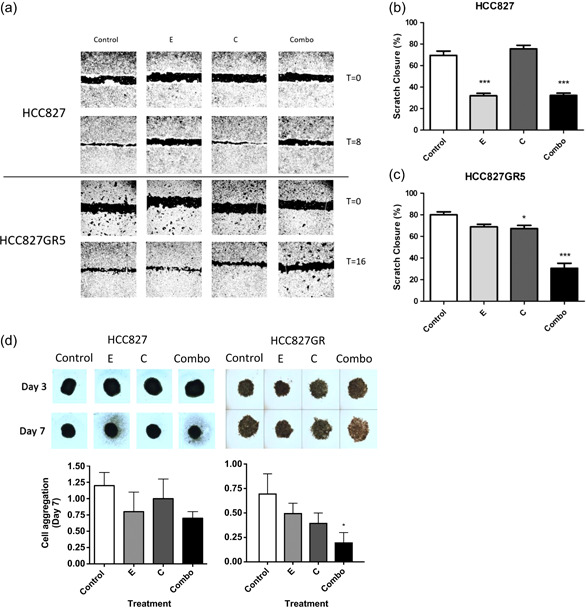
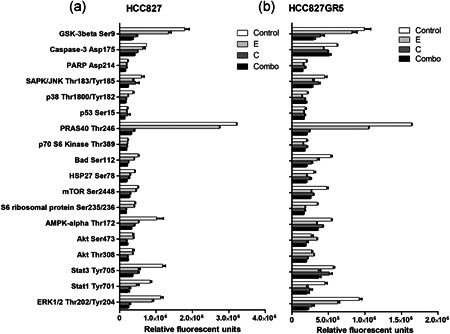
In non-small cell lung cancer, sensitizing mutations in epidermal growth factor receptor (EGFR) or cMET amplification serve as good biomarkers for targeted therapies against EGFR or cMET, respectively. Here we aimed to determine how this different genetic background would affect the interaction between the EGFR-inhibitor erlotinib and the cMET-inhibitor crizotinib. To unravel the mechanism of synergy we investigated the effect of the drugs on various parameters, including cell cycle arrest, migration, protein phosphorylation, kinase activity, the expression of drug efflux pumps, intracellular drug concentrations, and live-cell microscopy. We observed additive effects in EBC-1, H1975, and HCC827, and a strong synergism in the HCC827GR5 cell line. This cell line is a clone of the HCC827 cells that harbor an EGFR exon 19 deletion and has been made resistant to the EGFR-inhibitor gefitinib, resulting in cMET amplification. Remarkably, the intracellular concentration of crizotinib was significantly higher in HCC827GR5 compared to the parental HCC827 cell line. Furthermore, live-cell microscopy with a pH-sensitive probe showed a differential reaction of the pH in the cytoplasm and the lysosomes after drug treatment in the HCC827GR5 in comparison with the HCC827 cells. This change in pH could influence the process of lysosomal sequestration of drugs. These results led us to the conclusion that lysosomal sequestration is involved in the strong synergistic reaction of the HCC827GR5 cell line to crizotinib-erlotinib combination. This finding warrants future clinical studies to evaluate whether genetic background and lysosomal sequestration could guide tailored therapeutic interventions.
在非小细胞肺癌中,表皮生长因子受体(EGFR)的敏感突变或 cMET 扩增分别作为针对 EGFR 或 cMET 的靶向治疗的良好生物标志物。在这里,我们旨在确定这种不同的遗传背景如何影响 EGFR 抑制剂厄洛替尼和 cMET 抑制剂克唑替尼之间的相互作用。为了阐明协同作用的机制,我们研究了药物对各种参数的影响,包括细胞周期停滞、迁移、蛋白质磷酸化、激酶活性、药物外排泵的表达、细胞内药物浓度和活细胞显微镜。我们观察到 EBC-1、H1975 和 HCC827 中存在相加作用,而在 HCC827GR5 细胞系中存在强烈的协同作用。该细胞系是 HCC827 细胞的克隆,其具有 EGFR 外显子 19 缺失,并对 EGFR 抑制剂吉非替尼产生耐药性,导致 cMET 扩增。值得注意的是,与亲本 HCC827 细胞系相比,HCC827GR5 中的克唑替尼细胞内浓度明显更高。此外,使用 pH 敏感探针的活细胞显微镜显示,与 HCC827 细胞相比,药物处理后 HCC827GR5 细胞质和溶酶体中的 pH 存在差异反应。这种 pH 变化可能会影响药物的溶酶体隔离过程。这些结果使我们得出结论,溶酶体隔离参与了 HCC827GR5 细胞系对克唑替尼-厄洛替尼联合治疗的强烈协同反应。这一发现需要未来的临床研究来评估遗传背景和溶酶体隔离是否可以指导定制的治疗干预。