Department of Mechanical Engineering, Centre for Bio Engineering at the University of Canterbury, Christchurch, New Zealand.
Biomed Eng Online. 2012 Jun 15;11:28. doi: 10.1186/1475-925X-11-28.
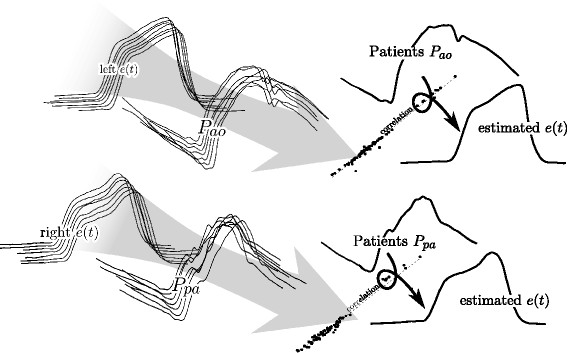
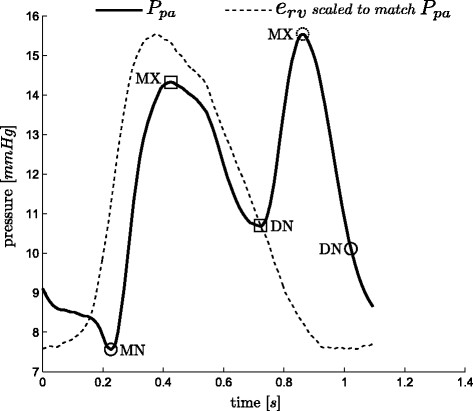
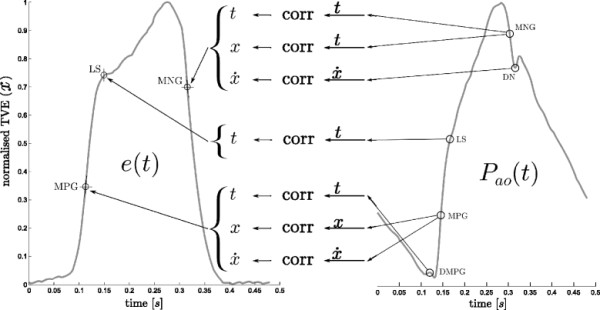
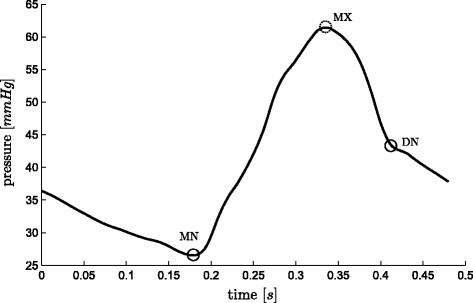
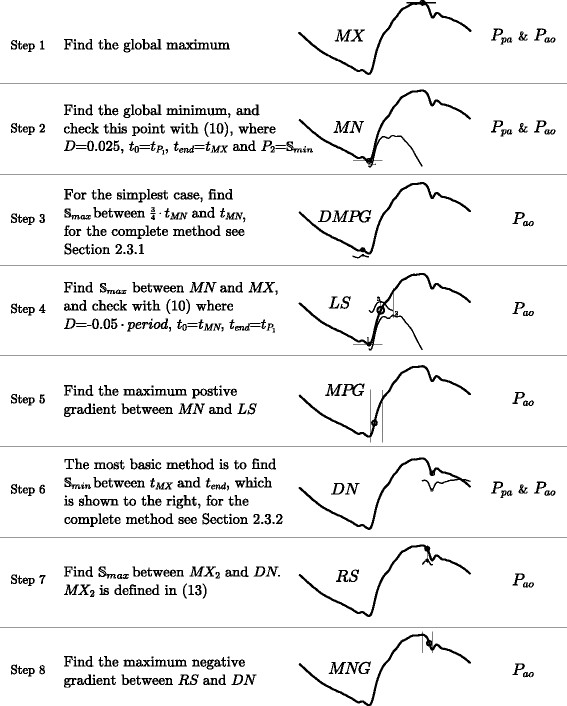
Cardiac elastances are highly invasive to measure directly, but are clinically useful due to the amount of information embedded in them. Information about the cardiac elastance, which can be used to estimate it, can be found in the downstream pressure waveforms of the aortic pressure (P(ao)) and the pulmonary artery (P(pa)). However these pressure waveforms are typically noisy and biased, and require processing in order to locate the specific information required for cardiac elastance estimations. This paper presents the method to algorithmically process the pressure waveforms.
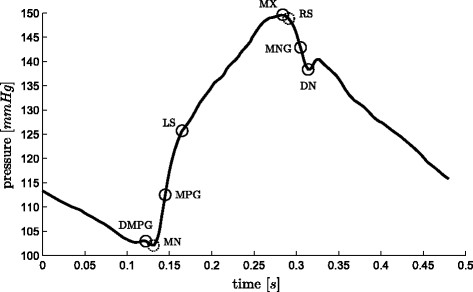
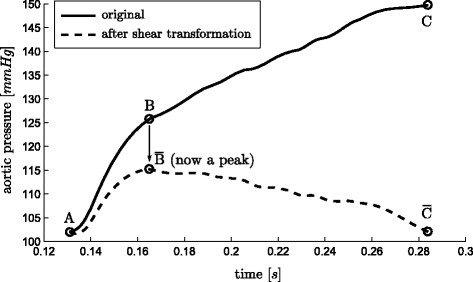
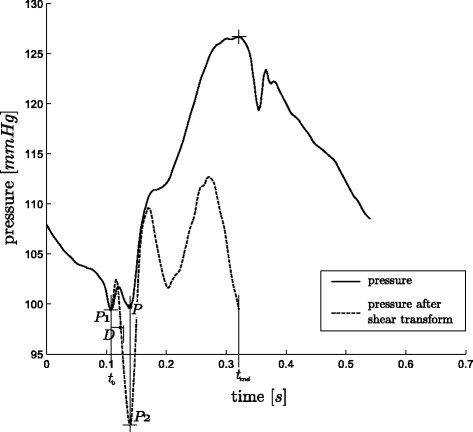
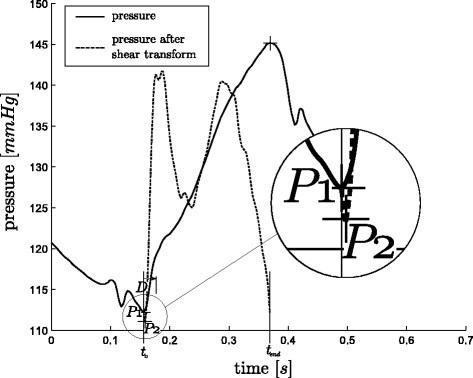
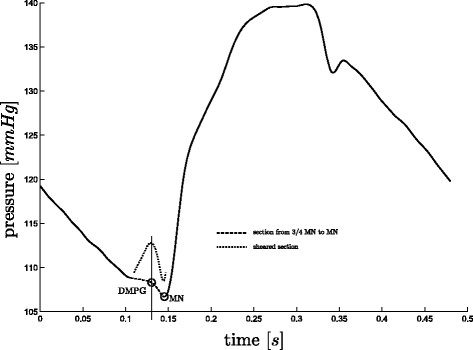
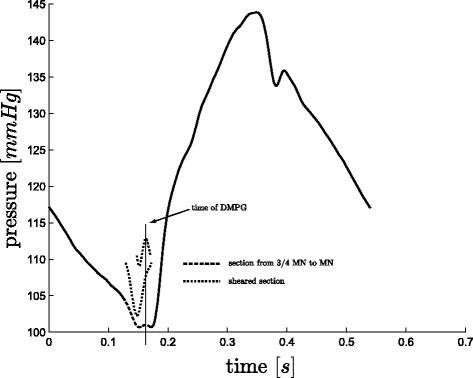
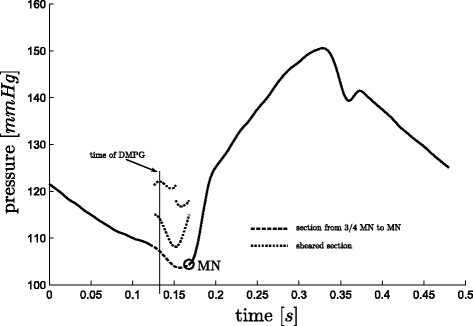
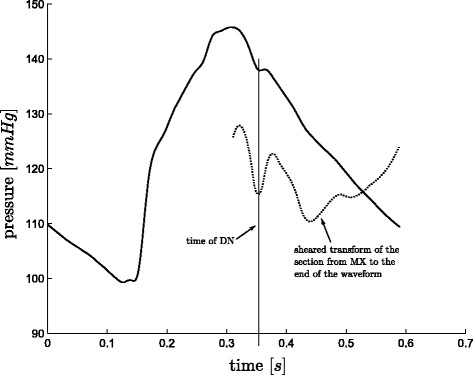
A shear transform is developed in order to help locate information in the pressure waveforms. This transform turns difficult to locate corners into easy to locate maximum or minimum points as well as providing error correction.
The method located all points on 87 out of 88 waveforms for Ppa, to within the sampling frequency. For Pao, out of 616 total points, 605 were found within 1%, 5 within 5%, 4 within 10% and 2 within 20%.
The presented method provides a robust, accurate and dysfunction-independent way to locate points on the aortic and pulmonary artery pressure waveforms, allowing the non-invasive estimation of the left and right cardiac elastance.
心脏弹性是一种高度侵入性的直接测量方法,但由于其嵌入的信息量很大,因此在临床上很有用。可以在主动脉压(Pao)和肺动脉(Ppa)的下游压力波形中找到有关心脏弹性的信息,这些信息可用于估计心脏弹性。然而,这些压力波形通常存在噪声和偏差,需要进行处理才能找到用于心脏弹性估计的特定信息。本文介绍了用于算法处理压力波形的方法。
为了帮助在压力波形中定位信息,开发了一种剪切变换。这种变换将难以定位的角点转换为易于定位的最大值或最小值,并提供错误校正。
该方法能够在 Ppa 的 88 个压力波形中的 87 个中定位到所有点,误差在采样频率以内。在总共 616 个 Pao 点中,有 605 个点在 1%以内,5 个点在 5%以内,4 个点在 10%以内,2 个点在 20%以内。
本文提出的方法提供了一种稳健、准确且不受功能障碍影响的方法,可以在主动脉和肺动脉压力波形上定位点,从而可以无创估计左、右心脏弹性。