Department of Paediatrics, Faculty of Medical Sciences, College of Medicine, University of Nigeria, Enugu, Nigeria.
Nutr J. 2012 Jun 14;11:43. doi: 10.1186/1475-2891-11-43.
To determine the prevalence, risk factors, co-morbidities and case fatality rates of Protein Energy Malnutrition (PEM) admissions at the paediatric ward of the University of Nigeria Teaching Hospital Enugu, South-east Nigeria over a 10 year period.
A retrospective study using case Notes, admission and mortality registers retrieved from the Hospital's Medical Records Department.
All children aged 0 to 59 months admitted into the hospital on account of PEM between 1996 and 2005.
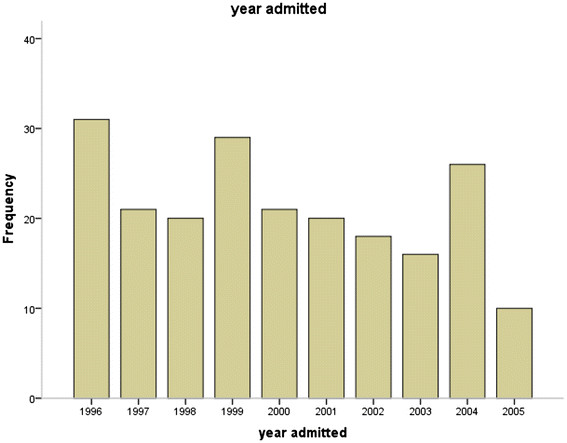
A total of 212 children with PEM were admitted during the period under review comprising of 127 (59.9%) males and 85 (40.1%) females. The most common age groups with PEM were 6 to 12 months (55.7%) and 13 to 24 months (36.8%). Marasmus (34.9%) was the most common form of PEM noted in this review. Diarrhea and malaria were the most common associated co-morbidities. Majority (64.9%) of the patients were from the lower socio-economic class. The overall case fatality rate was 40.1% which was slightly higher among males (50.9%). Mortality in those with marasmic-kwashiokor and in the unclassified group was 53.3% and 54.5% respectively.
Most of the admissions and case fatality were noted in those aged 6 to 24 months which coincides with the weaning period. Marasmic-kwashiokor is associated with higher case fatality rate than other forms of PEM. We suggest strengthening of the infant feeding practices by promoting exclusive breastfeeding for the first six months of life, followed by appropriate weaning with continued breast feeding. Under-five children should be screened for PEM at the community level for early diagnosis and prompt management as a way of reducing the high mortality associated with admitted severe cases.
在过去的 10 年中,确定尼日利亚东南部恩古大学教学医院儿科病房蛋白质能量营养不良(PEM)入院的患病率、危险因素、合并症和病死率。
这是一项使用从医院病历部门检索到的病历、入院和死亡率登记册的回顾性研究。
1996 年至 2005 年间因 PEM 入院的所有 0 至 59 个月大的儿童。
在审查期间,共有 212 名患有 PEM 的儿童入院,其中 127 名(59.9%)为男性,85 名(40.1%)为女性。最常见的 PEM 年龄组为 6 至 12 个月(55.7%)和 13 至 24 个月(36.8%)。在本次回顾中,最常见的 PEM 形式是消瘦型(34.9%)。腹泻和疟疾是最常见的相关合并症。大多数(64.9%)患者来自较低的社会经济阶层。总体病死率为 40.1%,男性略高(50.9%)。消瘦型和未分类组的死亡率分别为 53.3%和 54.5%。
大多数入院和病死率发生在 6 至 24 个月龄的儿童中,这与断奶期相吻合。消瘦型比其他形式的 PEM 更易导致病死率增加。我们建议通过促进婴儿在生命最初 6 个月内进行纯母乳喂养,随后进行适当的断奶并继续母乳喂养,加强婴儿喂养实践。应在社区层面筛查 5 岁以下儿童是否患有 PEM,以便早期诊断和及时治疗,从而降低严重病例入院相关的高死亡率。