Department of Infectious Diseases.
Mediterr J Hematol Infect Dis. 2012;4(1):e2012029. doi: 10.4084/MJHID.2012.029. Epub 2012 May 8.
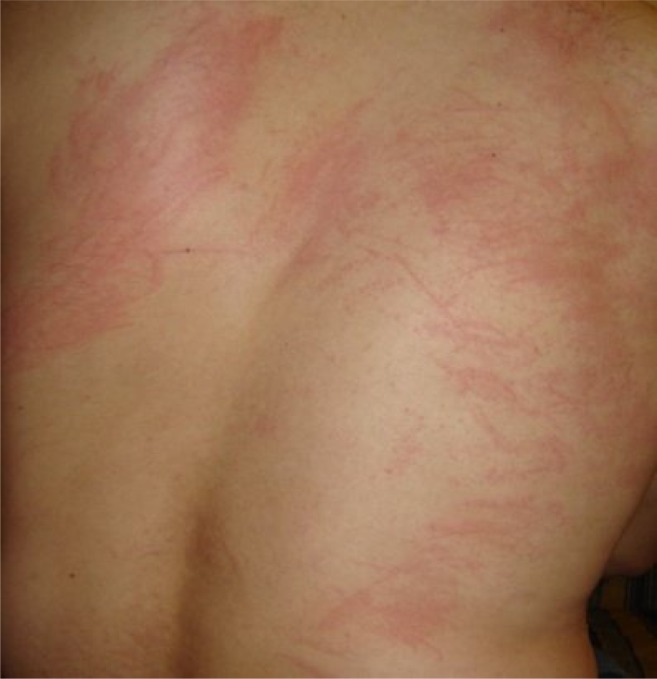
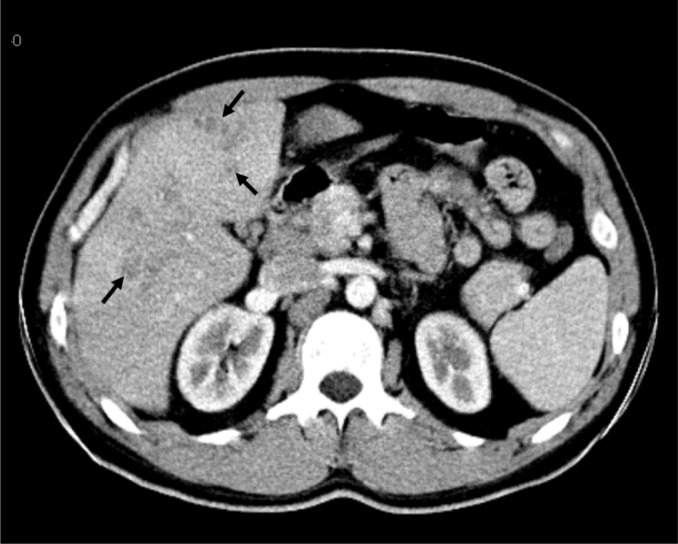
Fascioliasis is a worlwide parasitic zoonosis, endemic in south-east mediterranean area, but uncommon in other areas. Clinical signs are usually non-specific. A 32 year old male patient was admitted to our hospital with complaints of abdominal pain, diarrhea, fatigue, nausea, lost of appetite, itching, cough, night sweats and weight loss. Complete blood count revealed hypereosinophilia. The abdominal ultrasound scan was normal. But computed tomography scan revealed irregular nodular lesions in periportal area of the liver. Based on these clinical and radiological signs and continuous hypereosinophilia, the patient was serologically investigated for Fasciola hepatica infection. F. hepatica indirect hemagglutination test in serum was positive at a titer of 1/1280. Single dose Triclabendasole 10mg/kg was administered and repeated two weeks later. Clinical and laboratory signs were completely resolved after treatment. Serological tests for fascioliasis should be included in all patients with hypereosinophilia and abnormal liver CT.
肝片形吸虫病是一种全球性的寄生虫病,在地中海东南部地区流行,但在其他地区并不常见。临床症状通常不特异。一名 32 岁男性患者因腹痛、腹泻、乏力、恶心、食欲不振、瘙痒、咳嗽、盗汗和体重减轻而到我院就诊。全血细胞计数显示嗜酸性粒细胞增多。腹部超声扫描正常。但计算机断层扫描显示肝门周围区域不规则结节状病变。根据这些临床和影像学表现以及持续的嗜酸性粒细胞增多,对该患者进行了血清学肝片形吸虫感染检查。血清肝片形吸虫间接血凝试验滴度为 1/1280,呈阳性。给予单剂量三氯苯达唑 10mg/kg,并在两周后重复给药。治疗后临床和实验室症状完全缓解。所有嗜酸性粒细胞增多和异常肝脏 CT 的患者均应进行肝片形吸虫病血清学检查。