Instituto de Bioquímica Médica, Universidade Federal do Rio de Janeiro, Rio de Janeiro, RJ 21941-902, Brazil.
J Biol Chem. 2012 Aug 10;287(33):28152-62. doi: 10.1074/jbc.M112.340638. Epub 2012 Jun 19.
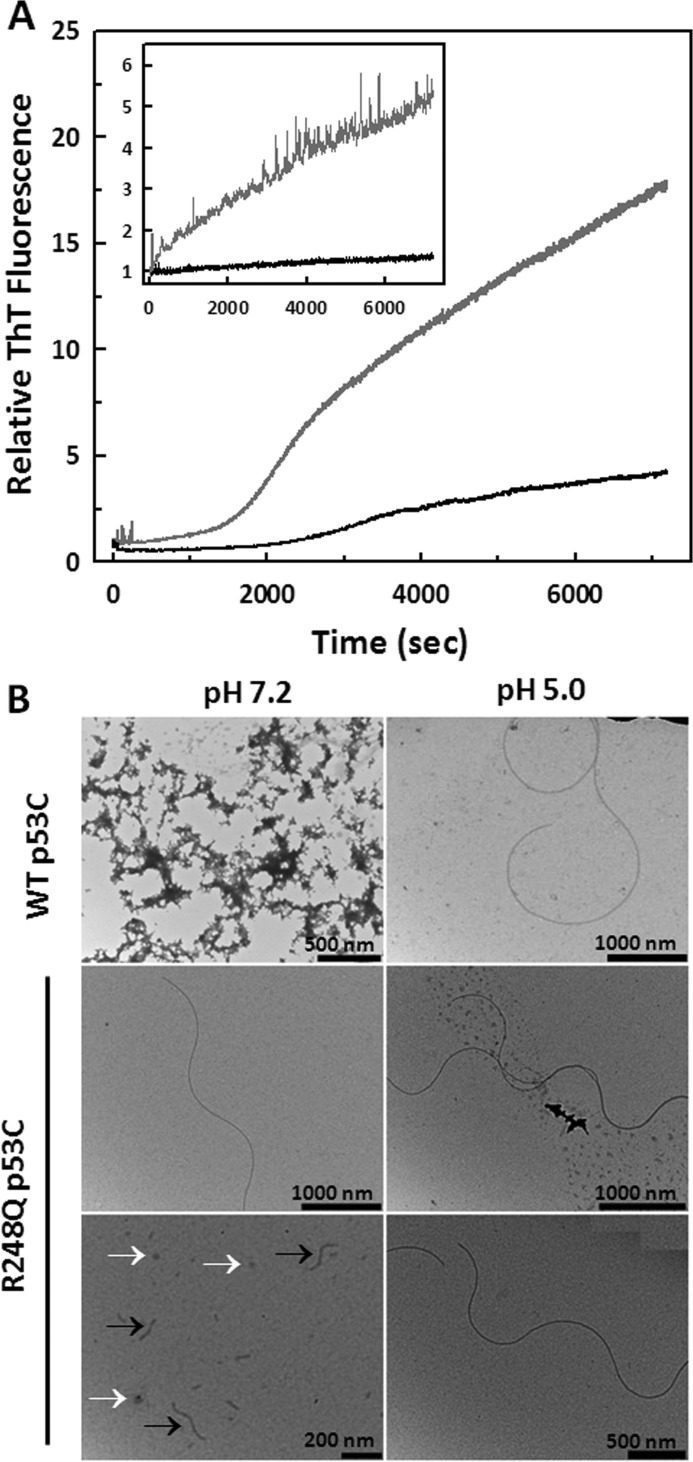
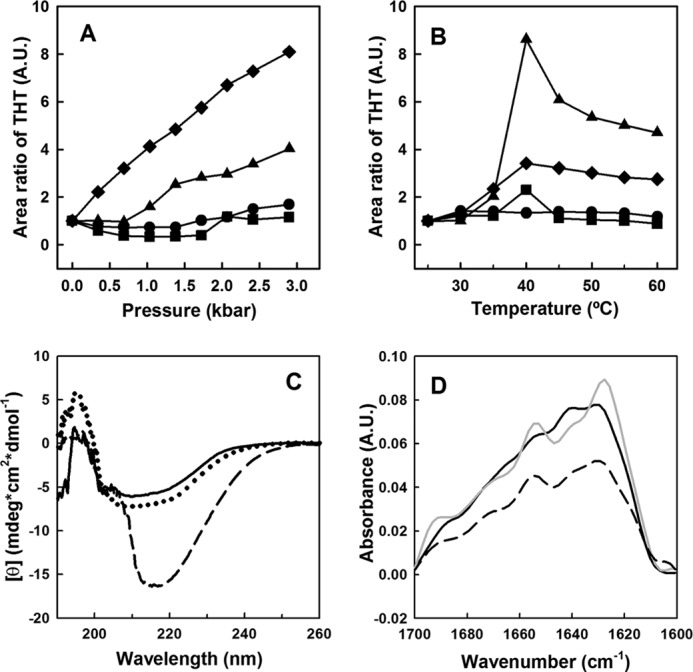
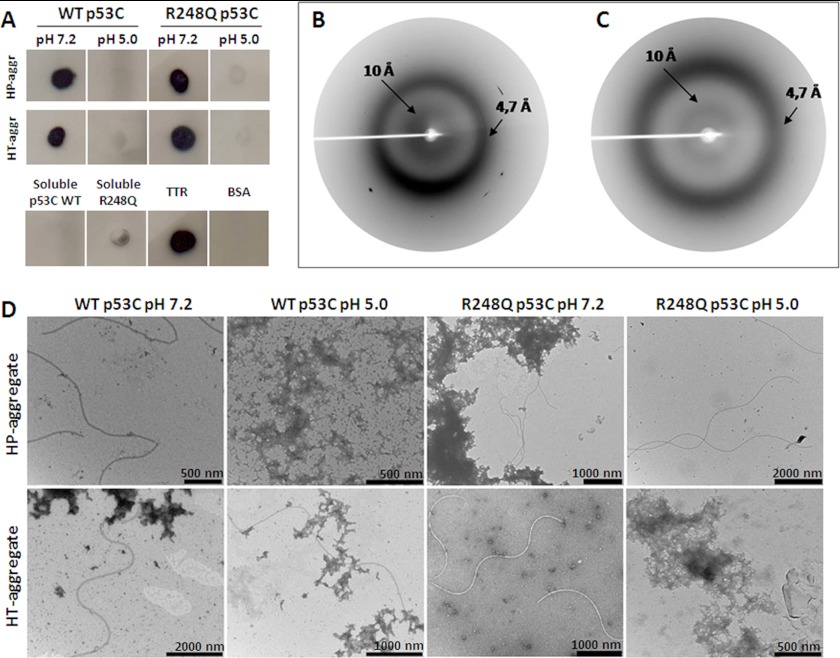
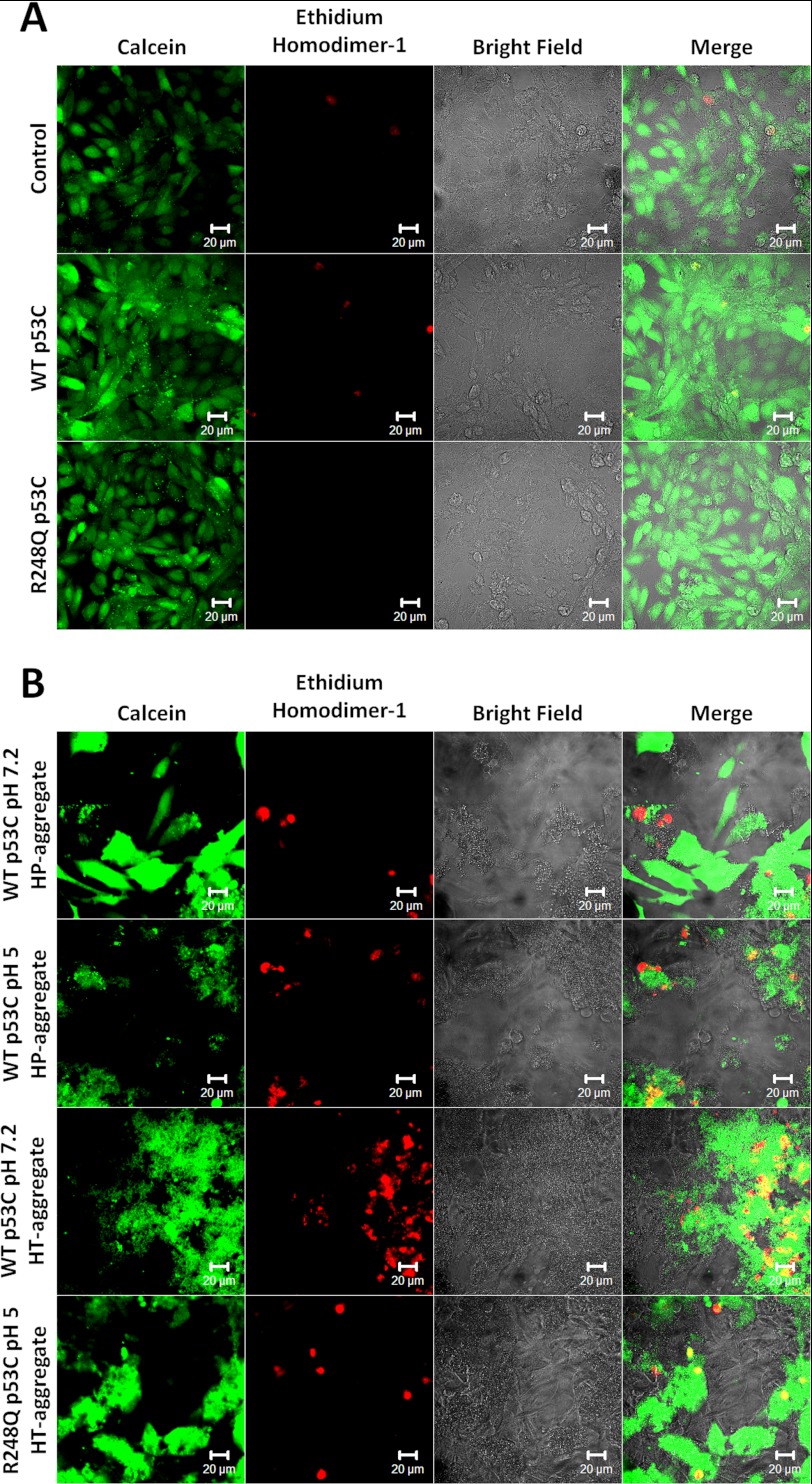
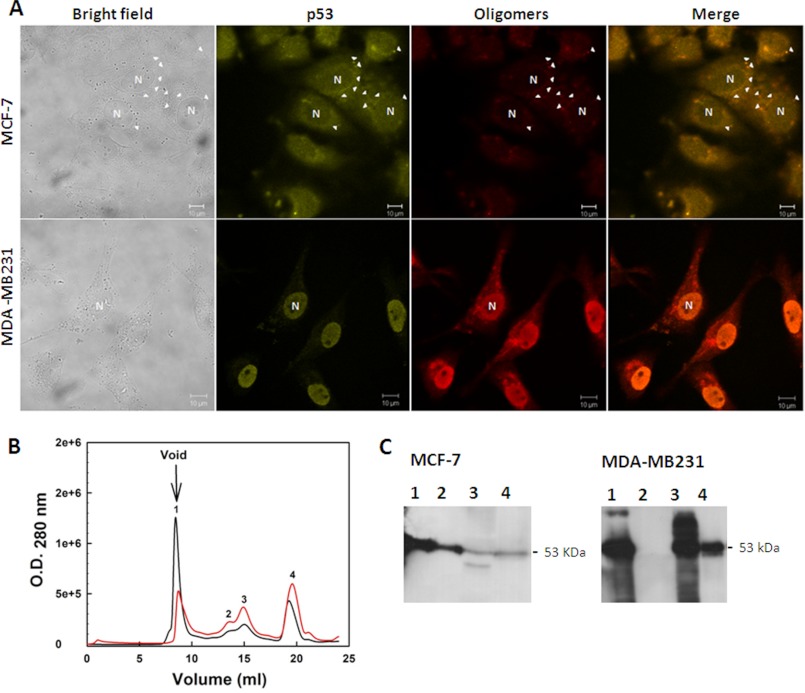
Over 50% of all human cancers lose p53 function. To evaluate the role of aggregation in cancer, we asked whether wild-type (WT) p53 and the hot-spot mutant R248Q could aggregate as amyloids under physiological conditions and whether the mutant could seed aggregation of the wild-type form. The central domains (p53C) of both constructs aggregated into a mixture of oligomers and fibrils. R248Q had a greater tendency to aggregate than WT p53. Full-length p53 aggregated into amyloid-like species that bound thioflavin T. The amyloid nature of the aggregates was demonstrated using x-ray diffraction, electron microscopy, FTIR, dynamic light scattering, cell viabilility assay, and anti-amyloid immunoassay. The x-ray diffraction pattern of the fibrillar aggregates was consistent with the typical conformation of cross β-sheet amyloid fibers with reflexions of 4.7 Å and 10 Å. A seed of R248Q p53C amyloid oligomers and fibrils accelerated the aggregation of WT p53C, a behavior typical of a prion. The R248Q mutant co-localized with amyloid-like species in a breast cancer sample, which further supported its prion-like effect. A tumor cell line containing mutant p53 also revealed massive aggregation of p53 in the nucleus. We conclude that aggregation of p53 into a mixture of oligomers and fibrils sequestrates the native protein into an inactive conformation that is typical of a prionoid. This prion-like behavior of oncogenic p53 mutants provides an explanation for the negative dominance effect and may serve as a potential target for cancer therapy.
超过 50%的人类癌症失去了 p53 功能。为了评估聚集在癌症中的作用,我们询问野生型 (WT) p53 和热点突变体 R248Q 是否能在生理条件下聚集为淀粉样体,以及突变体是否能引发野生型的聚集。这两种结构的中心结构域(p53C)都聚集为寡聚体和原纤维的混合物。R248Q 比 WT p53 更倾向于聚集。全长 p53 聚集为结合硫黄素 T 的类淀粉样物质。使用 X 射线衍射、电子显微镜、FTIR、动态光散射、细胞活力测定和抗淀粉样免疫测定证明了聚集物的淀粉样性质。纤维状聚集物的 X 射线衍射图与交叉 β-片层淀粉样纤维的典型构象一致,反射为 4.7 Å 和 10 Å。R248Q p53C 淀粉样寡聚体和纤维的种子加速了 WT p53C 的聚集,这是一种典型的朊病毒行为。R248Q 突变体与乳腺癌样本中的类淀粉样物质共定位,进一步支持了其朊病毒样效应。含有突变 p53 的肿瘤细胞系也显示出 p53 在核内的大量聚集。我们得出结论,p53 聚集为寡聚体和纤维的混合物将天然蛋白质隔离到一种无活性的构象,这种构象典型的是朊病毒样。致癌 p53 突变体的这种朊病毒样行为为负显性效应提供了解释,并可能成为癌症治疗的潜在靶点。