Department of Human Biology, Nutrition and Toxicology Research Institute Maastricht, Maastricht University Medical Center, Maastricht, The Netherlands.
PLoS One. 2012;7(6):e38632. doi: 10.1371/journal.pone.0038632. Epub 2012 Jun 13.
The daily number of meals has an effect on postprandial glucose and insulin responses, which may affect substrate partitioning and thus weight control. This study investigated the effects of meal frequency on 24 h profiles of metabolic markers and substrate partitioning.
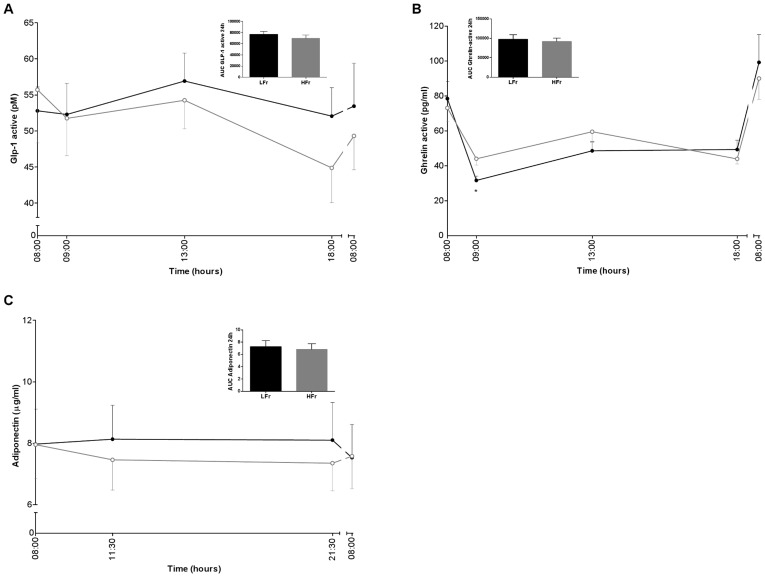
Twelve (BMI:21.6 ± 0.6 kg/m(2)) healthy male subjects stayed after 3 days of food intake and physical activity standardization 2 × 36 hours in a respiration chamber to measure substrate partitioning. All subjects randomly received two isoenergetic diets with a Low meal Frequency (3 ×; LFr) or a High meal Frequency (14 ×; HFr) consisting of 15 En% protein, 30 En% fat, and 55 En% carbohydrates. Blood was sampled at fixed time points during the day to measure metabolic markers and satiety hormones.
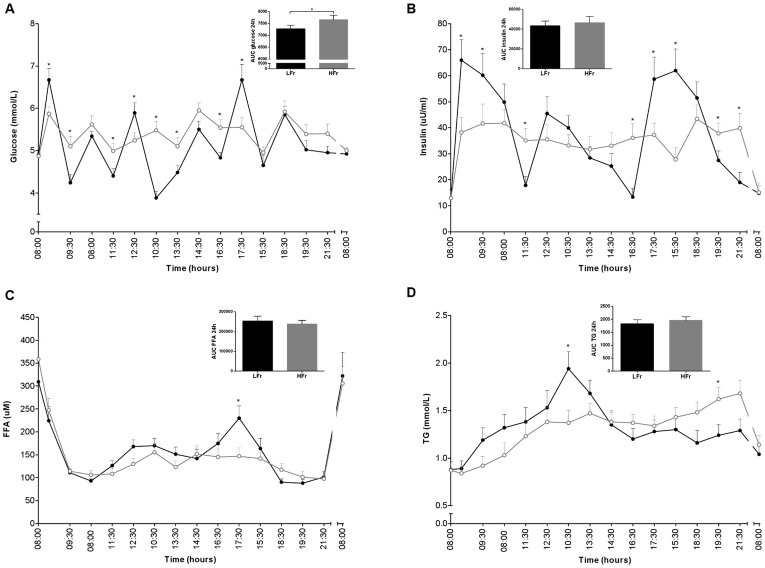
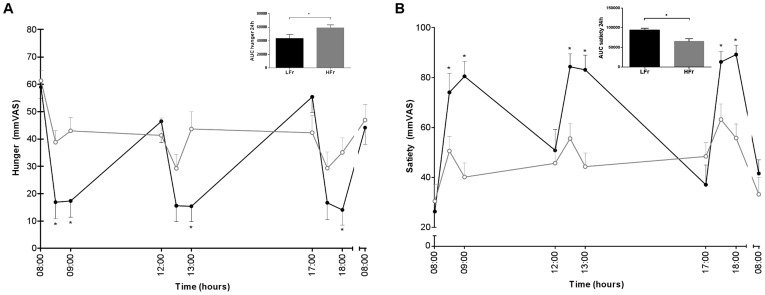
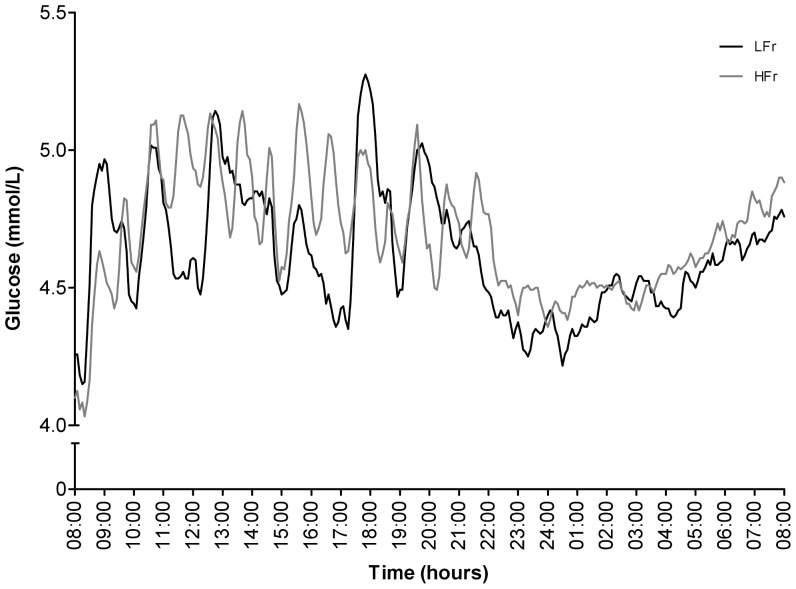
Glucose and insulin profiles showed greater fluctuations, but a lower AUC of glucose in the LFr diet compared with the HFr diet. No differences between the frequency diets were observed on fat and carbohydrate oxidation. Though, protein oxidation and RMR (in this case SMR + DIT) were significantly increased in the LFr diet compared with the HFr diet. The LFr diet increased satiety and reduced hunger ratings compared with the HFr diet during the day.
The higher rise and subsequently fall of insulin in the LFr diet did not lead to a higher fat oxidation as hypothesized. The LFr diet decreased glucose levels throughout the day (AUC) indicating glycemic improvements. RMR and appetite control increased in the LFr diet, which can be relevant for body weight control on the long term.
ClinicalTrials.gov NCT01034293.
用餐频率会影响餐后血糖和胰岛素反应,这可能会影响底物分配,从而影响体重控制。本研究旨在探讨进食频率对代谢标志物和底物分配 24 小时谱的影响。
12 名(BMI:21.6±0.6kg/m2)健康男性受试者在经过 3 天的食物摄入和体力活动标准化后,在呼吸室中停留 2×36 小时,以测量底物分配。所有受试者随机接受两种等能量饮食,一种是低餐频(3×;LFr),另一种是高餐频(14×;HFr),分别含有 15%蛋白质、30%脂肪和 55%碳水化合物。在白天的固定时间点抽取血液样本,以测量代谢标志物和饱腹感激素。
与 HFr 饮食相比,LFr 饮食的血糖和胰岛素曲线波动更大,但 AUC 更低。两种频率饮食之间的脂肪和碳水化合物氧化没有差异。然而,与 HFr 饮食相比,LFr 饮食的蛋白质氧化和静息代谢率(在此情况下为 SMR+DIT)显著增加。与 HFr 饮食相比,LFr 饮食在白天增加了饱腹感,降低了饥饿感评分。
与假设相反,LFr 饮食中胰岛素的急剧上升和随后下降并没有导致脂肪氧化增加。LFr 饮食全天降低了血糖水平(AUC),表明血糖改善。LFr 饮食增加了静息代谢率和食欲控制,这可能对长期体重控制有意义。
ClinicalTrials.gov NCT01034293。