Institute of Experimental Cardiology, Russian Cardiology Research and Production Complex, Moscow, Russia.
PLoS One. 2012;7(6):e38776. doi: 10.1371/journal.pone.0038776. Epub 2012 Jun 13.
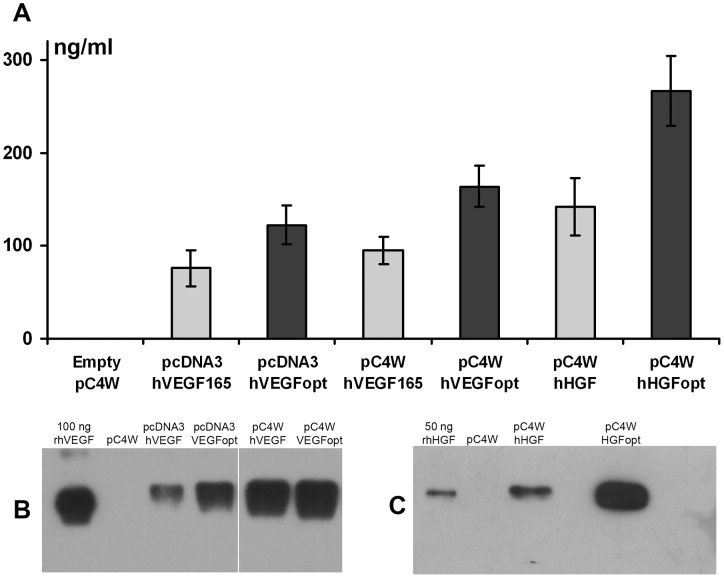
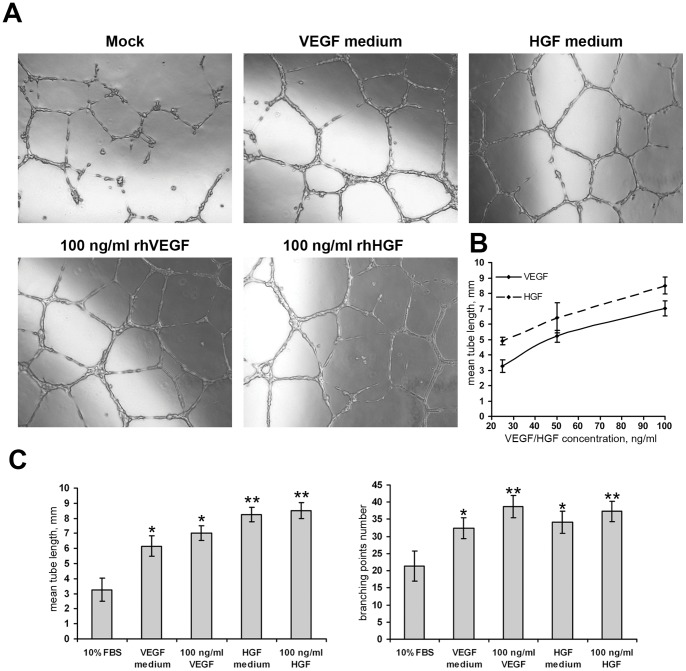
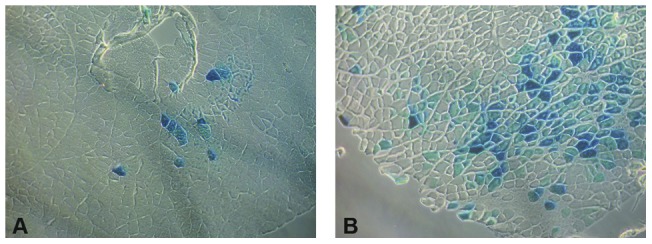
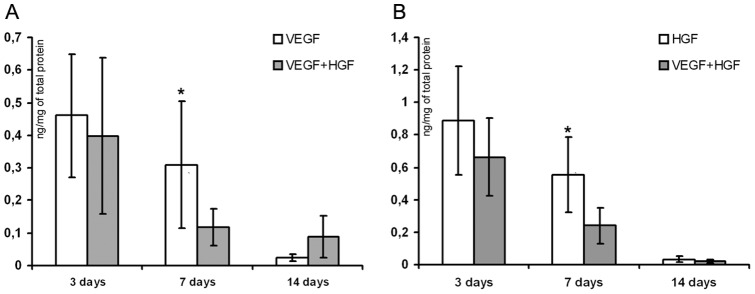
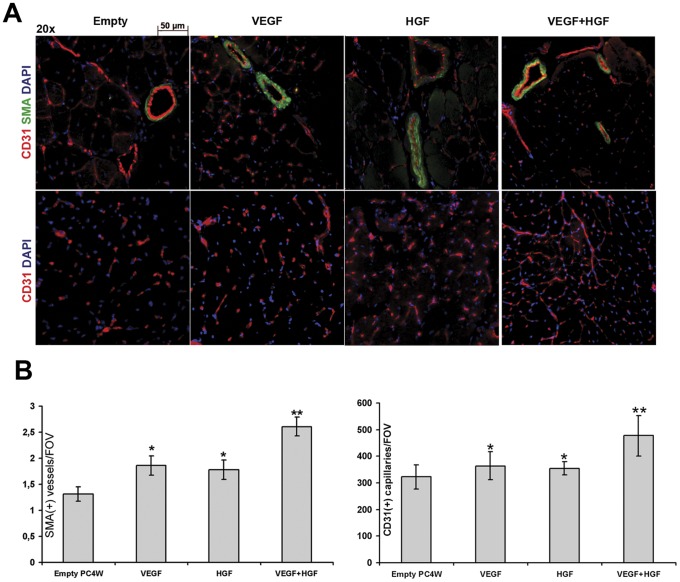
Increased interest in development of combined gene therapy emerges from results of recent clinical trials that indicate good safety yet unexpected low efficacy of "single-gene" administration. Multiple studies showed that vascular endothelial growth factor 165 aminoacid form (VEGF165) and hepatocyte growth factor (HGF) can be used for induction of angiogenesis in ischemic myocardium and skeletal muscle. Gene transfer system composed of a novel cytomegalovirus-based (CMV) plasmid vector and codon-optimized human VEGF165 and HGF genes combined with intramuscular low-voltage electroporation was developed and tested in vitro and in vivo. Studies in HEK293T cell culture, murine skeletal muscle explants and ELISA of tissue homogenates showed efficacy of constructed plasmids. Functional activity of angiogenic proteins secreted by HEK293T after transfection by induction of tube formation in human umbilical vein endothelial cell (HUVEC) culture. HUVEC cells were used for in vitro experiments to assay the putative signaling pathways to be responsible for combined administration effect one of which could be the ERK1/2 pathway. In vivo tests of VEGF165 and HGF genes co-transfer were conceived in mouse model of hind limb ischemia. Intramuscular administration of plasmid encoding either VEGF165 or HGF gene resulted in increased perfusion compared to empty vector administration. Mice injected with a mixture of two plasmids (VEGF165+HGF) showed significant increase in perfusion compared to single plasmid injection. These findings were supported by increased CD31+ capillary and SMA+ vessel density in animals that received combined VEGF165 and HGF gene therapy compared to single gene therapy. Results of the study suggest that co-transfer of VEGF and HGF genes renders a robust angiogenic effect in ischemic skeletal muscle and may present interest as a potential therapeutic combination for treatment of ischemic disorders.
人们对联合基因治疗的开发越来越感兴趣,这源于最近的临床试验结果,这些结果表明“单基因”给药的安全性良好,但疗效出人意料地低。多项研究表明,血管内皮生长因子 165 个氨基酸形式(VEGF165)和肝细胞生长因子(HGF)可用于诱导缺血性心肌和骨骼肌的血管生成。开发了一种由新型巨细胞病毒(CMV)质粒载体和密码子优化的人 VEGF165 和 HGF 基因组成的基因转移系统,并与肌肉内低电压电穿孔相结合,在体外和体内进行了测试。在 HEK293T 细胞培养、鼠骨骼肌外植体和组织匀浆的 ELISA 研究中,显示了构建质粒的功效。转染后,转染后的 HEK293T 细胞分泌的血管生成蛋白在人脐静脉内皮细胞(HUVEC)培养中诱导管形成,显示出其功能活性。使用 HUVEC 细胞进行体外实验,以检测可能负责联合给药效果的信号通路,其中一种可能是 ERK1/2 通路。在小鼠后肢缺血模型中,设计了 VEGF165 和 HGF 基因共转染的体内测试。与空载体给药相比,肌肉内给予编码 VEGF165 或 HGF 基因的质粒可增加灌注。与单独注射质粒相比,注射两种质粒混合物(VEGF165+HGF)的小鼠灌注明显增加。与单独基因治疗相比,接受联合 VEGF165 和 HGF 基因治疗的动物中 CD31+毛细血管和 SMA+血管密度增加,支持了这些发现。研究结果表明,VEGF 和 HGF 基因的共转移可在缺血性骨骼肌中产生强大的血管生成作用,并且可能作为治疗缺血性疾病的潜在治疗组合具有一定的研究意义。