Department of Biology, Section of Ecology, University of Turku, Turku, Finland.
PLoS One. 2012;7(6):e38832. doi: 10.1371/journal.pone.0038832. Epub 2012 Jun 12.
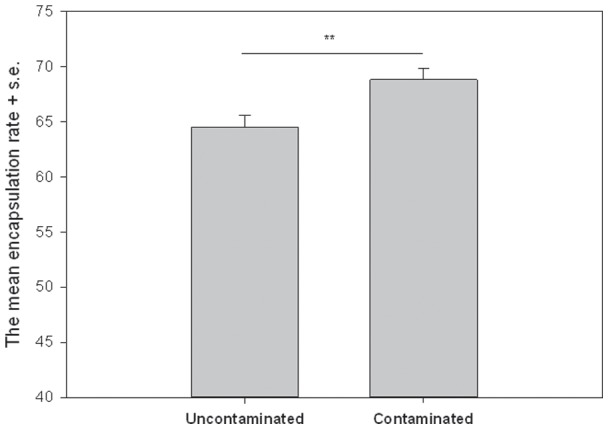
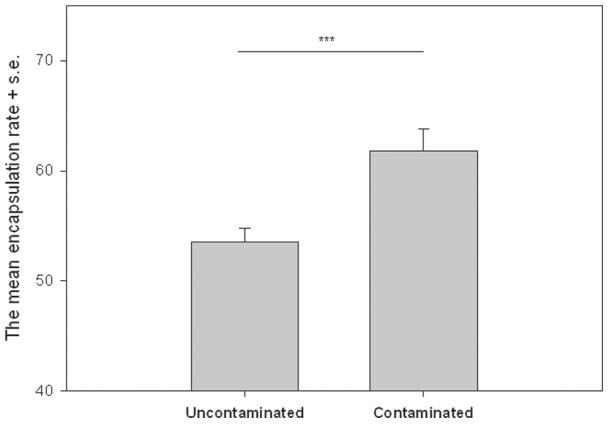
Recently environmental conditions during early parental development have been found to have transgenerational effects on immunity and other condition-dependent traits. However, potential transgenerational effects of heavy metal pollution have not previously been studied. Here we show that direct exposure to heavy metal (copper) upregulates the immune system of the blow fly, Protophormia terraenovae, reared in copper contaminated food. In the second experiment, to test transgenerational effects of heavy metal, the parental generation of the P. terraenovae was reared in food supplemented with copper, and the immunocompetence of their offspring, reared on uncontaminated food, was measured. Copper concentration used in this study was, in the preliminary test, found to have no effect on mortality of the flies. Immunity was tested on the imago stage by measuring encapsulation response against an artificial antigen, nylon monofilament. We found that exposure to copper during the parental development stages through the larval diet resulted in immune responses that were still apparent in the next generation that was not exposed to the heavy metal. We found that individuals reared on copper-contaminated food developed more slowly compared with those reared on uncontaminated food. The treatment groups did not differ in their dry body mass. However, parental exposure to copper did not have an effect on the development time or body mass of their offspring. Our study suggests that heavy metal pollution has positive feedback effect on encapsulation response through generations which multiplies the harmful effects of heavy metal pollution in following generations.
最近发现,亲代早期发育期间的环境条件会对免疫和其他依赖条件的特征产生跨代效应。然而,重金属污染的潜在跨代效应以前尚未被研究过。在这里,我们展示了重金属(铜)的直接暴露会上调在受污染铜食物中饲养的黄粉蝇(Protophormia terraenovae)的免疫系统。在第二个实验中,为了测试重金属的跨代效应,将黄粉蝇的亲代在补充铜的食物中饲养,并测量其在未受污染的食物中饲养的后代的免疫能力。在这项研究中使用的铜浓度在初步测试中被发现对苍蝇的死亡率没有影响。通过测量对人工抗原尼龙单丝的包被反应来测试成虫阶段的免疫。我们发现,通过幼虫饮食在亲代发育阶段暴露于铜会导致在未暴露于重金属的下一代中仍然明显的免疫反应。我们发现,与在未受污染的食物中饲养的个体相比,在受污染的铜食物中饲养的个体发育较慢。处理组在其干体重方面没有差异。然而,亲代暴露于铜对其后代的发育时间或体重没有影响。我们的研究表明,重金属污染通过代际对包被反应产生正反馈效应,从而在后代中放大重金属污染的有害影响。