Department of Microbiology, Indira Gandhi Medical College, Shimla, Himachal Pradesh, India.
PLoS Negl Trop Dis. 2012;6(6):e1673. doi: 10.1371/journal.pntd.0001673. Epub 2012 Jun 12.
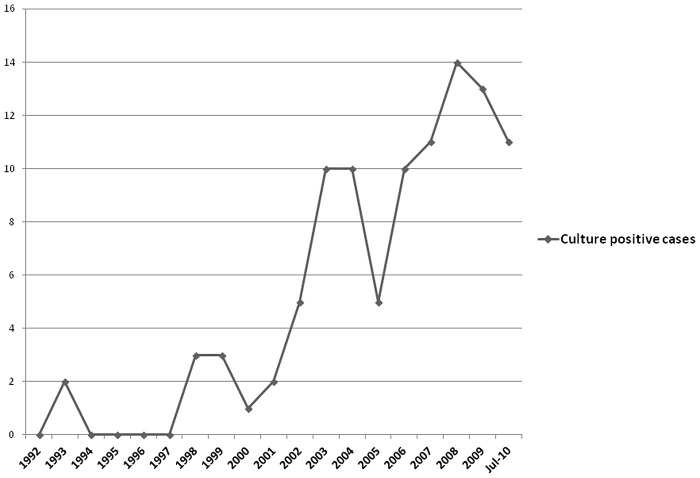
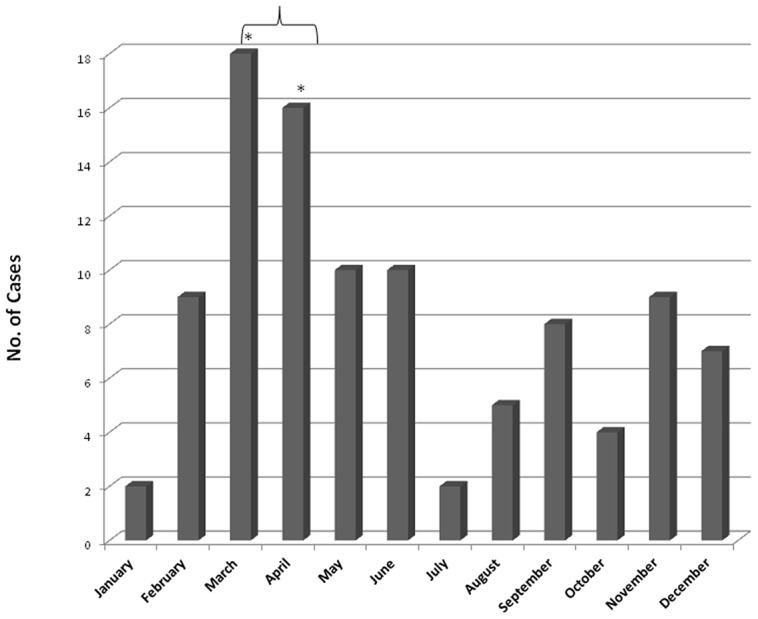
Sporotrichosis is endemic in the Sub-Himalayan belt, which ranges from the northern to the north-eastern Indian subcontinent. Similar to many parts of the developing world, sporotrichosis is commonly recognized clinically in this region however consolidated epidemiological data is lacking. We report epidemiological, clinical and microbiological data from a hundred culture positive cases of sporotrichosis. Out of 305 clinically suspicious cases of sporotrichosis, a total of 100 isolates were identified as Sporothrix schenckii species complex (S. schenckii) on culture. Out of the culture proven cases 71% of the cases presented with lymphocutaneous type of lesions while 28% had fixed localized type and 1% had disseminated sporotrichosis. Presentation with lesions on hands was most frequently seen in 32% with arm (23%) and face (21%) in that sequence. The male to female ratio was 1∶1.27. Age ranged from 1 ½ years to 88 years. Mean age was 43.25 years. Disease was predominantly seen in the fourth to sixth decade of life with 58% cases between 31 and 60 years of age. Since the first report from the region there has been a steady rise in the number of cases of sporotrichosis. Seasonal trends reveal that most of the patients visited for consultation in the beginning of the year between March and April. This is the first study, from the most endemic region of the Sub-Himalayan belt, to delve into epidemiological and clinical details of such a large number of culture proven cases over a period of more than eighteen years which would help in the understanding of the local disease pattern of sporotrichosis.
地方性孢子丝菌病流行于次喜马拉雅山脉带,该地区从印度次大陆的北部延伸到东北部。与许多发展中国家一样,该地区临床上通常可以识别孢子丝菌病,但缺乏综合的流行病学数据。我们报告了从一百例培养阳性的孢子丝菌病病例中获得的流行病学、临床和微生物学数据。在 305 例临床疑似孢子丝菌病病例中,共有 100 株分离物在培养上被鉴定为申克孢子丝菌种复合体(S. schenckii)。在培养证实的病例中,71%的病例表现为淋巴管皮肤型病变,28%的病例表现为固定局限性病变,1%的病例表现为播散性孢子丝菌病。手部病变的表现最为常见,占 32%,其次是手臂(23%)和面部(21%)。男女比例为 1:1.27。年龄从 1 岁半到 88 岁不等,平均年龄为 43.25 岁。该病主要见于 31 至 60 岁之间的第四至第六个十年,占 58%。自该地区首次报告以来,孢子丝菌病的病例数一直在稳步上升。季节性趋势显示,大多数患者在年初的 3 月至 4 月期间就诊。这是第一次对次喜马拉雅山脉带最流行地区的如此大量的培养阳性病例进行流行病学和临床细节研究,有助于了解当地孢子丝菌病的疾病模式。