Centre for Tropical Biodiversity and Climate Change, School of Marine and Tropical Biology, James Cook University, Townsville, Queensland, Australia.
PLoS One. 2012;7(6):e39208. doi: 10.1371/journal.pone.0039208. Epub 2012 Jun 19.
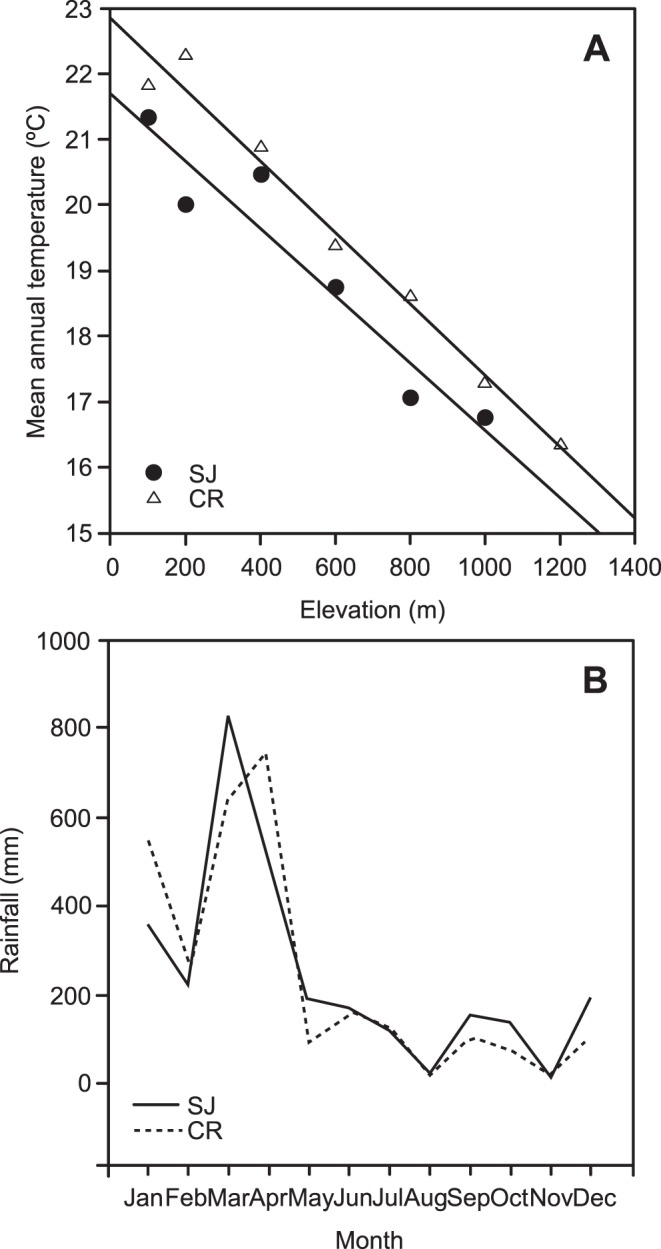
The rising global temperature is predicted to expand the distribution of vector-borne diseases both in latitude and altitude. Many host communities could be affected by increased prevalence of disease, heightening the risk of extinction for many already threatened species. To understand how host communities could be affected by changing parasite distributions, we need information on the distribution of parasites in relation to variables like temperature and rainfall that are predicted to be affected by climate change.
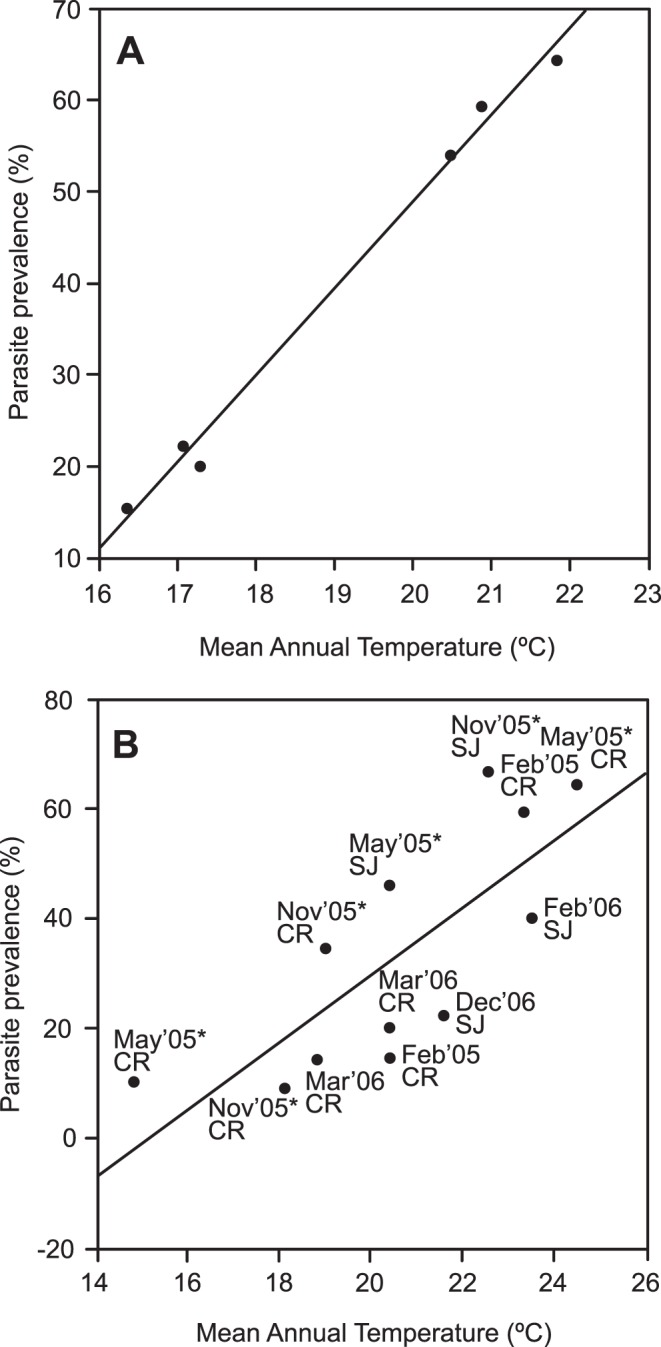
METHODOLOGY/PRINCIPAL FINDINGS: We determined relations between prevalence of blood parasites, temperature, and seasonal rainfall in a bird community of the Australian Wet Tropics along an elevation gradient. We used PCR screening to investigate the prevalence and lineage diversity of four genera of blood parasites (Plasmodium, Haemoproteus, Leucocytozoon and Trypanosoma) in 403 birds. The overall prevalence of the four genera of blood parasites was 32.3%, with Haemoproteus the predominant genus. A total of 48 unique lineages were detected. Independent of elevation, parasite prevalence was positively and strongly associated with annual temperature. Parasite prevalence was elevated during the dry season.
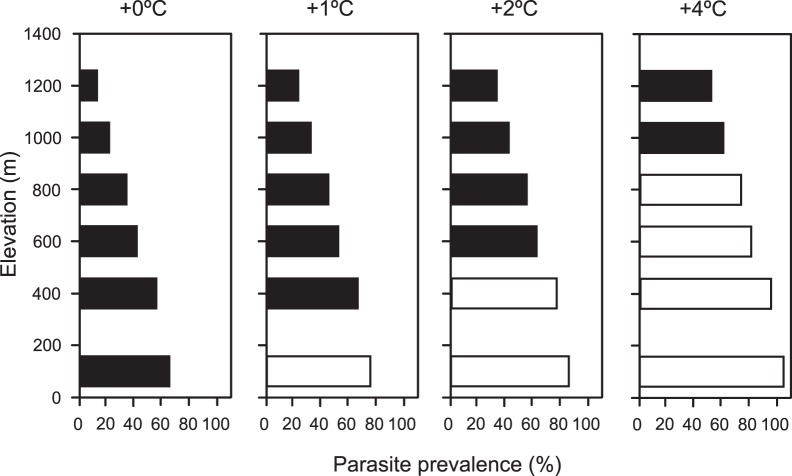
CONCLUSIONS/SIGNIFICANCE: Low temperatures of the higher elevations can help to reduce both the development of avian haematozoa and the abundance of parasite vectors, and hence parasite prevalence. In contrast, high temperatures of the lowland areas provide an excellent environment for the development and transmission of haematozoa. We showed that rising temperatures are likely to lead to increased prevalence of parasites in birds, and may force shifts of bird distribution to higher elevations. We found that upland tropical areas are currently a low-disease habitat and their conservation should be given high priority in management plans under climate change.
预计全球气温上升将扩大蚊媒疾病在纬度和海拔上的分布范围。许多宿主群体可能会受到疾病流行率增加的影响,这加剧了许多已经受到威胁的物种灭绝的风险。为了了解宿主群体如何受到寄生虫分布变化的影响,我们需要了解寄生虫在温度和降雨量等与气候变化相关的变量方面的分布情况,这些变量预计会受到气候变化的影响。
方法/主要发现:我们在澳大利亚潮湿热带地区的一个鸟类群落中,沿着海拔梯度确定了血液寄生虫的流行率、温度和季节性降雨之间的关系。我们使用 PCR 筛查技术,对 403 只鸟类中的四种血液寄生虫(疟原虫、疟原虫、白细胞虫和锥虫)的流行率和谱系多样性进行了调查。四种血液寄生虫的总流行率为 32.3%,疟原虫是主要的寄生虫。共检测到 48 个独特的谱系。独立于海拔高度,寄生虫的流行率与年平均温度呈正相关且相关性很强。寄生虫的流行率在旱季升高。
结论/意义:较高海拔地区的低温有助于减少鸟类血液寄生虫的发育和寄生虫媒介的数量,从而降低寄生虫的流行率。相比之下,低海拔地区的高温为血液寄生虫的发育和传播提供了极好的环境。我们表明,气温升高可能导致鸟类寄生虫的流行率增加,并可能迫使鸟类分布向高海拔地区转移。我们发现,热带高地地区目前是一个低疾病栖息地,在气候变化下的管理计划中,应高度优先考虑保护这些地区。