Division of Epidemiology, Norwegian Institute of Public Health, Oslo, Norway.
PLoS One. 2012;7(6):e39240. doi: 10.1371/journal.pone.0039240. Epub 2012 Jun 19.
Orofacial clefts are common birth defects of complex etiology, with an excess of males among babies with cleft lip and palate, and an excess of females among those with cleft palate only. Although genes on the X chromosome have been implicated in clefting, there has been no association analysis of X-linked markers.
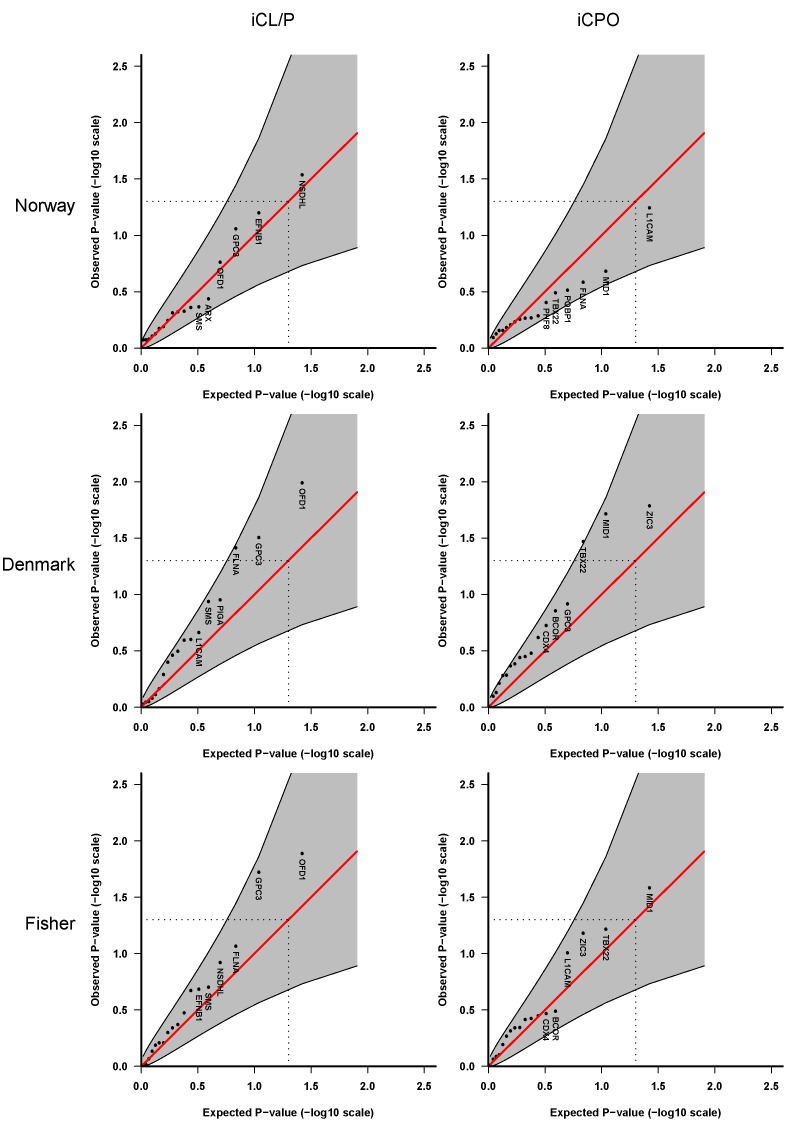
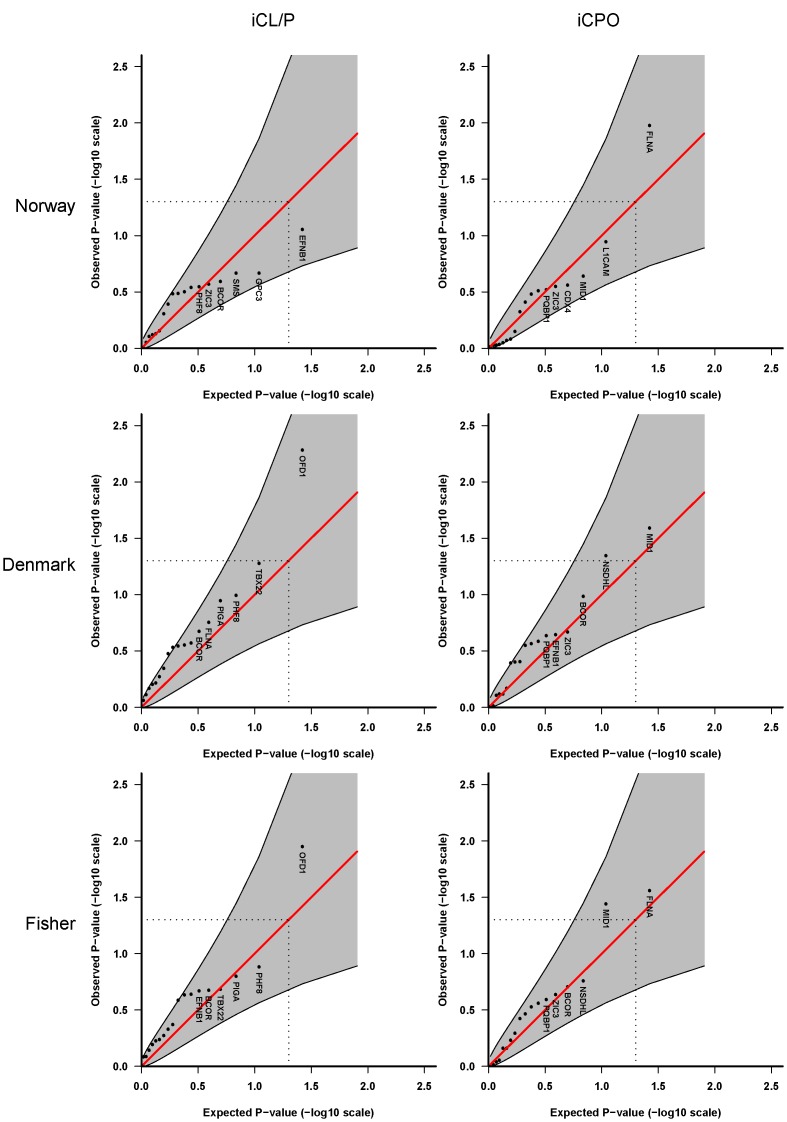
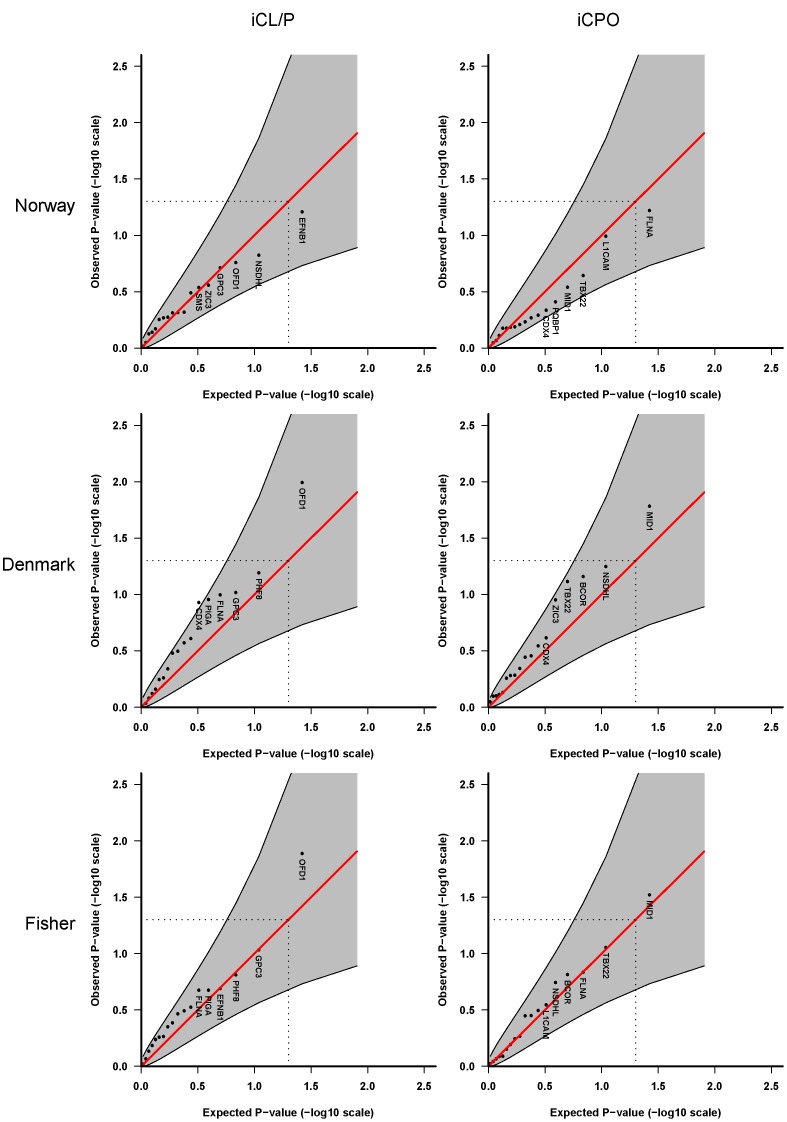
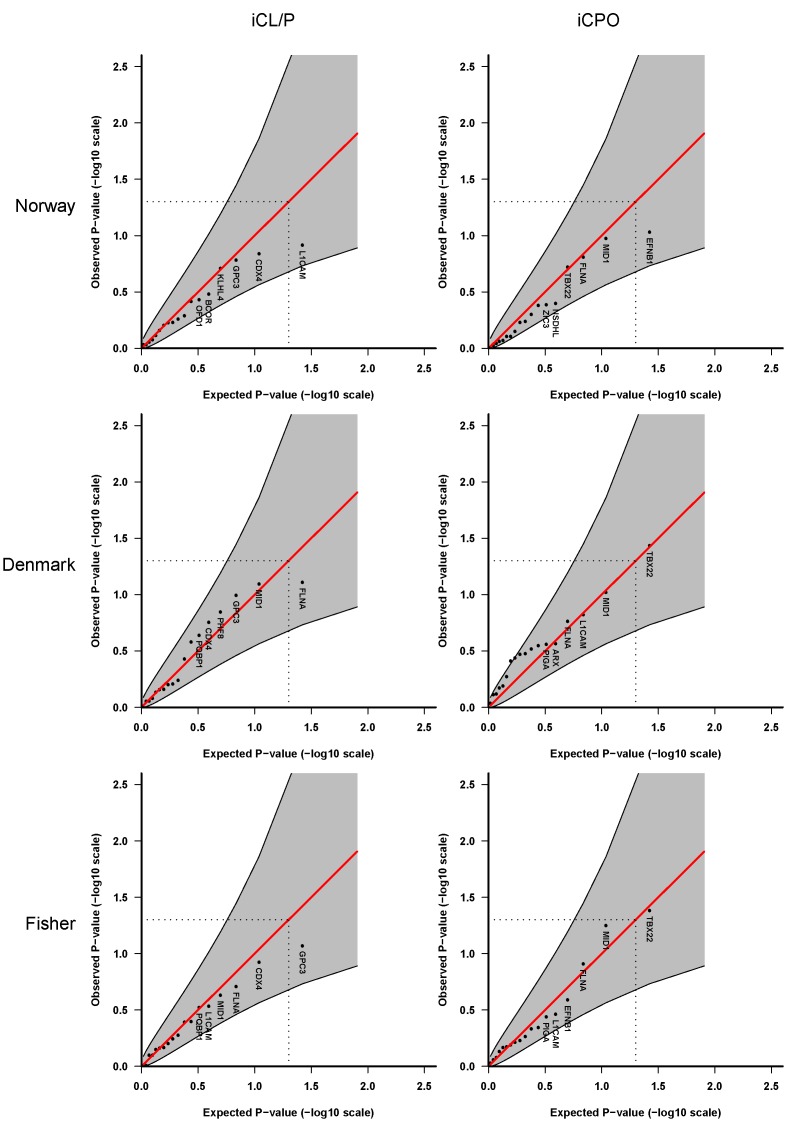
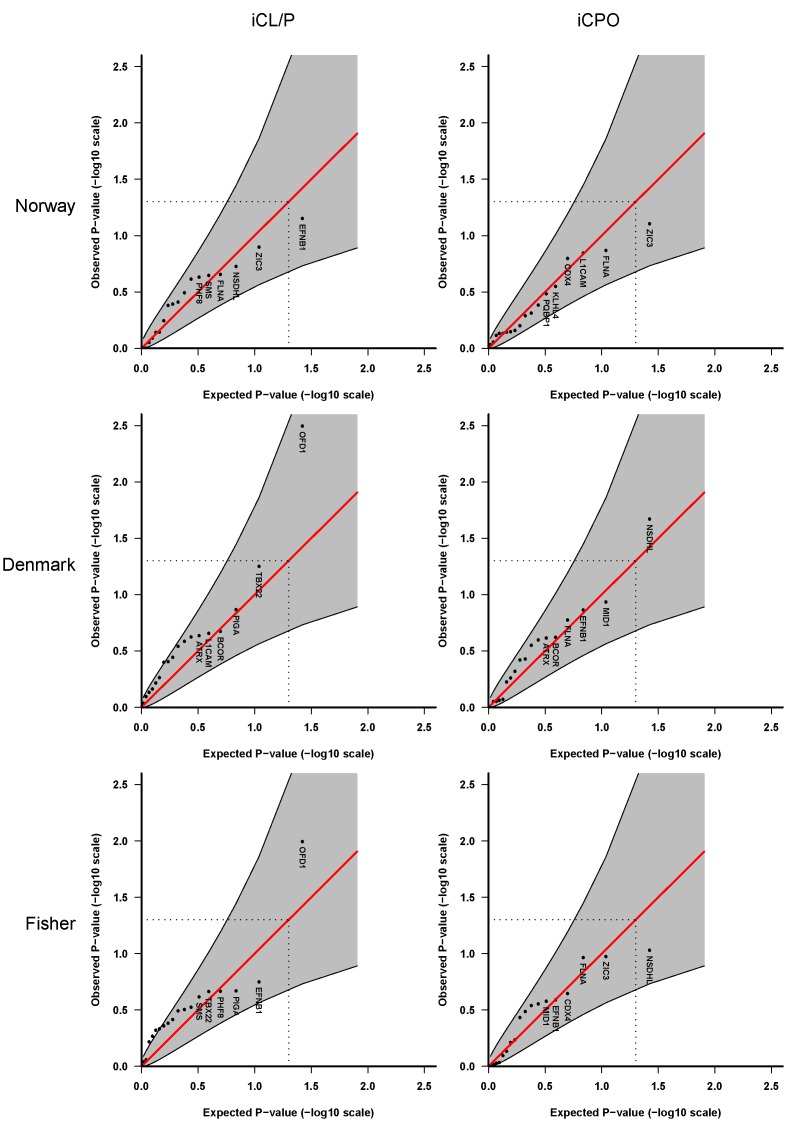
METHODOLOGY/PRINCIPAL FINDINGS: We added new functionalities in the HAPLIN statistical software to enable association analysis of X-linked markers and an exploration of various causal scenarios relevant to orofacial clefts. Genotypes for 48 SNPs in 18 candidate genes on the X chromosome were analyzed in two population-based samples from Scandinavia (562 Norwegian and 235 Danish case-parent triads). For haplotype analysis, we used a sliding-window approach and assessed isolated cleft lip with or without cleft palate (iCL/P) separately from isolated cleft palate only (iCPO). We tested three statistical models in HAPLIN, allowing for: i) the same relative risk in males and females, ii) sex-specific relative risks, and iii) X-inactivation in females. We found weak but consistent associations with the oral-facial-digital syndrome 1 (OFD1) gene (formerly known as CXORF5) in the Danish iCL/P samples across all models, but not in the Norwegian iCL/P samples. In sex-specific analyses, the association with OFD1 was in male cases only. No analyses showed associations with iCPO in either the Norwegian or the Danish sample.
The association of OFD1 with iCL/P is plausible given the biological relevance of this gene. However, the lack of replication in the Norwegian samples highlights the need to verify these preliminary findings in other large datasets. More generally, the novel analytic methods presented here are widely applicable to investigations of the role of X-linked genes in complex traits.
唇腭裂是一种常见的先天性畸形,具有复杂的病因学,唇裂合并腭裂的婴儿中男性过多,而单纯腭裂的婴儿中女性过多。虽然 X 染色体上的基因与腭裂有关,但尚未对 X 连锁标记进行关联分析。
方法/主要发现:我们在 HAPLIN 统计软件中添加了新功能,以实现 X 连锁标记的关联分析,并探索与唇腭裂相关的各种因果情景。我们在来自斯堪的纳维亚的两个基于人群的样本中(562 名挪威和 235 名丹麦病例-父母三亲体)分析了 18 个候选基因上的 48 个 SNP 的基因型。对于单体型分析,我们使用滑动窗口方法,分别分析了单纯唇裂伴或不伴腭裂(iCL/P)和单纯腭裂(iCPO)。我们在 HAPLIN 中测试了三种统计模型,允许:i)男性和女性的相对风险相同,ii)性别特异性相对风险,和 iii)女性的 X 失活。我们发现,在所有模型中,丹麦 iCL/P 样本中与口腔面指综合征 1(OFD1)基因(以前称为 CXORF5)有微弱但一致的关联,但在挪威 iCL/P 样本中没有。在性别特异性分析中,与 OFD1 的关联仅存在于男性病例中。在挪威或丹麦样本中,没有分析显示与 iCPO 相关。
鉴于该基因的生物学相关性,OFD1 与 iCL/P 的关联是合理的。然而,挪威样本中缺乏复制突出了在其他大型数据集验证这些初步发现的必要性。更一般地说,这里提出的新分析方法广泛适用于研究 X 连锁基因在复杂特征中的作用。