Strathclyde Institute of Pharmacy and Biomedical Sciences, University of Strathclyde, Glasgow, Scotland, United Kingdom.
Immunol Lett. 2012 Sep;147(1-2):55-62. doi: 10.1016/j.imlet.2012.06.002. Epub 2012 Jun 23.
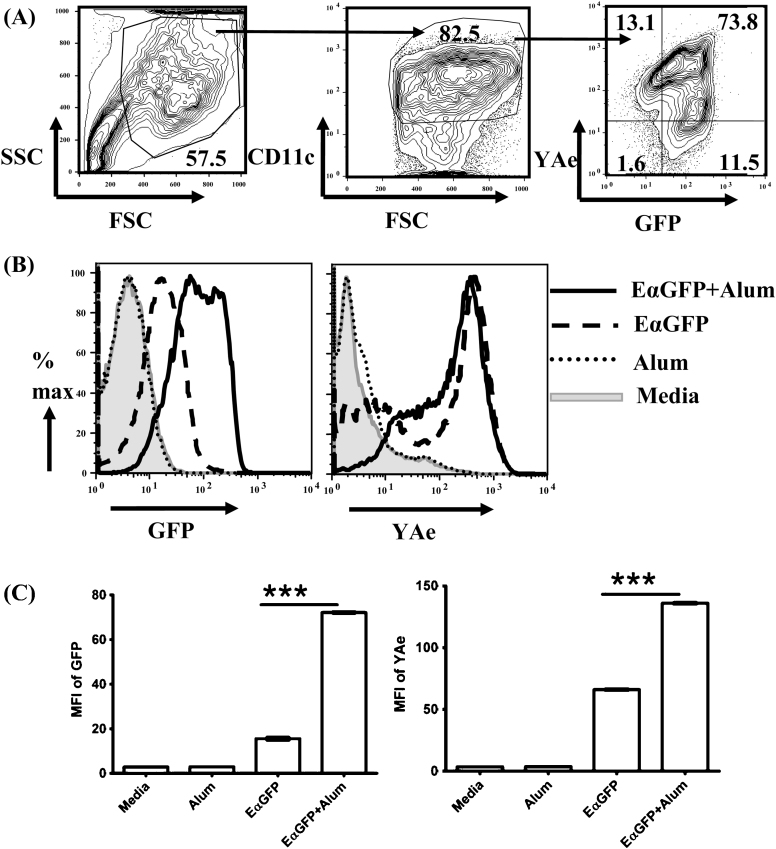
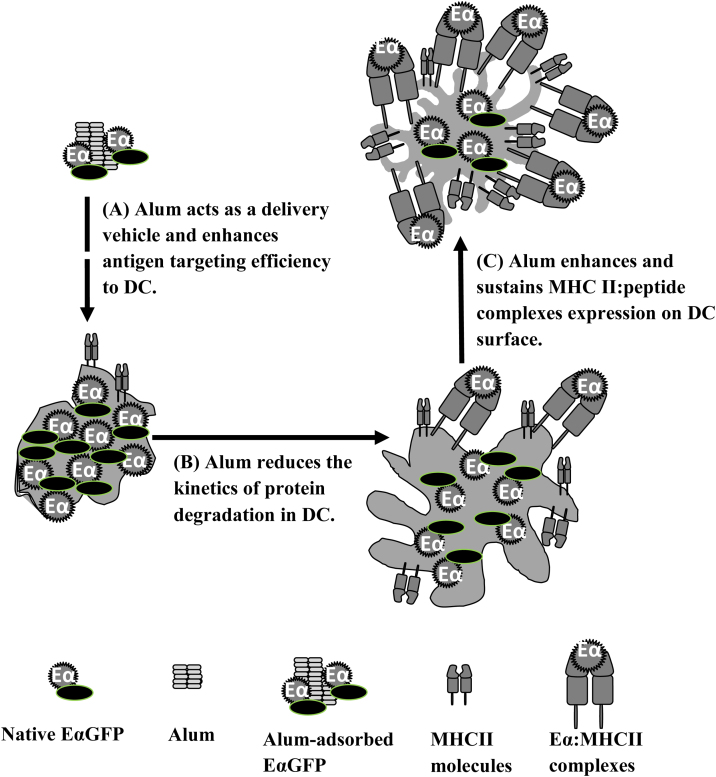
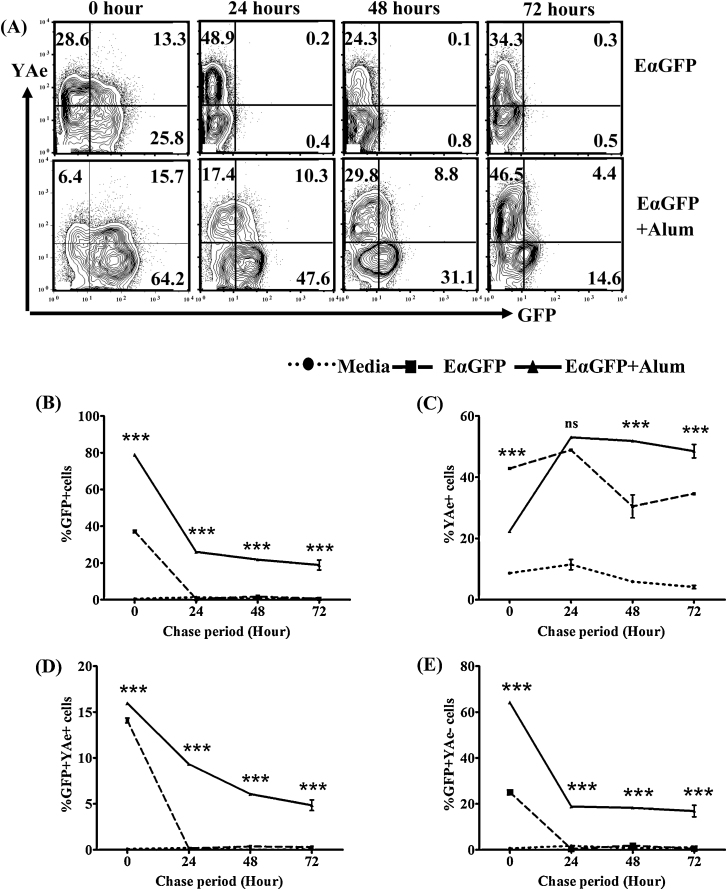
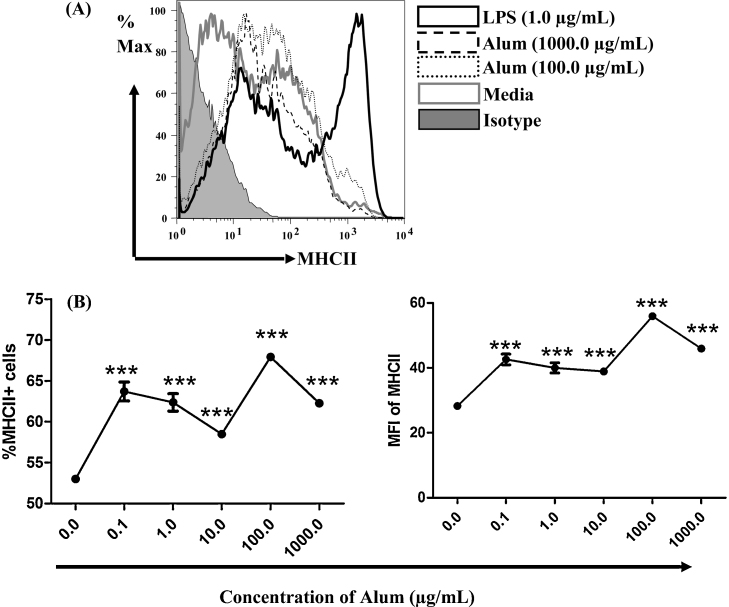
Aluminium adjuvants (alum) have been the only widely approved adjuvants for use in human vaccines since the 1920s, however, the mechanism of action of these adjuvants remains elusive. Due to increasing demand for novel adjuvants, a clearer understanding of the mechanisms that allow these important agents to affect adaptive immune responses will make a significant contribution to the rational design of future vaccines. Using a novel approach to tracking antigen and antigen presentation, we demonstrate that alum induces higher antigen accumulation and increased antigen presentation by dendritic cells (DCs) in vitro. Antigen accumulation was 100-fold higher and antigen presentation 10-fold higher following alum treatment when compared with soluble protein alone. We also observed that alum causes an initial reduction in presentation compared with soluble antigen, but eventually increases the magnitude and duration of antigen presentation. This was associated with reduced protein degradation in DCs following alum treatment. These studies demonstrate the dynamic alterations in antigen processing and presentation induced by alum that underlie enhanced DC function in response to this adjuvant.
铝佐剂(明矾)自 20 世纪 20 年代以来一直是唯一广泛批准用于人类疫苗的佐剂,然而,这些佐剂的作用机制仍然难以捉摸。由于对新型佐剂的需求不断增加,因此更清楚地了解这些重要试剂影响适应性免疫反应的机制,将为合理设计未来疫苗做出重大贡献。我们采用一种新颖的方法来跟踪抗原和抗原呈递,证明明矾在体外诱导更高的抗原积累和树突状细胞(DC)的抗原呈递。与单独的可溶性蛋白相比,铝佐剂处理后抗原积累增加了 100 倍,抗原呈递增加了 10 倍。我们还观察到,与可溶性抗原相比,明矾最初会降低抗原呈递,但最终会增加抗原呈递的幅度和持续时间。这与明矾处理后 DC 中蛋白质降解减少有关。这些研究表明,明矾诱导的抗原加工和呈递的动态变化是明矾佐剂增强 DC 功能的基础。