Institute of Molecular Biology and Biochemistry, Centre for Molecular Medicine, Medical University of Graz, Harrachgasse 21, A-8010 Graz, Austria.
Exp Gerontol. 2012 Nov;47(11):873-7. doi: 10.1016/j.exger.2012.06.003. Epub 2012 Jun 23.
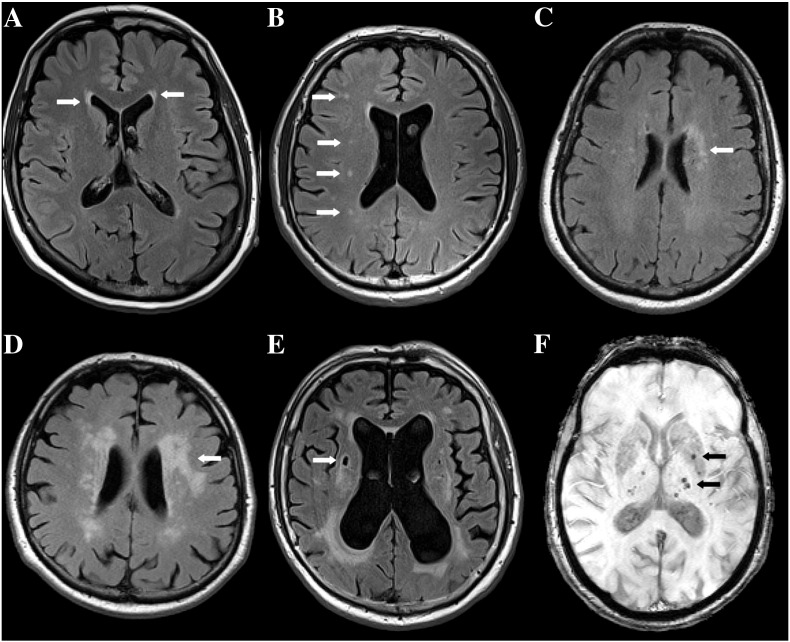
Subcortical vascular dementia or cerebral small vessel disease is a common cause of disability in the elderly. On magnetic resonance imaging the disease is manifested as white matter lesions, lacunes and microbleeds. Its etiology is complex, with age and hypertension as established risk factors. The heritability of white matter lesions is constantly high over different populations. Linkage studies identified several loci for these lesions however no genes responsible for the linkage signals had been identified so far. Results from genetic association studies using the candidate gene approach support the role of APOE, the renin-angiotensin system, as well as the Notch3 signaling pathway in the development of subcortical vascular dementia. The recent genomegenome wide association study on white matter lesions identified a novel locus on chromosome 17q25 harboring several genes such as TRIM65 and TRIM47 which pinpoints to possible novel mechanisms leading to these lesions.
皮质下血管性痴呆或脑小血管病是老年人致残的常见原因。在磁共振成像上,该病表现为白质病变、腔隙和微出血。其病因复杂,年龄和高血压是已确定的危险因素。不同人群的白质病变遗传率一直很高。连锁研究确定了这些病变的几个位点,但到目前为止,还没有发现与连锁信号相关的基因。使用候选基因方法的遗传关联研究结果支持 APOE、肾素-血管紧张素系统以及 Notch3 信号通路在皮质下血管性痴呆发展中的作用。最近对白质病变的全基因组关联研究在 17q25 染色体上确定了一个新的位点,该位点包含几个基因,如 TRIM65 和 TRIM47,这可能为导致这些病变的新机制提供了线索。