Department of Ophthalmology, University of Minnesota Minneapolis, MN, USA.
Front Immunol. 2012 Jun 21;3:166. doi: 10.3389/fimmu.2012.00166. eCollection 2012.
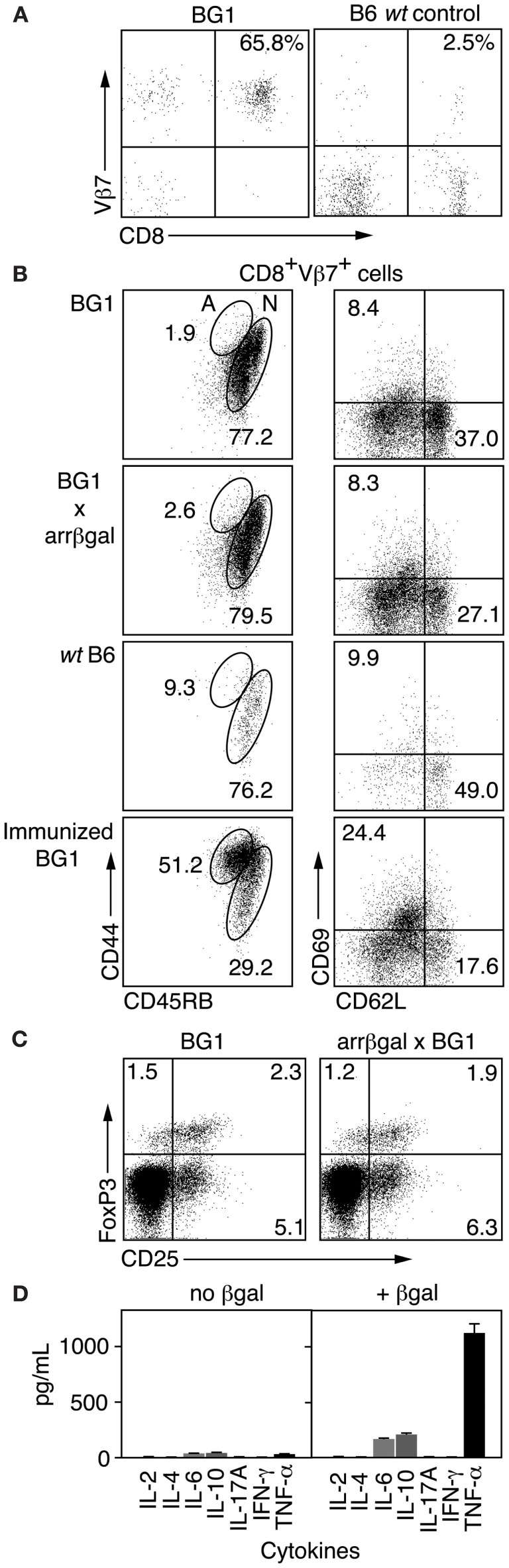
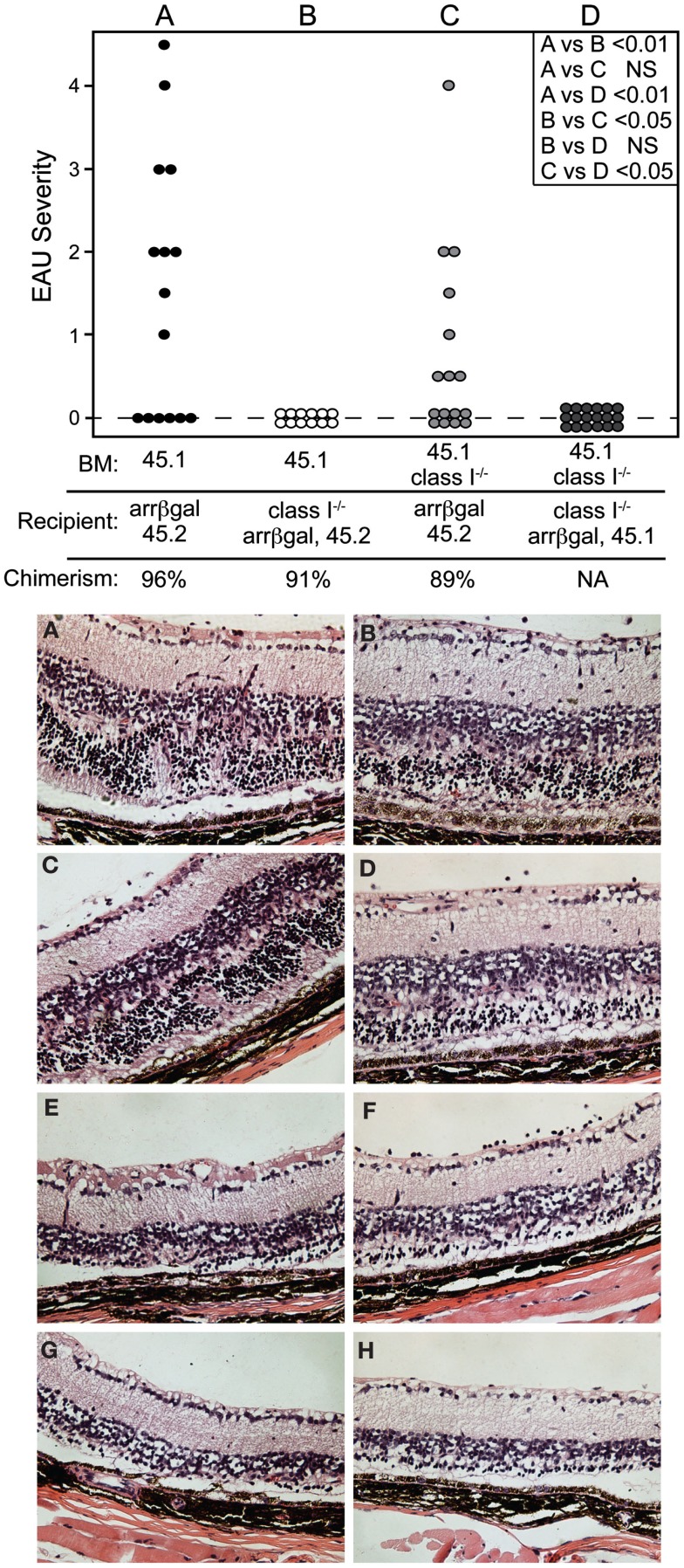
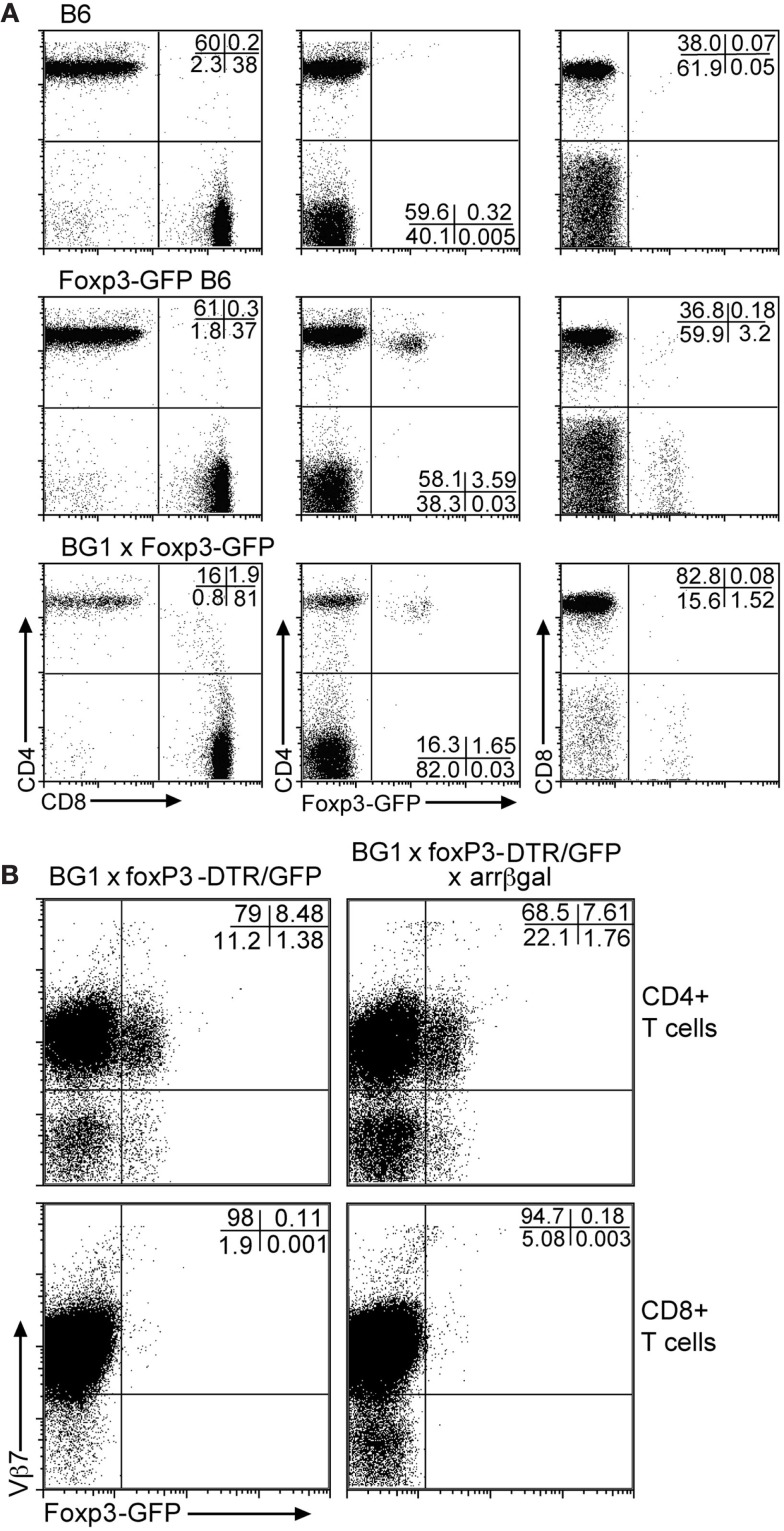
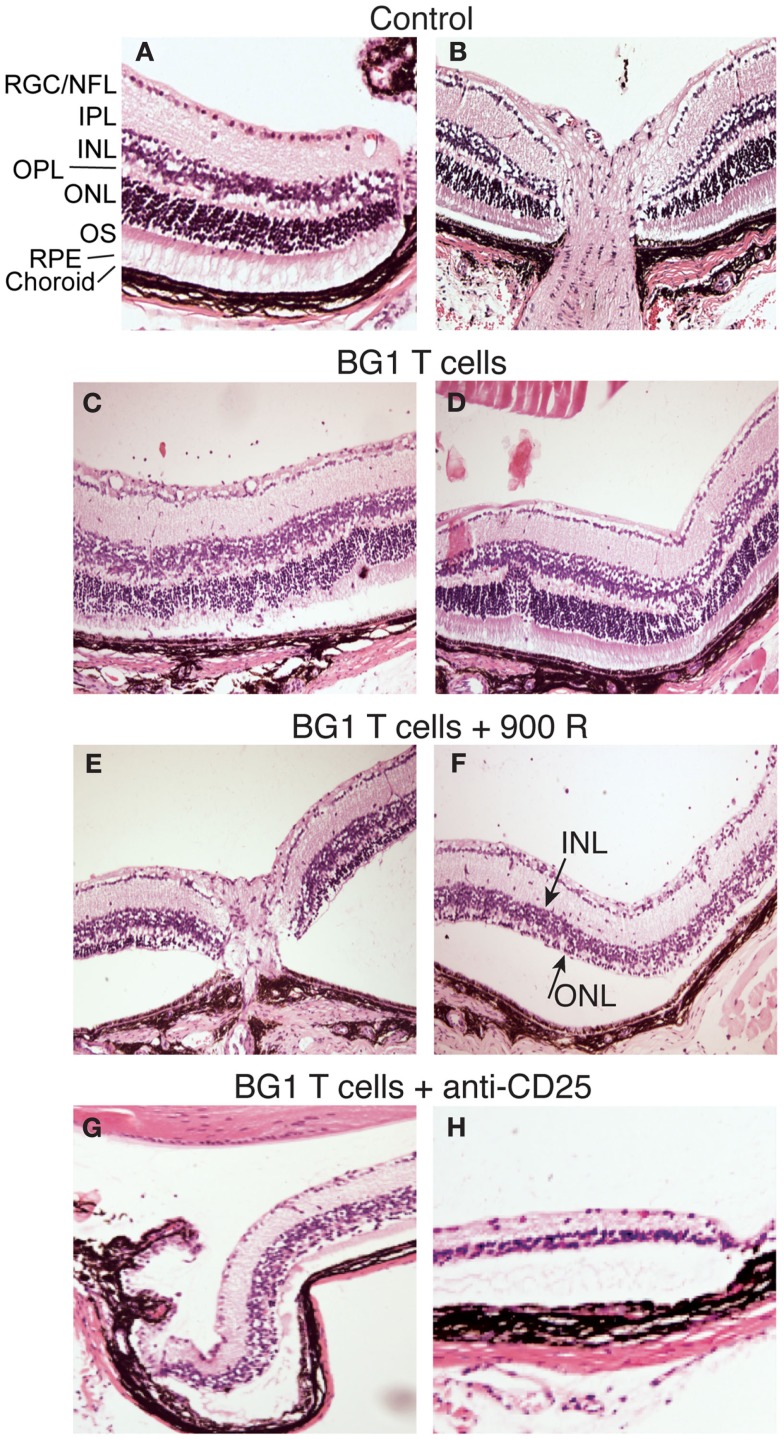
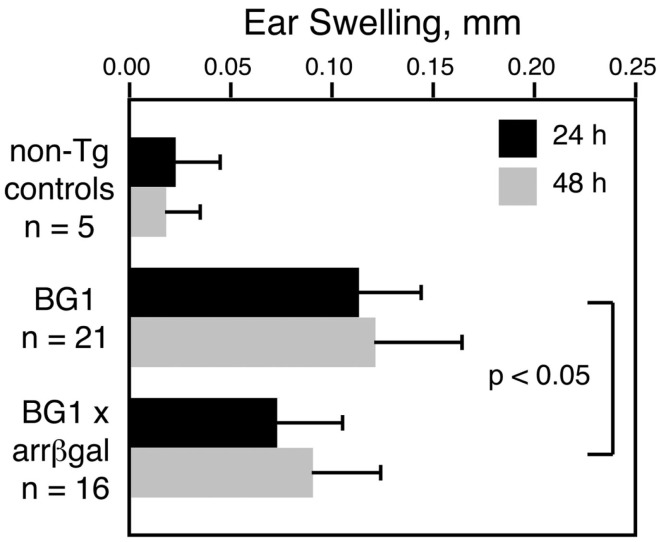
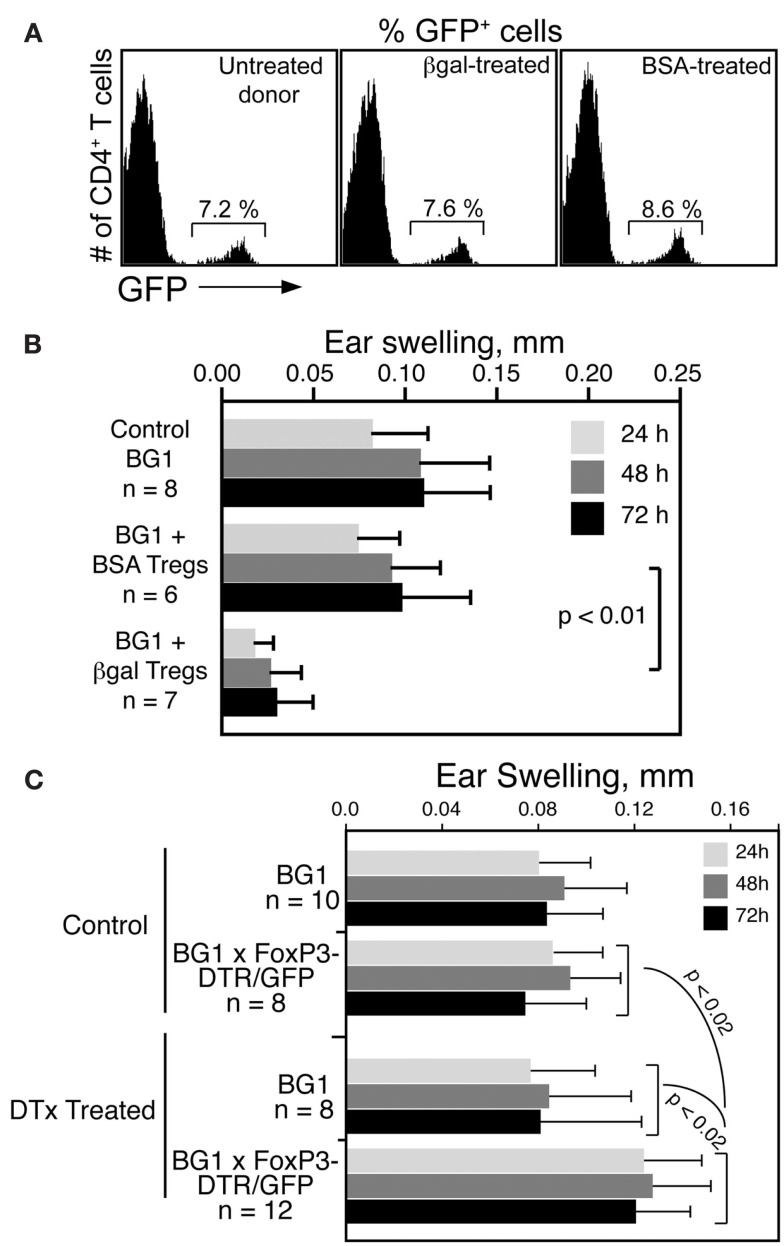
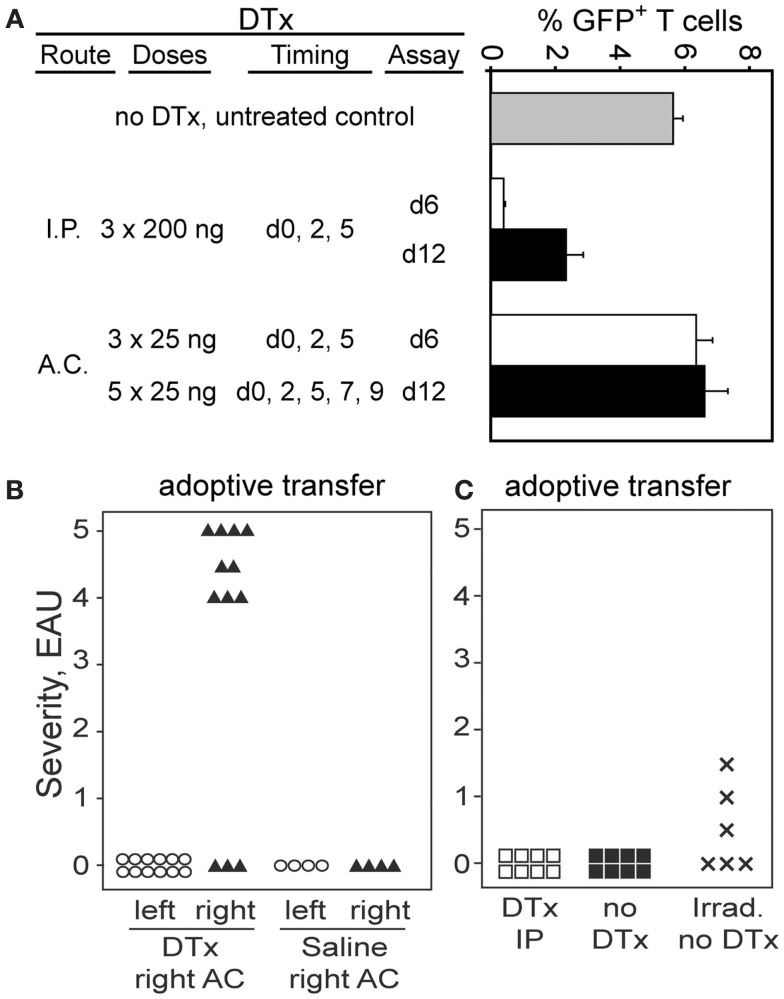
While pathogenic CD4 T cells are well known mediators of autoimmune uveoretinitis, CD8 T cells can also be uveitogenic. Since preliminary studies indicated that C57BL/6 mice were minimally susceptible to autoimmune uveoretinitis induction by CD8 T cells, the basis of the retinal disease resistance was sought. Mice that express β-galactosidase (βgal) on a retina-specific promoter (arrβgal mice) were backcrossed to mice expressing green fluorescent protein (GFP) and diphtheria toxin (DTx) receptor (DTR) under control of the Foxp3 promoter (Foxp3-DTR/GFP mice), and to T cell receptor transgenic mice that produce βgal-specific CD8 T cells (BG1 mice). These mice were used to explore the role of regulatory T cells in the resistance to retinal autoimmune disease. Experiments with T cells from double transgenic BG1 × Foxp3-DTR/GFP mice transferred into Foxp3-DTR/GFP × arrβgal mice confirmed that the retina was well protected from attempts to induce disease by adoptive transfer of activated BG1 T cells. The successful induction of retinal disease following unilateral intraocular administration of DTx to deplete regulatory T cells showed that the protective activity was dependent on local, toxin-sensitive regulatory T cells; the opposite, untreated eye remained disease-free. Although there were very few Foxp3(+) regulatory T cells in the parenchyma of quiescent retina, and they did not accumulate in retina, their depletion by local toxin administration led to disease susceptibility. We propose that these regulatory T cells modulate the pathogenic activity of βgal-specific CD8 T cells in the retinas of arrβgal mice on a local basis, allowing immuno regulation to be responsive to local conditions.
虽然致病性 CD4 T 细胞是自身免疫性葡萄膜炎的主要介导者,但 CD8 T 细胞也可能具有葡萄膜炎发病能力。由于初步研究表明 C57BL/6 小鼠对 CD8 T 细胞诱导的自身免疫性葡萄膜炎的易感性较低,因此寻找视网膜疾病抗性的基础。在视网膜特异性启动子(arrβgal 小鼠)上表达β-半乳糖苷酶(βgal)的小鼠与在 Foxp3 启动子控制下表达绿色荧光蛋白(GFP)和白喉毒素(DTx)受体(DTR)的小鼠(Foxp3-DTR/GFP 小鼠)和产生βgal 特异性 CD8 T 细胞的 T 细胞受体转基因小鼠(BG1 小鼠)进行回交。这些小鼠用于研究调节性 T 细胞在抵抗视网膜自身免疫疾病中的作用。用来自双转基因 BG1×Foxp3-DTR/GFP 小鼠的 T 细胞进行的实验转移到 Foxp3-DTR/GFP×arrβgal 小鼠中,证实了通过过继转移激活的 BG1 T 细胞尝试诱导疾病时,视网膜得到了很好的保护。单侧眼内给予 DTx 以耗尽调节性 T 细胞后成功诱导视网膜疾病表明,保护活性依赖于局部、毒素敏感的调节性 T 细胞;相反,未经处理的眼睛保持无病状态。尽管在静止的视网膜实质中 Foxp3(+)调节性 T 细胞非常少,并且它们不在视网膜中积累,但局部毒素给药耗尽它们会导致疾病易感性。我们提出,这些调节性 T 细胞在 arrβgal 小鼠的视网膜中以局部方式调节βgal 特异性 CD8 T 细胞的致病性活性,从而使免疫调节能够对局部条件做出反应。