Department of Endocrinology, Zhujiang Hospital, Southern Medical University, Guangzhou, China.
Med Sci Monit. 2012 Jul;18(7):BR286-91. doi: 10.12659/msm.883207.
The peptide glucagon-like peptide-1 (GLP-1) is a hormone secreted by intestinal L cells in response to food intake. GLP-1 has been proposed as the basis of emerging therapy for patients with type 2 diabetes. However, the effects of GLP-1 on vascular injury in diabetes have not been identified. Advanced glycation end products (AGEs) induce endothelial cell apoptosis and have been implicated in the process of vascular complications from diabetes.
MATERIAL/METHODS: The aim of this work was to investigate whether and how GLP-1 protects endothelial cells from apoptosis induced by AGEs. Human umbilical vein endothelial cells (HUVECs) were treated with AGEs (200 µg/mL) for 48 h in the presence or absence of GLP-1. Cell morphology, viability, apoptosis, ratio of Bcl-2 protein to Bax protein, cytochrome c release, and activity of caspase-9 and -3 were determined.
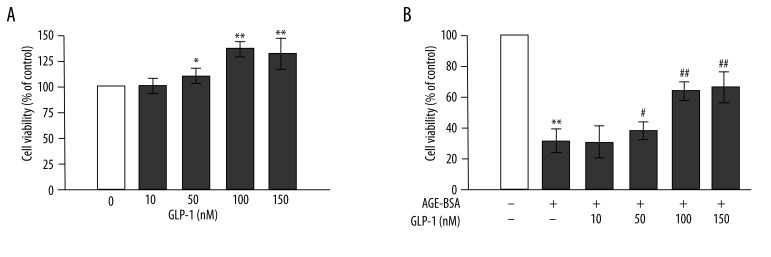
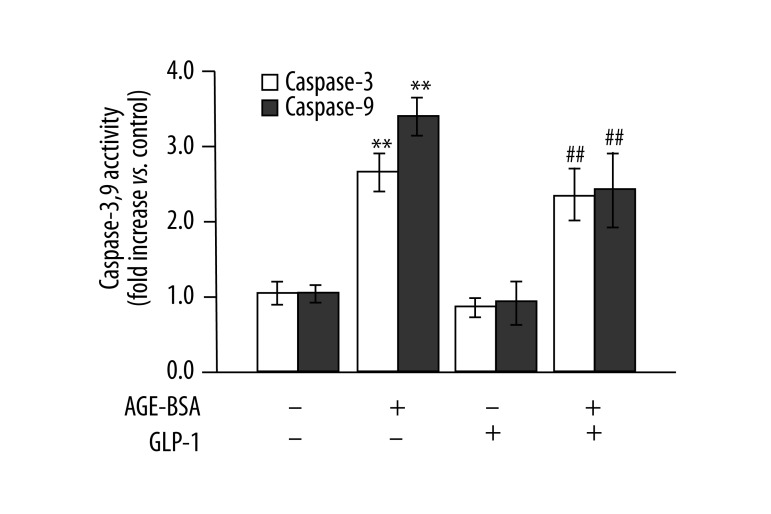
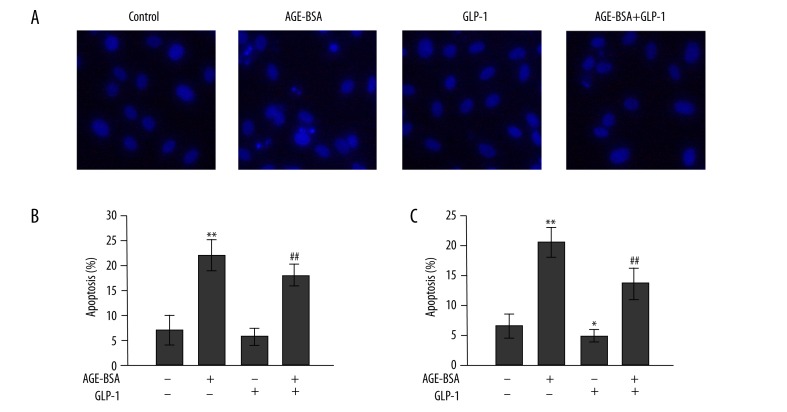
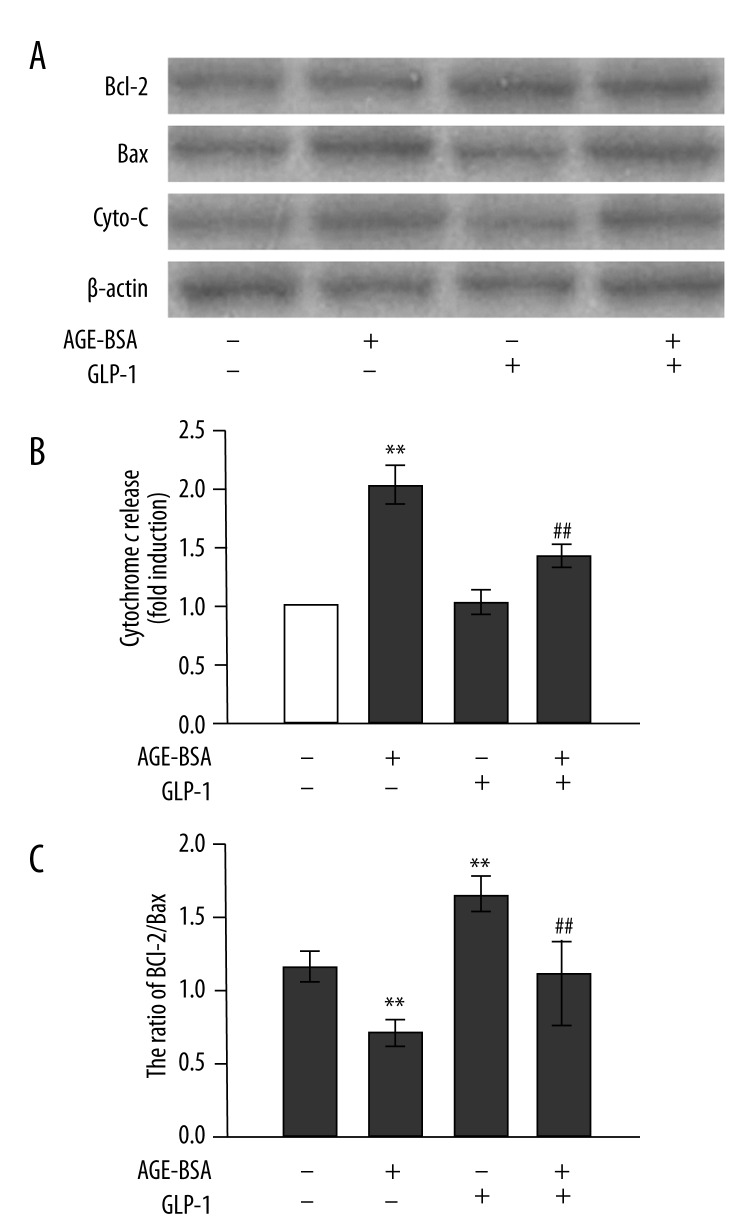
Treatment of cells with AGEs led to cell morphology changes and decreased cell viability, resulting in apoptosis. GLP-1 alone increased cell viability in a concentration-dependent manner. GLP-1 partially inhibited AGEs-induced apoptosis in HUVECs. GLP-1 increased Bcl-2/Bax ratio, reduced cytochrome c levels in the cytoplasm, and reduced the activity of caspase-9 and -3 in AGEs-treated HUVECs.
AGEs induces apoptosis via the mitochondrion-cytochrome c-caspase protease pathway, and GLP-1 protects endothelial cells by interfering with this mechanism. GLP-1 may represent an anti-apoptotic agent in the treatment of vascular complications arising from diabetes.
肽类激素胰高血糖素样肽-1(GLP-1)是一种在进食后由肠道 L 细胞分泌的激素。GLP-1 已被提议作为治疗 2 型糖尿病患者的新兴疗法的基础。然而,GLP-1 对糖尿病血管损伤的影响尚未确定。糖基化终产物(AGEs)诱导内皮细胞凋亡,并与糖尿病血管并发症的发生过程有关。
材料/方法:本研究旨在探讨 GLP-1 是否以及如何保护内皮细胞免受 AGEs 诱导的凋亡。将人脐静脉内皮细胞(HUVEC)用 AGEs(200μg/ml)处理 48 小时,同时存在或不存在 GLP-1。测定细胞形态、活力、凋亡、Bcl-2 蛋白与 Bax 蛋白的比值、细胞色素 c 释放和 caspase-9、caspase-3 的活性。
用 AGEs 处理细胞导致细胞形态改变和细胞活力下降,从而导致细胞凋亡。GLP-1 以浓度依赖的方式单独增加细胞活力。GLP-1 部分抑制 HUVECs 中 AGEs 诱导的细胞凋亡。GLP-1 增加了 Bcl-2/Bax 比值,减少了细胞质中细胞色素 c 的水平,并降低了 AGEs 处理的 HUVECs 中 caspase-9 和 caspase-3 的活性。
AGEs 通过线粒体-细胞色素 c-caspase 蛋白酶途径诱导细胞凋亡,GLP-1 通过干扰该机制来保护内皮细胞。GLP-1 可能是治疗糖尿病血管并发症的一种抗凋亡剂。