Nguyen Thu T A, Le Hanh N D, Vo Minh, Wang Zhaoyang, Luu Long, Ramella-Roman Jessica C
Biomed Opt Express. 2012 Jun 1;3(6):1200-14. doi: 10.1364/BOE.3.001200. Epub 2012 May 3.
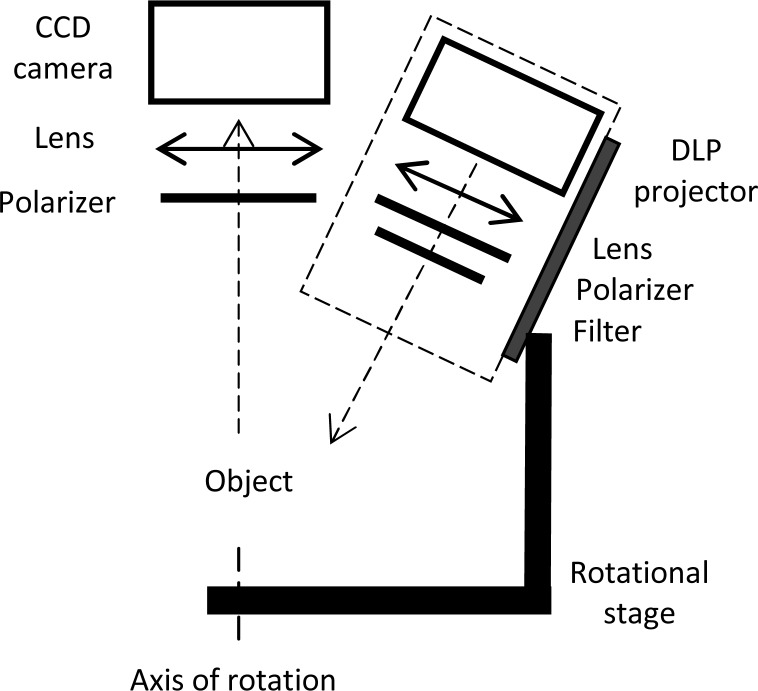
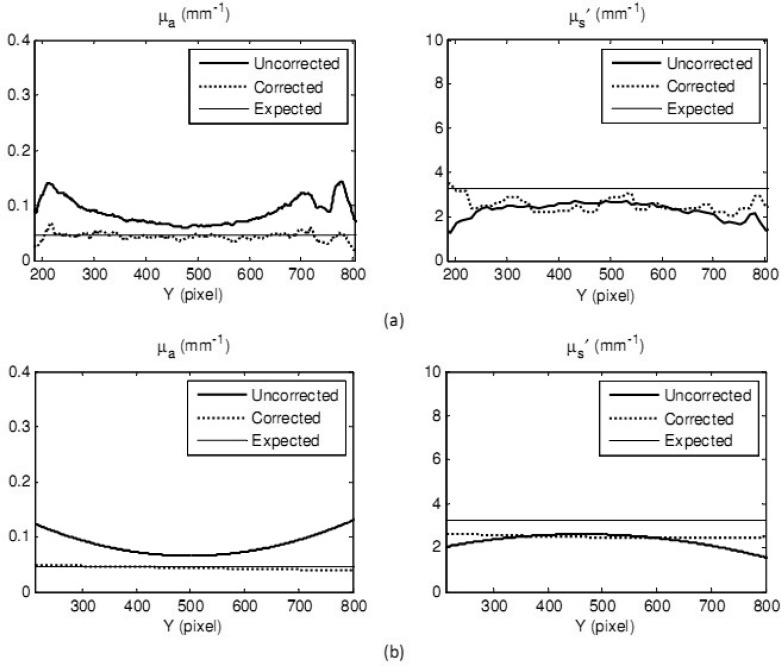
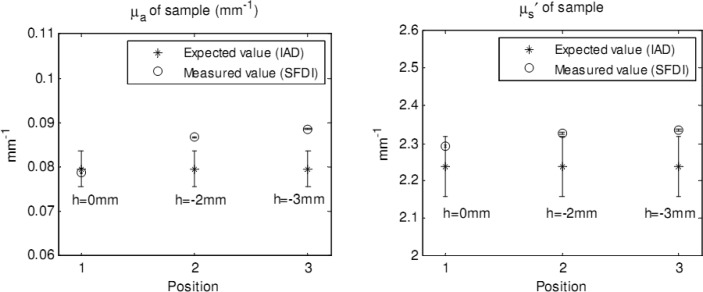
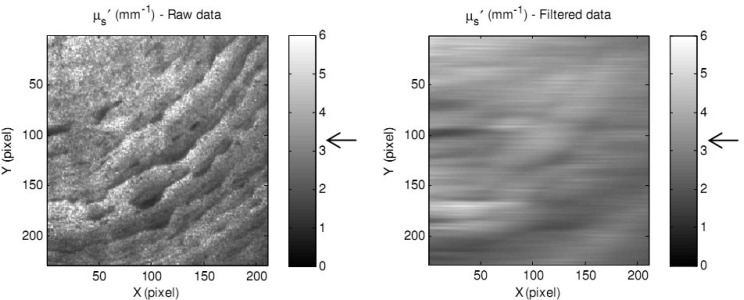
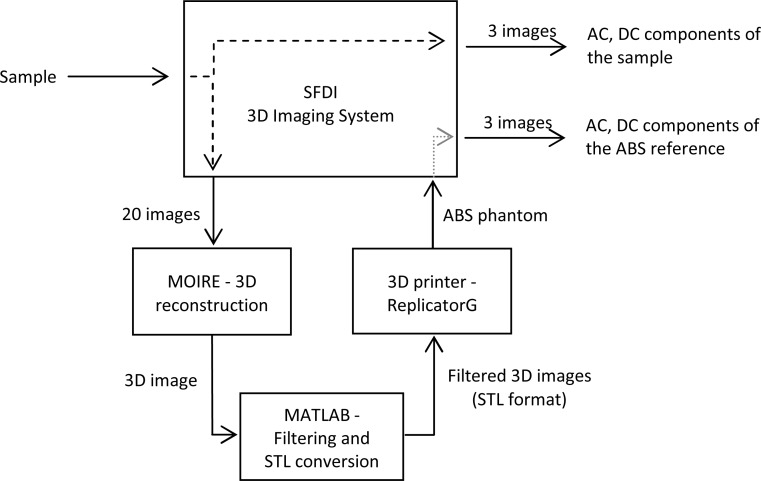
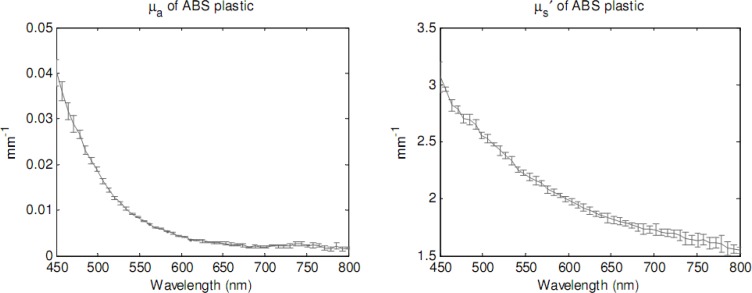
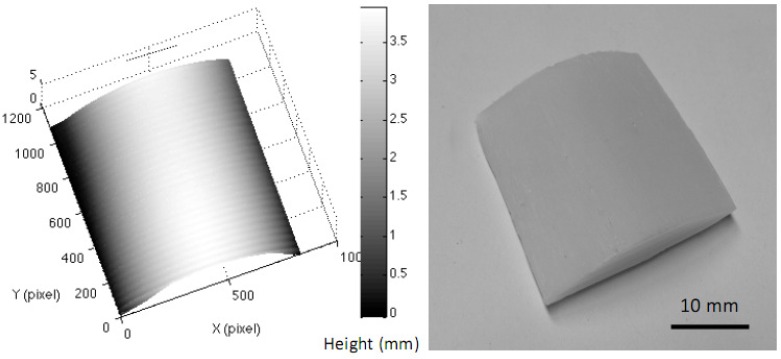
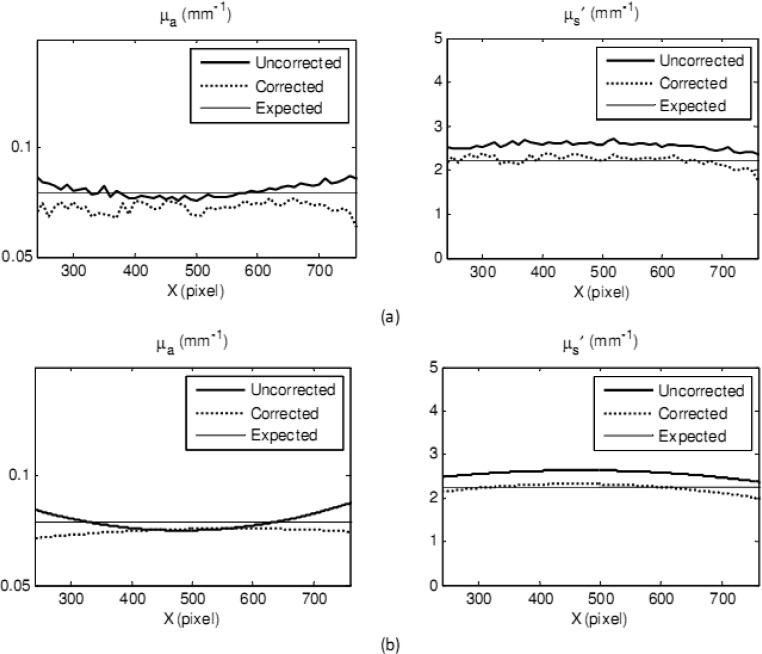
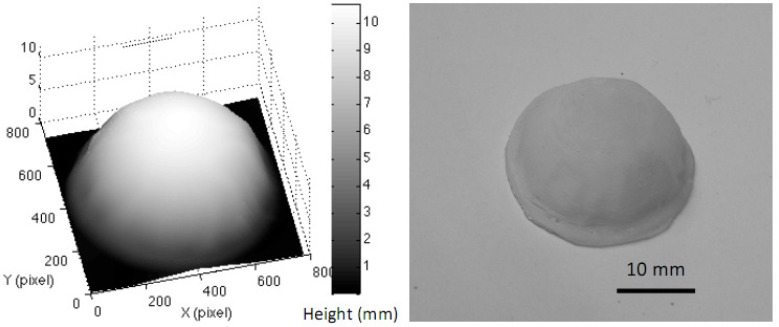
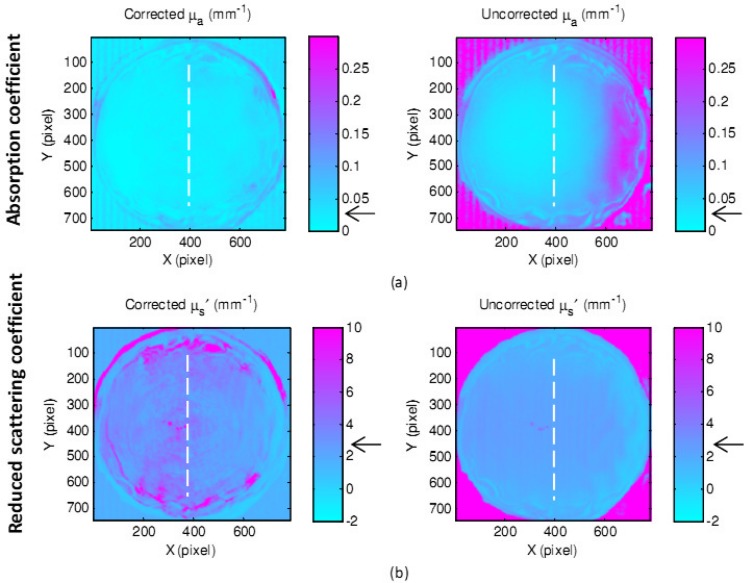
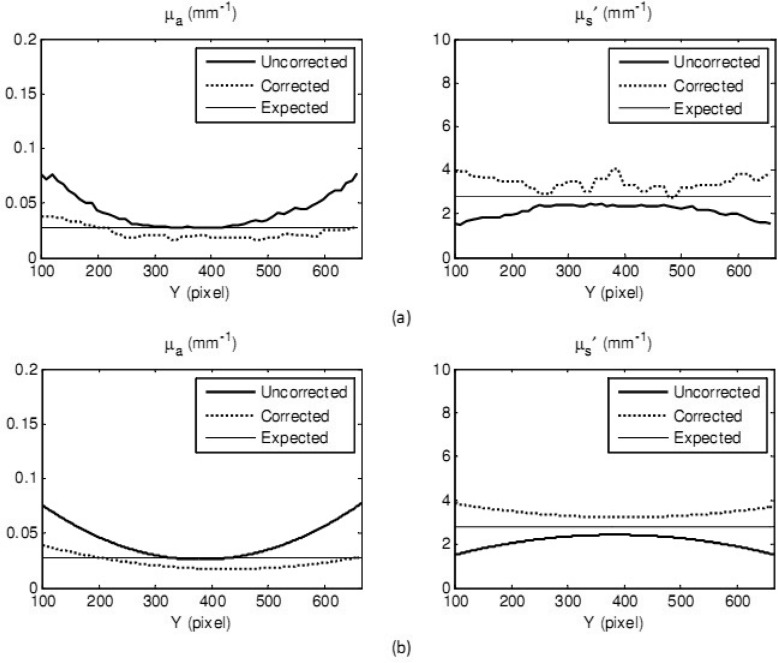
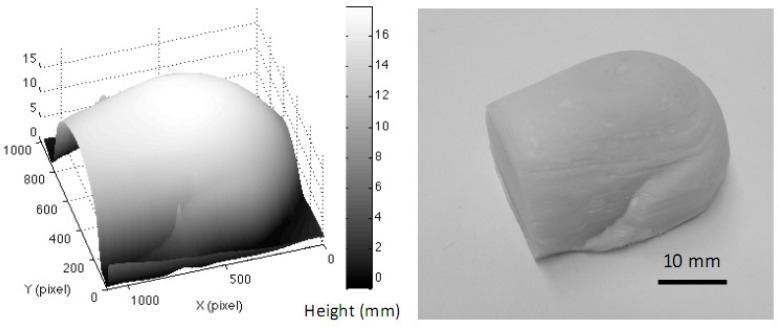
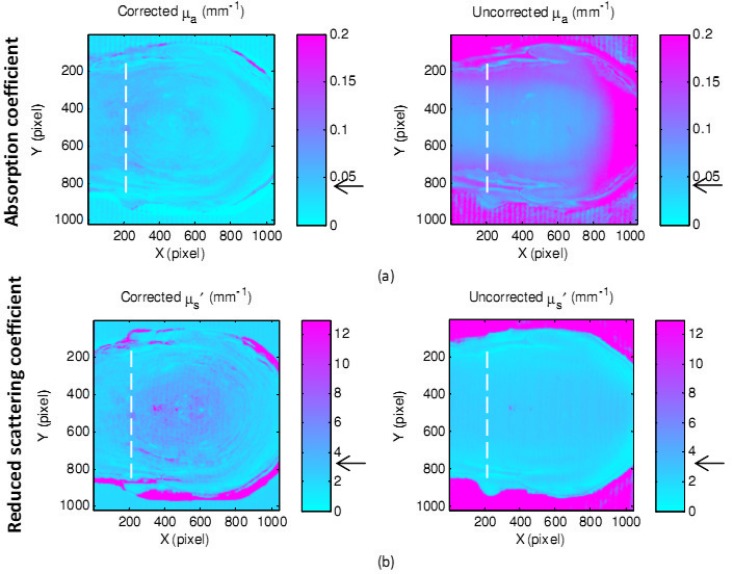
The sensitivity to surface profile of non-contact optical imaging, such as spatial frequency domain imaging, may lead to incorrect measurements of optical properties and consequently erroneous extrapolation of physiological parameters of interest. Previous correction methods have focused on calibration-based, model-based, and computation-based approached. We propose an experimental method to correct the effect of surface profile on spectral images. Three-dimensional (3D) phantoms were built with acrylonitrile butadiene styrene (ABS) plastic using an accurate 3D imaging and an emergent 3D printing technique. In this study, our method was utilized for the correction of optical properties (absorption coefficient μ(a) and reduced scattering coefficient μ(s)') of objects obtained with a spatial frequency domain imaging system. The correction method was verified on three objects with simple to complex shapes. Incorrect optical properties due to surface with minimum 4 mm variation in height and 80 degree in slope were detected and improved, particularly for the absorption coefficients. The 3D phantom-based correction method is applicable for a wide range of purposes. The advantages and drawbacks of the 3D phantom-based correction methods are discussed in details.
非接触式光学成像(如空间频域成像)对表面轮廓的敏感性可能会导致光学特性的测量错误,进而导致对感兴趣的生理参数进行错误的推断。先前的校正方法主要集中在基于校准、基于模型和基于计算的方法上。我们提出了一种实验方法来校正表面轮廓对光谱图像的影响。使用精确的三维成像和新兴的三维打印技术,用丙烯腈-丁二烯-苯乙烯(ABS)塑料制作了三维模型。在本研究中,我们的方法用于校正通过空间频域成像系统获得的物体的光学特性(吸收系数μ(a)和约化散射系数μ(s)')。该校正方法在三个形状从简单到复杂的物体上得到了验证。检测并改善了由于高度至少有4毫米变化且斜率为80度的表面所导致的不正确光学特性,特别是吸收系数。基于三维模型的校正方法适用于广泛的用途。详细讨论了基于三维模型的校正方法的优缺点。