Biophysics and Department of Chemistry, University of Michigan, Ann Arbor, MI, United States.
Int J Biochem Cell Biol. 2012 Nov;44(11):1852-61. doi: 10.1016/j.biocel.2012.06.025. Epub 2012 Jun 26.
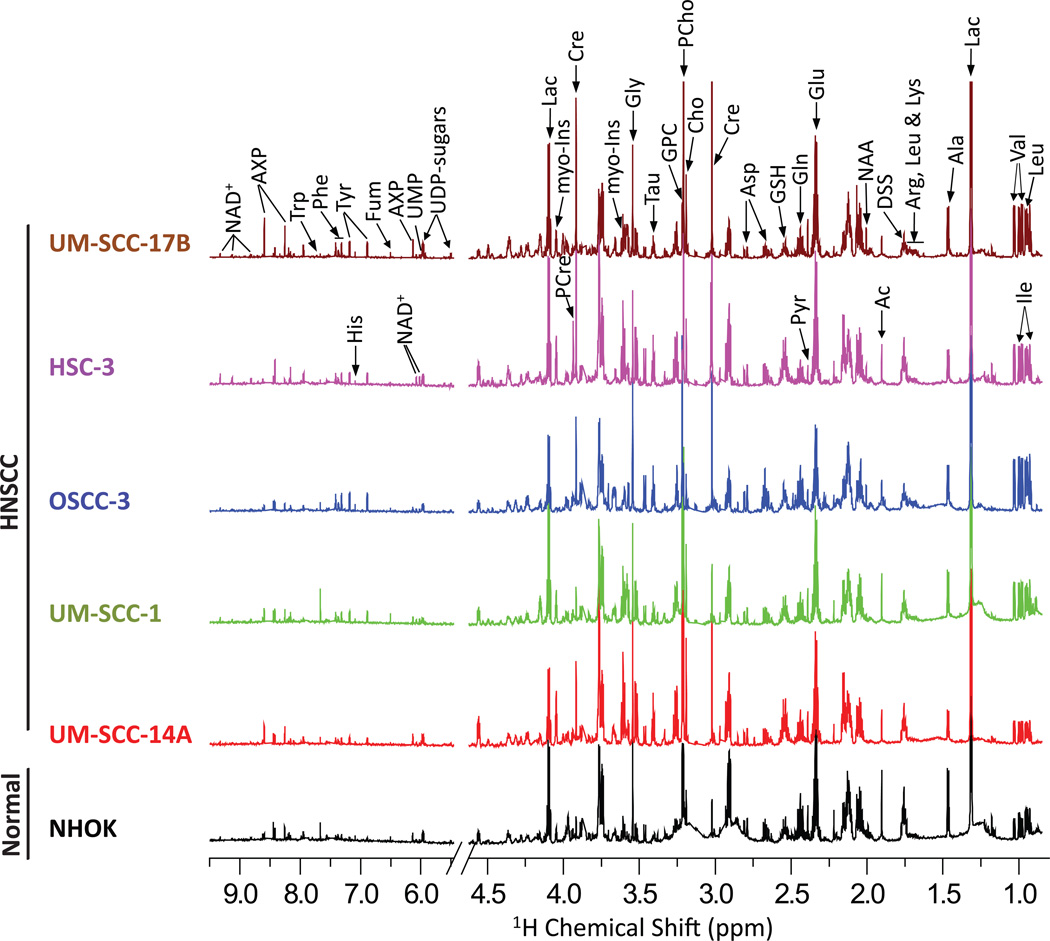
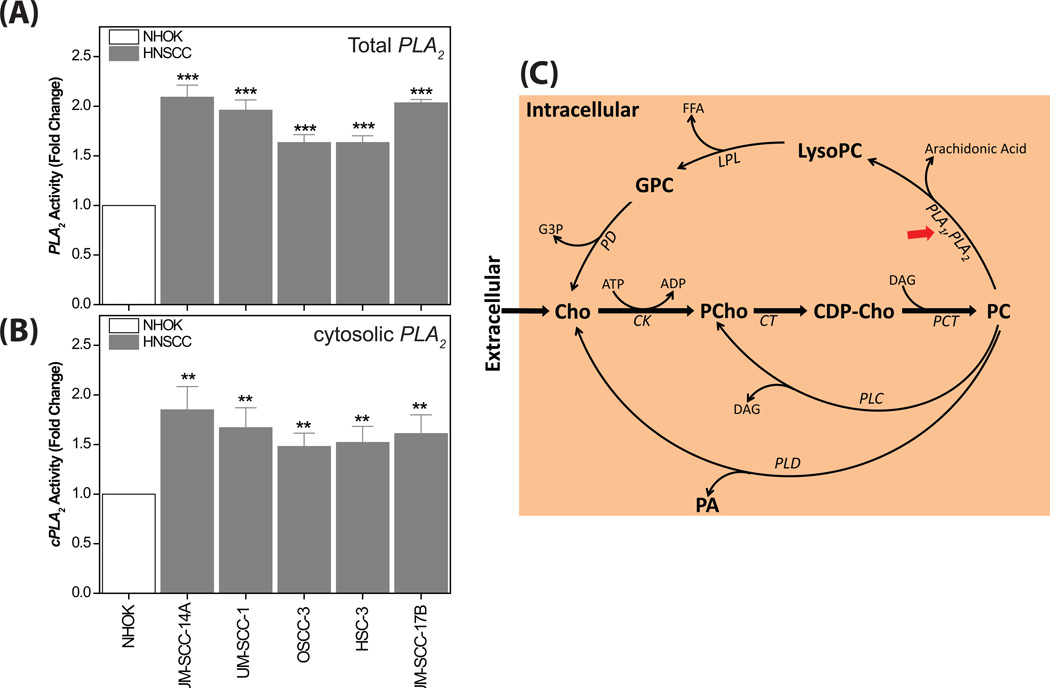
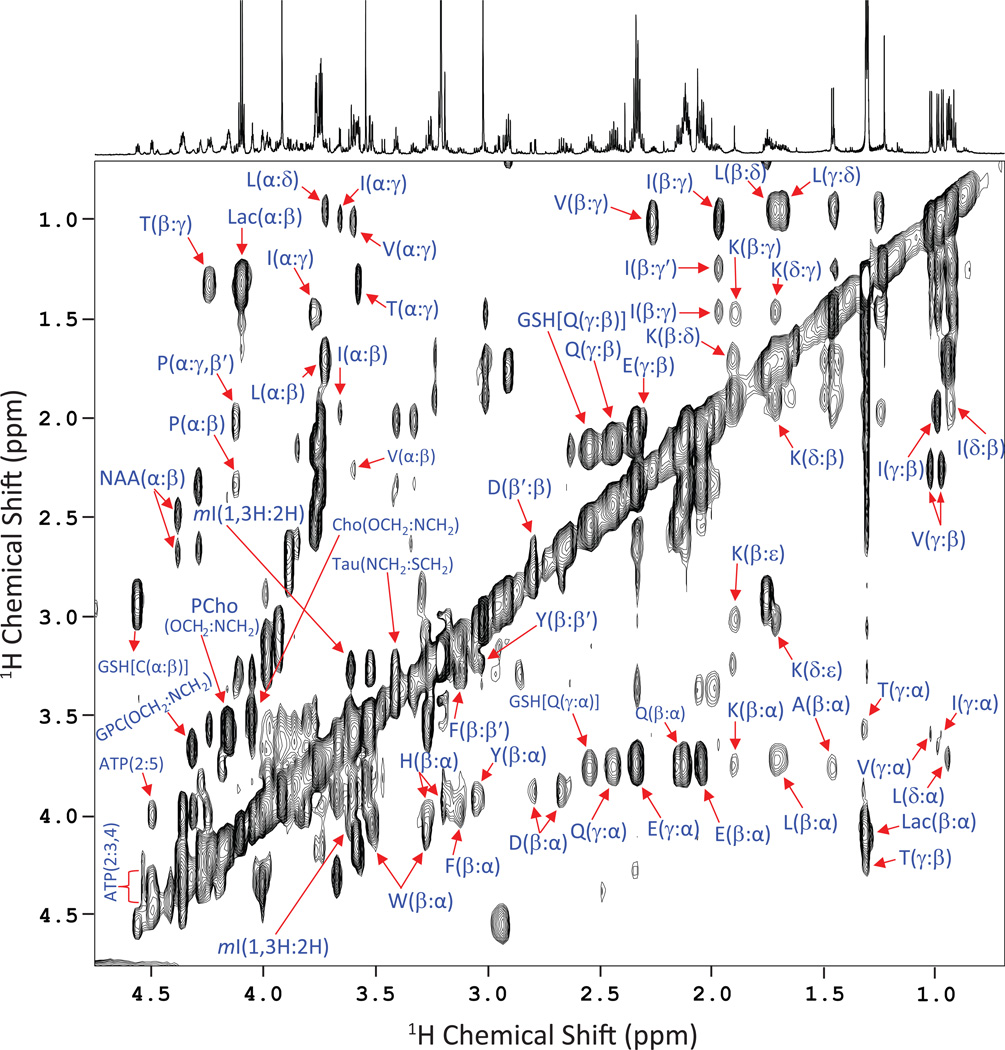
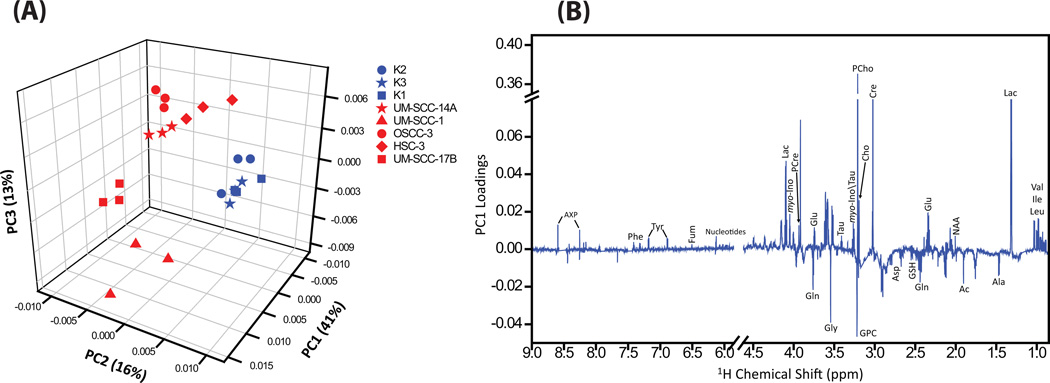
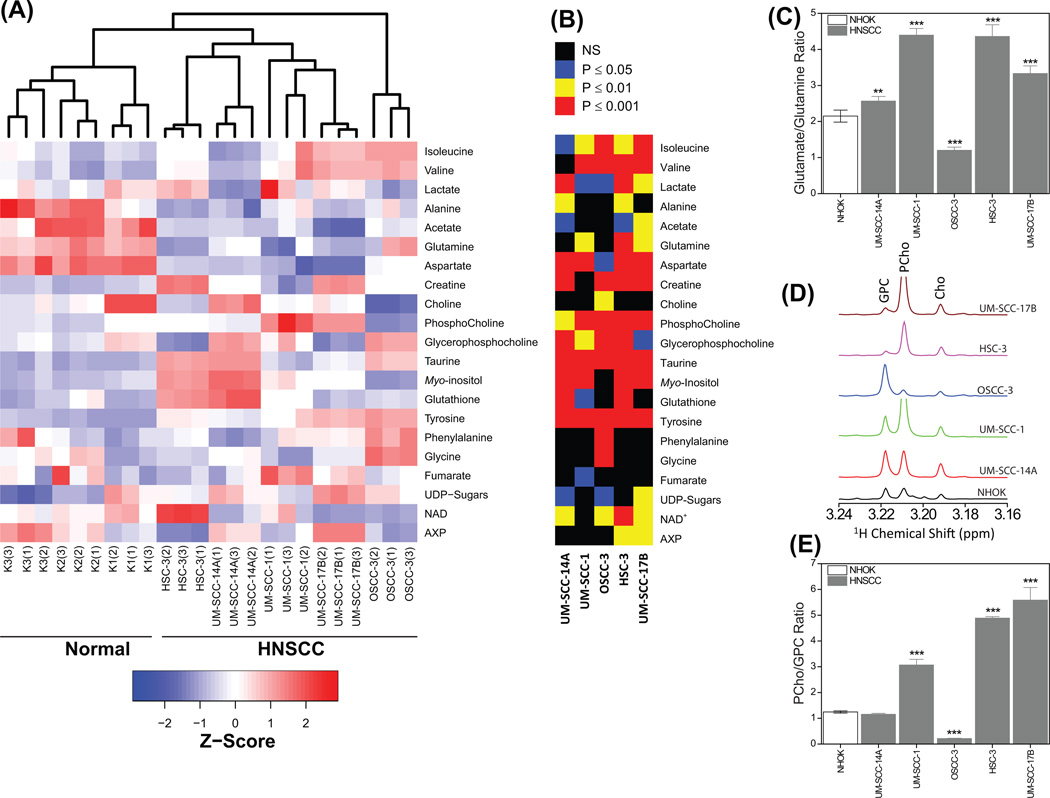
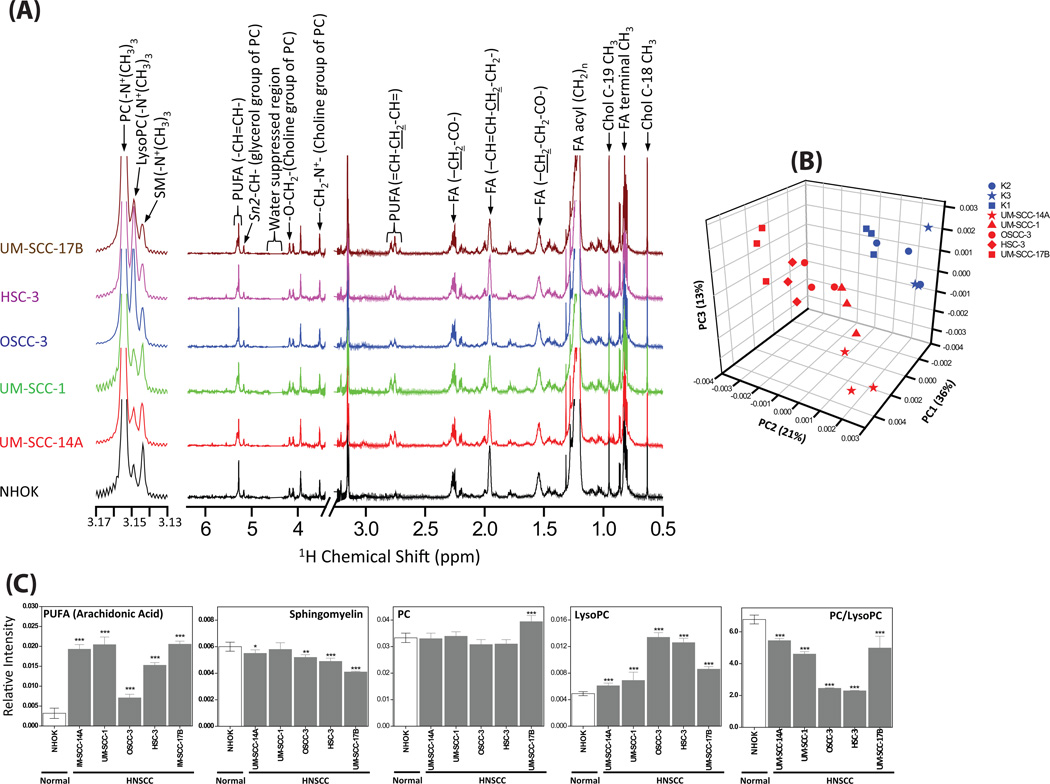
A better understanding of molecular pathways involved in malignant transformation of head and neck squamous cell carcinoma (HNSCC) is essential for the development of novel and efficient anti-cancer drugs. To delineate the global metabolism of HNSCC, we report (1)H NMR-based metabolic profiling of HNSCC cells from five different patients that were derived from various sites of the upper aerodigestive tract, including the floor of mouth, tongue and larynx. Primary cultures of normal human oral keratinocytes (NHOK) from three different donors were used for comparison. (1)H NMR spectra of polar and non-polar extracts of cells were used to identify more than thirty-five metabolites. Principal component analysis performed on the NMR data revealed a clear classification of NHOK and HNSCC cells. HNSCC cells exhibited significantly altered levels of various metabolites that clearly revealed dysregulation in multiple metabolic events, including Warburg effect, oxidative phosphorylation, energy metabolism, TCA cycle anaplerotic flux, glutaminolysis, hexosamine pathway, osmo-regulatory and anti-oxidant mechanism. In addition, significant alterations in the ratios of phosphatidylcholine/lysophosphatidylcholine and phosphocholine/glycerophosphocholine, and elevated arachidonic acid observed in HNSCC cells reveal an altered membrane choline phospholipid metabolism (MCPM). Furthermore, significantly increased activity of phospholipase A(2) (PLA(2)), particularly cytosolic PLA(2) (cPLA(2)) observed in all the HNSCC cells confirm an altered MCPM. In summary, the metabolomic findings presented here can be useful to further elucidate the biological aspects that lead to HNSCC, and also provide a rational basis for monitoring molecular mechanisms in response to chemotherapy. Moreover, cPLA(2) may serve as a potential therapeutic target for anti-cancer therapy of HNSCC.
更好地了解头颈部鳞状细胞癌(HNSCC)恶性转化中涉及的分子途径,对于开发新型有效的抗癌药物至关重要。为了描绘 HNSCC 的全局代谢,我们报告了(1)H NMR 基于代谢谱分析来自五个不同患者的 HNSCC 细胞,这些患者来自上呼吸道的不同部位,包括口底、舌和喉。来自三个不同供体的正常人口腔角质形成细胞(NHOK)的原代培养用于比较。对细胞的极性和非极性提取物的(1)H NMR 光谱用于鉴定三十多种代谢物。对 NMR 数据进行的主成分分析显示 NHOK 和 HNSCC 细胞的分类清晰。HNSCC 细胞表现出各种代谢物水平的显著改变,这些改变清楚地表明了多种代谢事件的失调,包括瓦博格效应、氧化磷酸化、能量代谢、TCA 循环补料通量、谷氨酰胺分解代谢、己糖胺途径、渗透压调节和抗氧化机制。此外,在 HNSCC 细胞中观察到的磷脂酰胆碱/溶血磷脂酰胆碱和磷酸胆碱/甘油磷酸胆碱的比率以及花生四烯酸的显著改变表明膜胆碱磷脂代谢(MCPM)发生改变。此外,在所有 HNSCC 细胞中观察到的磷酸脂酶 A2(PLA2),特别是胞质 PLA2(cPLA2)的活性显著增加,证实了 MCPM 的改变。总之,这里呈现的代谢组学发现可用于进一步阐明导致 HNSCC 的生物学方面,并为监测化疗反应中的分子机制提供合理的基础。此外,cPLA2 可作为 HNSCC 抗癌治疗的潜在治疗靶点。