State Key Laboratory of Electroanalytical Chemistry, Changchun Institute of Applied Chemistry, Chinese Academy of Sciences, Changchun, Jilin, China.
PLoS One. 2012;7(6):e37841. doi: 10.1371/journal.pone.0037841. Epub 2012 Jun 20.
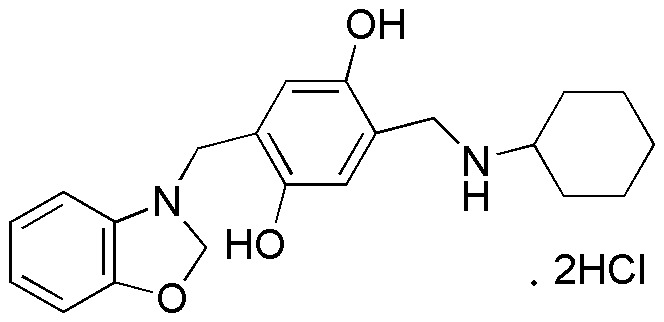
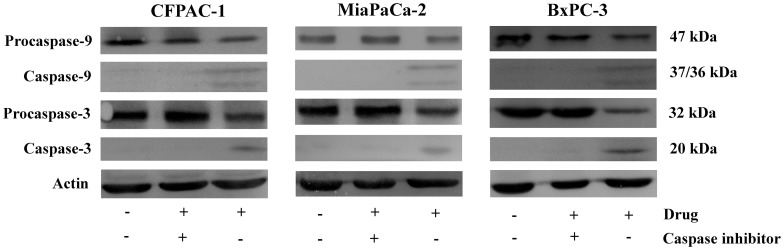
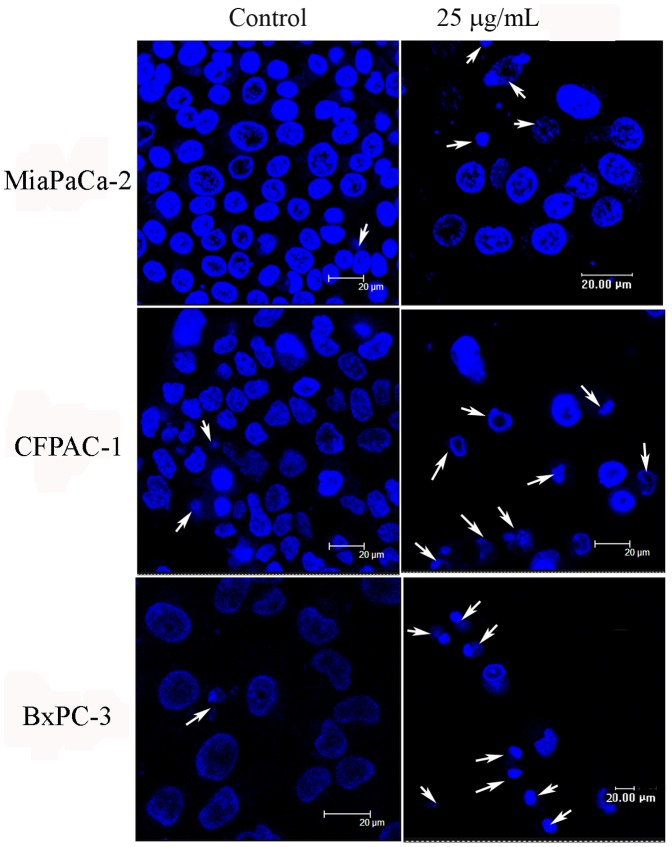
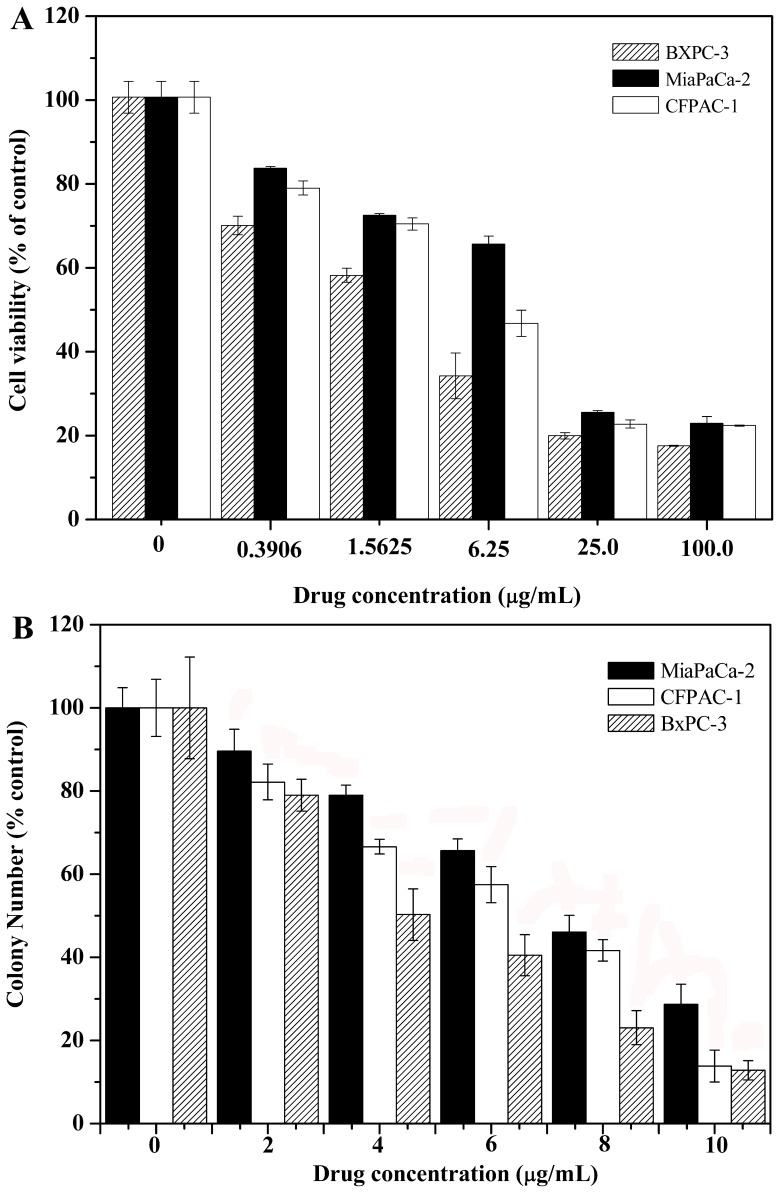
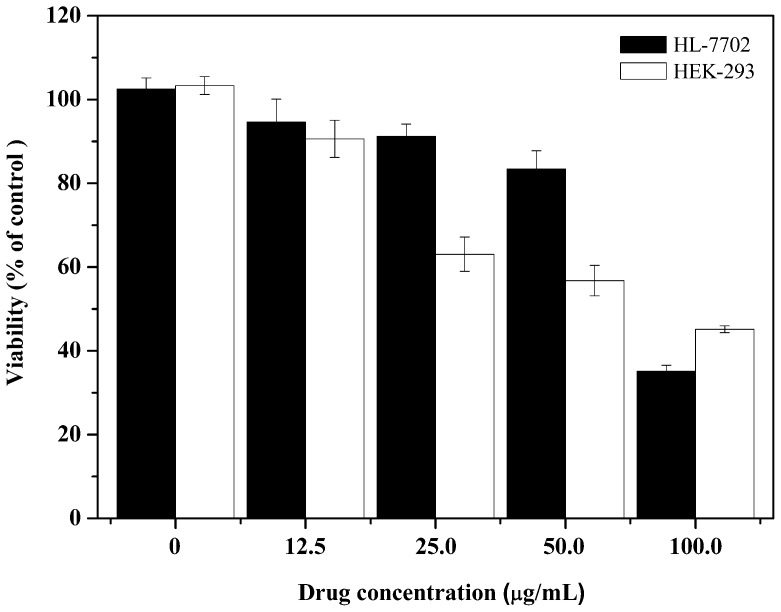
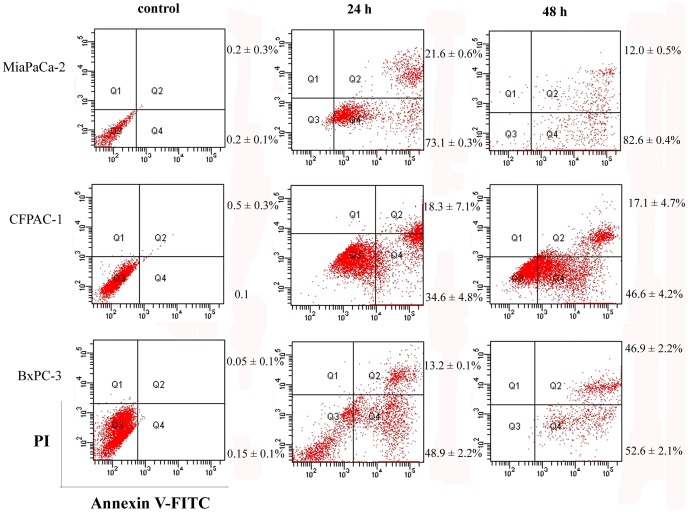
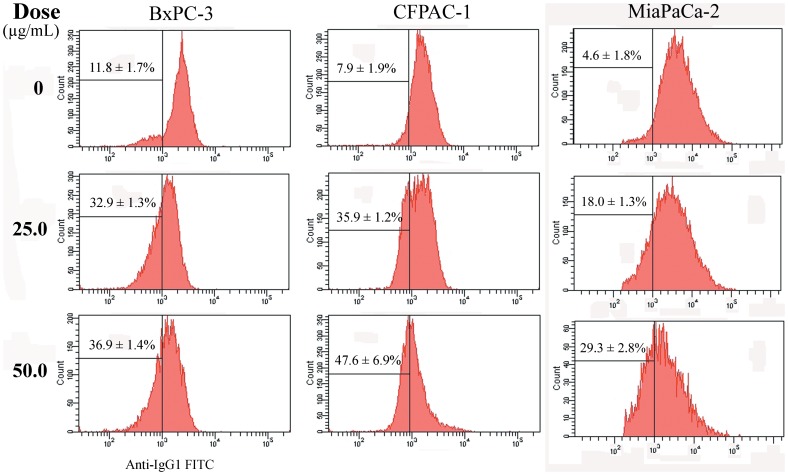
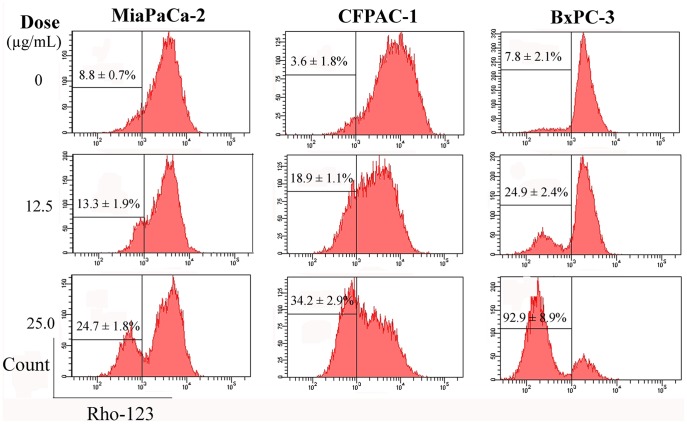
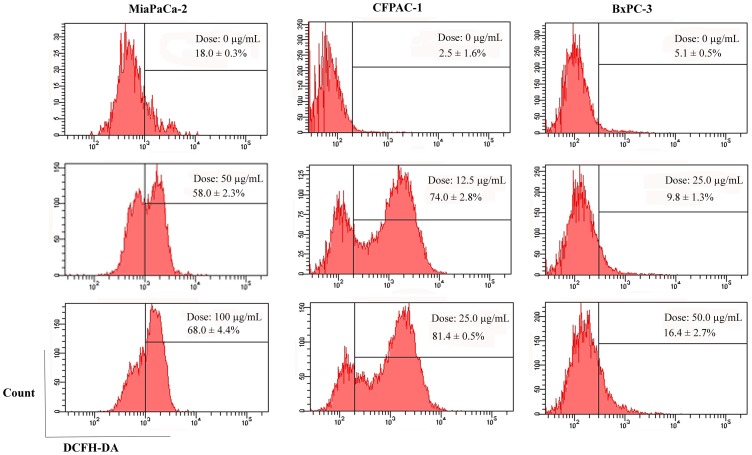
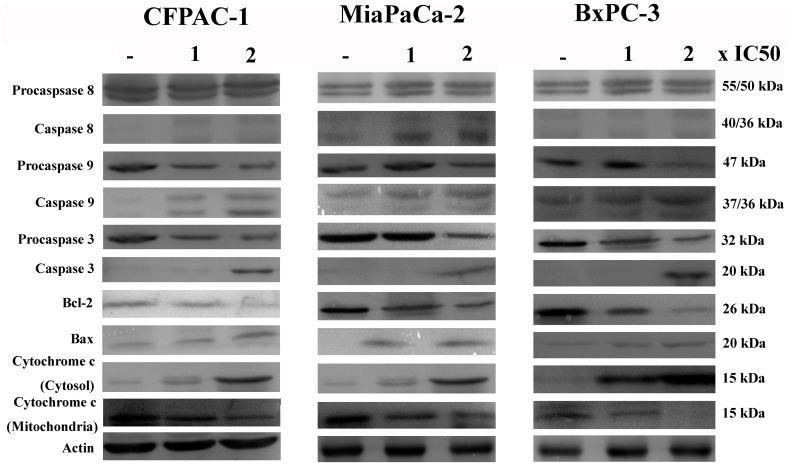
Pancreatic cancer is considered a lethal and treatment-refractory disease. To obtain a potent anticancer drug, the cytotoxic effect of 2-(benzo[d]oxazol-3(2H)-ylmethyl)-5-((cyclohexylamino)methyl)benzene-1,4-diol, dihydrochloride (NSC48693) on human pancreatic cancer cells CFPAC-1, MiaPaCa-2, and BxPC-3 was assessed in vitro. The proliferation of CFPAC-1, MiaPaCa-2, and BxPC-3 is inhibited with IC(50) value of 12.9±0.2, 20.6±0.3, and 6.2±0.6 µM at 48 h, respectively. This discovery is followed with additional analysis to demonstrate that NSC48693 inhibition is due to induction of apoptosis, including Annexin V staining, chromatins staining, and colony forming assays. It is further revealed that NSC48693 induces the release of cytochrome c, reduces mitochondrial membrane potential, generates reactive oxygen species, and activates caspase. These results collectively indicate that NSC48693 mainly induces apoptosis of CFPAC-1, MiaPaCa-2, and BxPC-3 cells by the mitochondrial-mediated apoptotic pathway. Excitingly, the study highlights an encouraging inhibition effect that human embryonic kidney (HEK-293) and liver (HL-7702) cells are more resistant to the antigrowth effect of NSC48693 compared to the three cancer cell lines. From this perspective, NSC48693 should help to open up a new opportunity for the treatment of patients with pancreatic cancer.
胰腺癌被认为是一种致命且治疗耐药的疾病。为了获得有效的抗癌药物,我们评估了 2-(苯并[d]恶唑-3(2H)-基甲基)-5-((环己基氨基)甲基)苯-1,4-二醇二盐酸盐(NSC48693)对人胰腺癌细胞 CFPAC-1、MiaPaCa-2 和 BxPC-3 的体外细胞毒性作用。结果显示,NSC48693 在 48 小时内对 CFPAC-1、MiaPaCa-2 和 BxPC-3 的抑制增殖作用的 IC50 值分别为 12.9±0.2、20.6±0.3 和 6.2±0.6µM。随后的分析表明,NSC48693 的抑制作用是由于诱导细胞凋亡,包括 Annexin V 染色、染色质染色和集落形成实验。进一步揭示,NSC48693 诱导细胞色素 c 释放,降低线粒体膜电位,产生活性氧,激活半胱天冬酶。这些结果表明,NSC48693 主要通过线粒体介导的凋亡途径诱导 CFPAC-1、MiaPaCa-2 和 BxPC-3 细胞凋亡。令人兴奋的是,该研究强调了一种令人鼓舞的抑制作用,即人胚肾(HEK-293)和人肝(HL-7702)细胞比三种癌细胞系对 NSC48693 的生长抑制作用更具抗性。从这个角度来看,NSC48693 有望为胰腺癌患者的治疗开辟新的机会。