Whitehead Institute for Biomedical Research, Nine Cambridge Center, Cambridge, MA 02142, USA.
Trends Mol Med. 2012 Sep;18(9):524-33. doi: 10.1016/j.molmed.2012.05.007. Epub 2012 Jun 28.
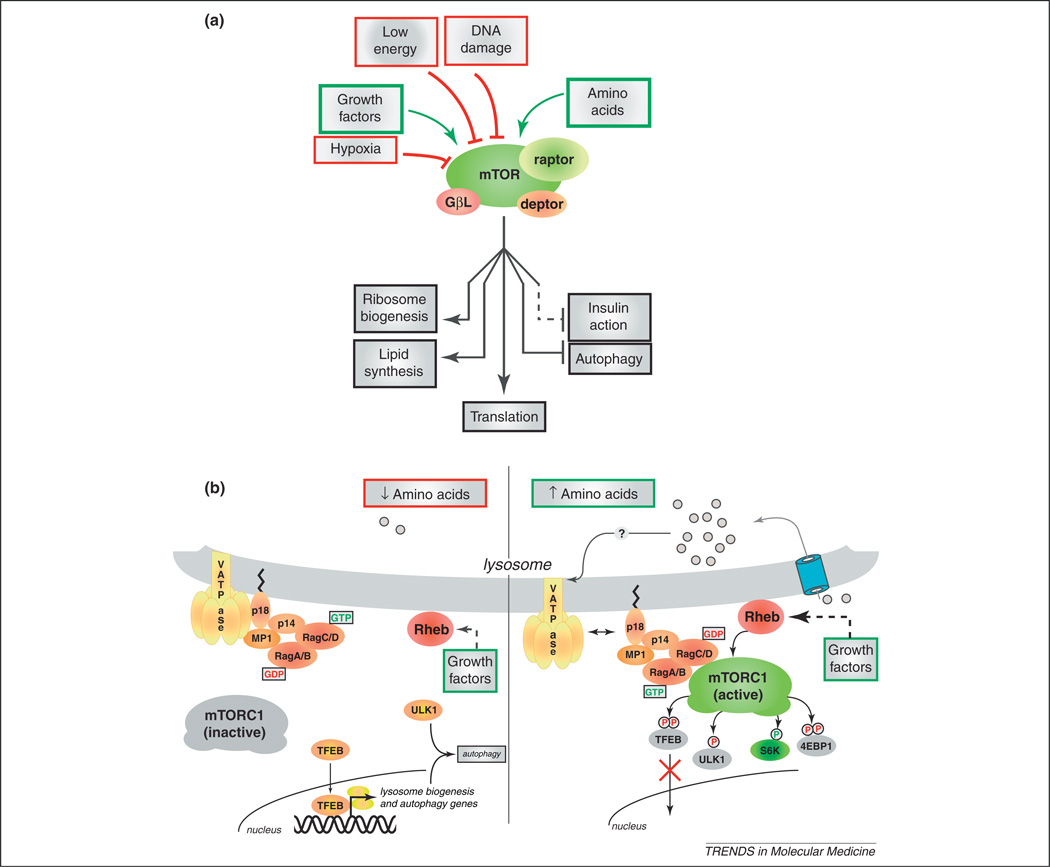
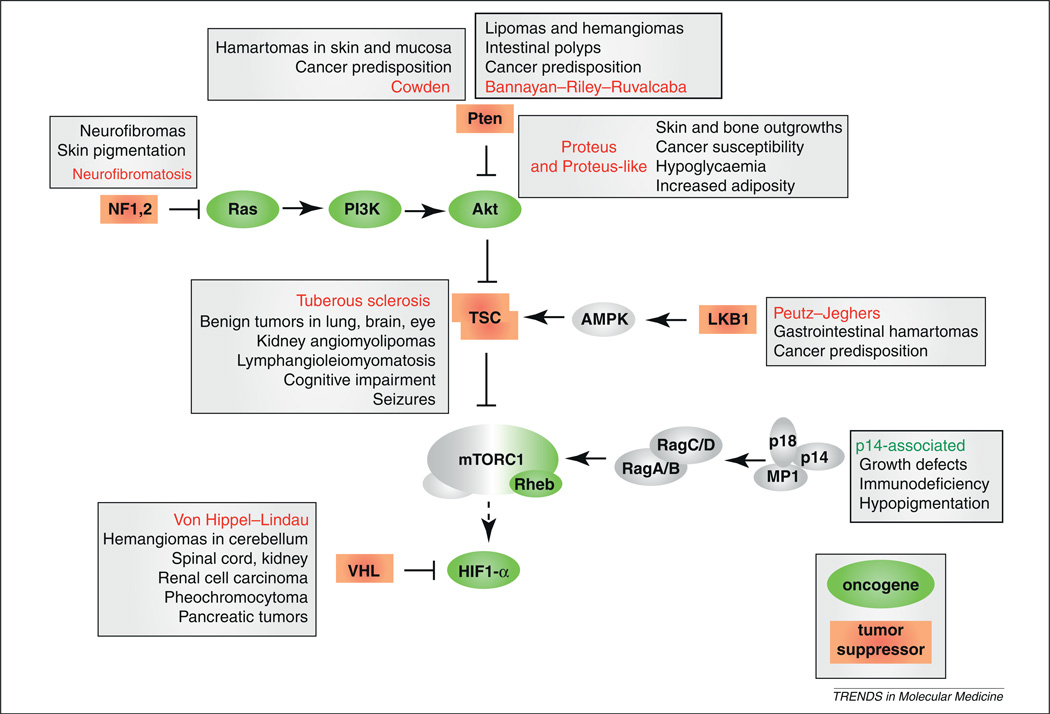
The mechanistic target of rapamycin (mTOR) kinase controls growth and metabolism, and its deregulation underlies the pathogenesis of many diseases, including cancer, neurodegeneration, and diabetes. mTOR complex 1 (mTORC1) integrates signals arising from nutrients, energy, and growth factors, but how exactly these signals are propagated await to be fully understood. Recent findings have placed the lysosome, a key mediator of cellular catabolism, at the core of mTORC1 regulation by amino acids. A multiprotein complex that includes the Rag GTPases, Ragulator, and the v-ATPase forms an amino acid-sensing machinery on the lysosomal surface that affects the decision between cell growth and catabolism at multiple levels. The involvement of a catabolic organelle in growth signaling may have important implications for our understanding of mTORC1-related pathologies.
雷帕霉素靶蛋白(mTOR)激酶的作用机制控制着生长和代谢,其失调是许多疾病(包括癌症、神经退行性疾病和糖尿病)的发病基础。mTOR 复合物 1(mTORC1)整合了来自营养物质、能量和生长因子的信号,但这些信号是如何传递的仍有待充分了解。最近的研究结果将溶酶体(细胞分解代谢的关键介质)置于氨基酸调控 mTORC1 的核心位置。一种包含 Rag GTPases、Ragulator 和 v-ATPase 的多蛋白复合物在溶酶体表面形成一个氨基酸感应机制,在多个层面上影响细胞生长和分解代谢之间的决策。分解代谢细胞器参与生长信号传递可能对我们理解与 mTORC1 相关的病理具有重要意义。