Xu Guoshuai, Zhang Qinghong, Cheng Renjia, Qu Jun, Li Wenqiang
Department of General Surgery, Aerospace Center Hospital, Beijing, China.
Emergency Department, Shengjing Hospital of China Medical University, Shenyang, Liaoning, China.
Autophagy. 2025 Apr;21(4):693-718. doi: 10.1080/15548627.2025.2452149. Epub 2025 Jan 26.
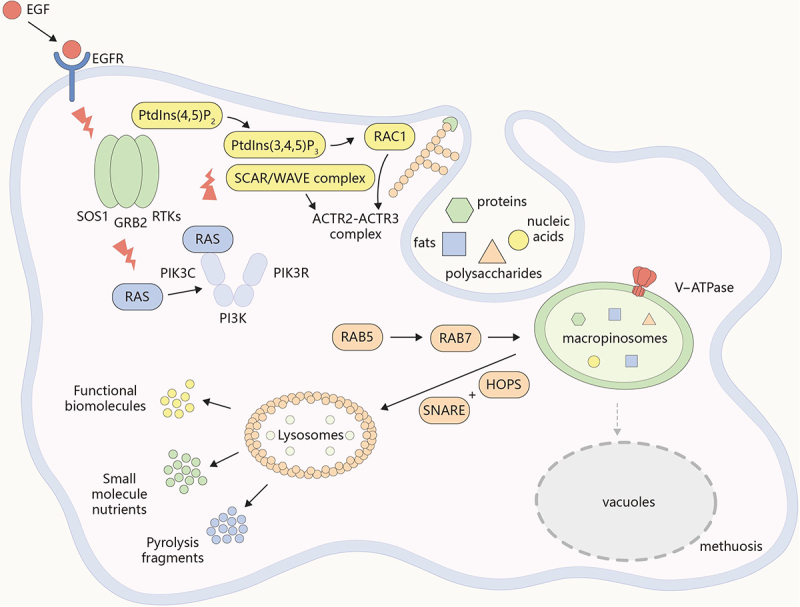
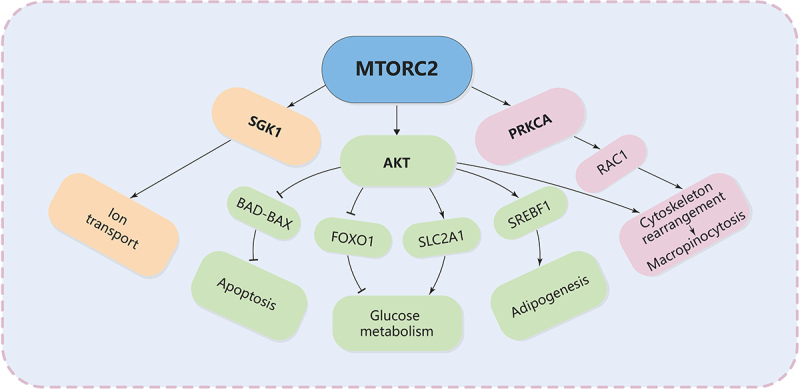
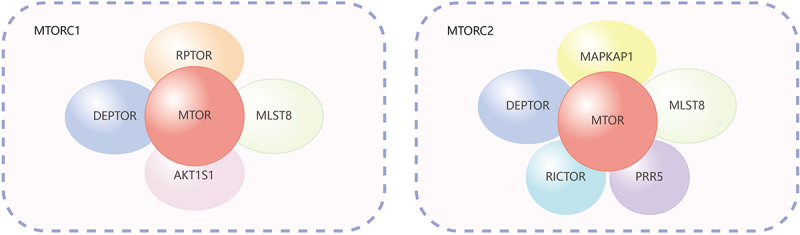
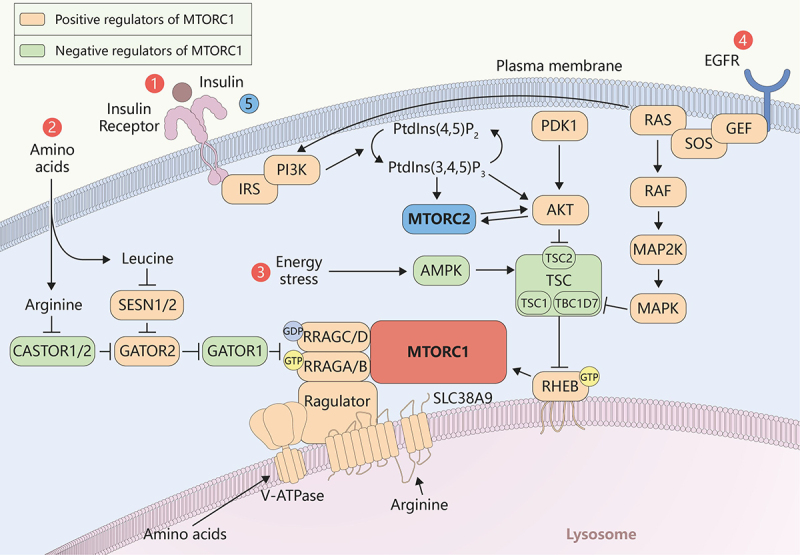
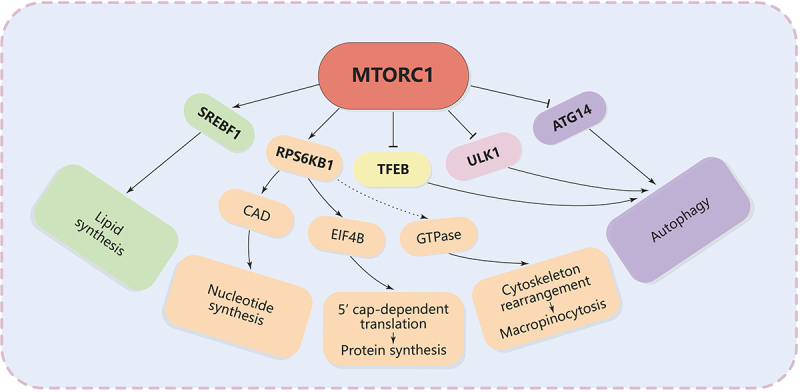
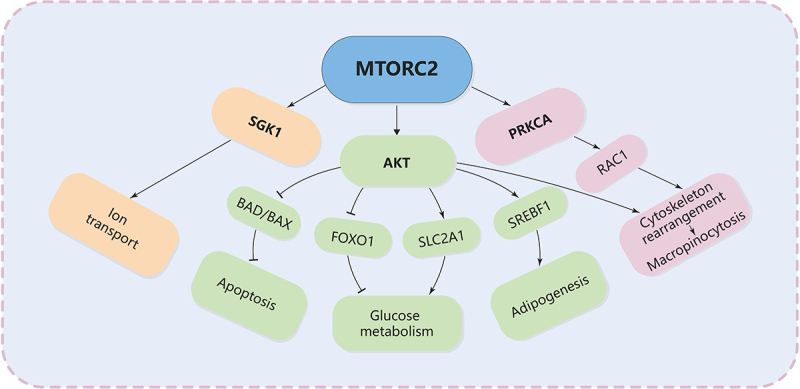
Macropinocytosis is a nonselective form of endocytosis that allows cancer cells to largely take up the extracellular fluid and its contents, including nutrients, growth factors, etc. We first elaborate meticulously on the process of macropinocytosis. Only by thoroughly understanding this entire process can we devise targeted strategies against it. We then focus on the central role of the MTOR (mechanistic target of rapamycin kinase) complex 1 (MTORC1) in regulating macropinocytosis, highlighting its significance as a key signaling hub where various pathways converge to control nutrient uptake and metabolic processes. The article covers a comprehensive analysis of the literature on the molecular mechanisms governing macropinocytosis, including the initiation, maturation, and recycling of macropinosomes, with an emphasis on how these processes are hijacked by cancer cells to sustain their growth. Key discussions include the potential therapeutic strategies targeting macropinocytosis, such as enhancing drug delivery via this pathway, inhibiting macropinocytosis to starve cancer cells, blocking the degradation and recycling of macropinosomes, and inducing methuosis - a form of cell death triggered by excessive macropinocytosis. Targeting macropinocytosis represents a novel and innovative approach that could significantly advance the treatment of cancers that rely on this pathway for survival. Through continuous research and innovation, we look forward to developing more effective and safer anti-cancer therapies that will bring new hope to patients.: AMPK: AMP-activated protein kinase; ASOs: antisense oligonucleotides; CAD: carbamoyl-phosphate synthetase 2, aspartate transcarbamylase, and dihydroorotase; DC: dendritic cell; EGF: epidermal growth factor; EGFR: epidermal growth factor receptor; ERBB2: erb-b2 receptor tyrosine kinase 2; ESCRT: endosomal sorting complex required for transport; GAP: GTPase-activating protein; GEF: guanine nucleotide exchange factor; GRB2: growth factor receptor bound protein 2; LPP: lipopolyplex; MTOR: mechanistic target of rapamycin kinase; MTORC1: mechanistic target of rapamycin kinase complex 1; MTORC2: mechanistic target of rapamycin kinase complex 2; NSCLC: non-small cell lung cancer; PADC: pancreatic ductal adenocarcinoma; PDPK1: 3-phosphoinositide dependent protein kinase 1; PI3K: phosphoinositide 3-kinase; PIK3C3: phosphatidylinositol 3-kinase catalytic subunit type 3; PtdIns(3,4,5)P: phosphatidylinositol-(3,4,5)-trisphosphate; PtdIns(4,5)P: phosphatidylinositol-(4,5)-bisphosphate; PTT: photothermal therapies; RAC1: Rac family small GTPase 1; RPS6: ribosomal protein S6; RPS6KB1: ribosomal protein S6 kinase B1; RTKs: receptor tyrosine kinases; SREBF: sterol regulatory element binding transcription factor; TFEB: transcription factor EB; TNBC: triple-negative breast cancer; TSC2: TSC complex subunit 2; ULK1: unc-51 like autophagy activating kinase 1; UPS: ubiquitin-proteasome system.
巨吞饮作用是一种非选择性的内吞形式,它使癌细胞能够大量摄取细胞外液及其所含物质,包括营养物质、生长因子等。我们首先详细阐述巨吞饮作用的过程。只有彻底了解这一整个过程,我们才能设计出针对它的靶向策略。然后,我们聚焦雷帕霉素机制性靶标激酶(MTOR)复合物1(MTORC1)在调节巨吞饮作用中的核心作用,强调其作为关键信号枢纽的重要性,各种途径在此汇聚以控制营养物质摄取和代谢过程。本文全面分析了有关巨吞饮作用分子机制的文献,包括巨吞饮小泡的起始、成熟和再循环,重点关注这些过程如何被癌细胞利用以维持其生长。关键讨论内容包括针对巨吞饮作用的潜在治疗策略,如通过该途径增强药物递送、抑制巨吞饮作用以使癌细胞饥饿、阻断巨吞饮小泡的降解和再循环,以及诱导自噬性细胞死亡(一种由过度巨吞饮作用引发的细胞死亡形式)。靶向巨吞饮作用代表了一种新颖且创新的方法,有望显著推进对依赖该途径生存的癌症的治疗。通过持续研究和创新,我们期待开发出更有效、更安全的抗癌疗法,为患者带来新希望。:AMPK:AMP激活的蛋白激酶;ASO:反义寡核苷酸;CAD:氨甲酰磷酸合成酶2、天冬氨酸转氨甲酰酶和二氢乳清酸酶;DC:树突状细胞;EGF:表皮生长因子;EGFR:表皮生长因子受体;ERBB2:erb-b2受体酪氨酸激酶2;ESCRT:运输所需的内体分选复合物;GAP:GTP酶激活蛋白;GEF:鸟嘌呤核苷酸交换因子;GRB2:生长因子受体结合蛋白2;LPP:脂质多聚体;MTOR:雷帕霉素机制性靶标激酶;MTORC1:雷帕霉素机制性靶标激酶复合物1;MTORC2:雷帕霉素机制性靶标激酶复合物2;NSCLC:非小细胞肺癌;PADC:胰腺导管腺癌;PDPK1:3-磷酸肌醇依赖性蛋白激酶1;PI3K:磷脂酰肌醇3-激酶;PIK3C3:磷脂酰肌醇3-激酶催化亚基3型;PtdIns(3,4,5)P:磷脂酰肌醇-(3,4,5)-三磷酸;PtdIns(4,5)P:磷脂酰肌醇-(4,5)-二磷酸;PTT:光热疗法;RAC1:Rac家族小GTP酶1;RPS6:核糖体蛋白S6;RPS6KB1:核糖体蛋白S6激酶B1;RTK:受体酪氨酸激酶;SREBF:固醇调节元件结合转录因子;TFEB:转录因子EB;TNBC:三阴性乳腺癌;TSC2:TSC复合物亚基2;ULK1:unc-51样自噬激活激酶1;UPS:泛素-蛋白酶体系统