Smith Andrew Paul, Jamson Samantha
Centre for Occupational and Health Psychology, School of Psychology, Cardiff University, Cardiff, UK.
BMJ Open. 2012 Jul 2;2(4). doi: 10.1136/bmjopen-2012-001047. Print 2012.
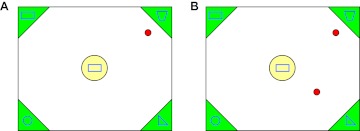
The aim of the present research was to investigate whether individuals with a common cold showed impaired ability on a simulated driving task and the ability to detect potential collisions between moving objects.
The study involved comparison of a healthy group with a group with colds. These scores were adjusted for individual differences by collecting further data when both groups were healthy and using these scores as covariates. On both occasions, volunteers rated their symptoms and carried out a simulated driving session. On the first occasion, volunteers also carried out a collision detection task.
University of Leeds Institute for Transport Studies.
Twenty-five students from the University of Leeds. Ten volunteers were healthy on both occasions and 15 had a cold on the first session and were healthy on the second.
In the collision detection task, the main outcomes were correct detections and response to a secondary identification task. In the simulated driving task, the outcomes were speed, lateral control, gap acceptance, overtaking behaviour, car following, vigilance and traffic light violations.
Those with a cold detected fewer collisions and had a higher divided attention error than those who were healthy. Many basic driving skills were unimpaired by the illness. However, those with a cold were slower at responding to unexpected events and spent a greater percentage of time driving at a headway of <2 s.
The finding that having a common cold is associated with reduced ability to detect collisions and respond quickly to unexpected events is of practical importance. Further research is now required to examine the efficacy of information campaigns and countermeasures such as caffeine.
本研究旨在调查患普通感冒的个体在模拟驾驶任务中的能力是否受损,以及检测移动物体之间潜在碰撞的能力。
该研究涉及将健康组与感冒组进行比较。通过在两组均健康时收集更多数据并将这些分数用作协变量,对这些分数进行个体差异调整。在这两种情况下,志愿者都对自己的症状进行评分并进行一次模拟驾驶。在第一次时,志愿者还进行了碰撞检测任务。
利兹大学交通研究学院。
来自利兹大学的25名学生。10名志愿者在两种情况下均健康,15名在第一次时感冒,第二次时健康。
在碰撞检测任务中,主要观察指标是正确检测和对次要识别任务的反应。在模拟驾驶任务中,观察指标是速度、横向控制、间隙接受、超车行为、跟车、警觉性和违反交通信号灯情况。
感冒的人比健康的人检测到的碰撞更少,且注意力分散错误更高。许多基本驾驶技能并未因疾病而受损。然而,感冒的人对意外事件的反应较慢,并且在车头时距小于2秒的情况下驾驶的时间占比更大。
患普通感冒与检测碰撞和对意外事件快速反应的能力降低有关这一发现具有实际意义。现在需要进一步研究来检验宣传活动和诸如咖啡因等对策的效果。