Culture Lab, School of Computing Science, Newcastle University, United Kingdom.
PLoS One. 2012;7(6):e39253. doi: 10.1371/journal.pone.0039253. Epub 2012 Jun 28.
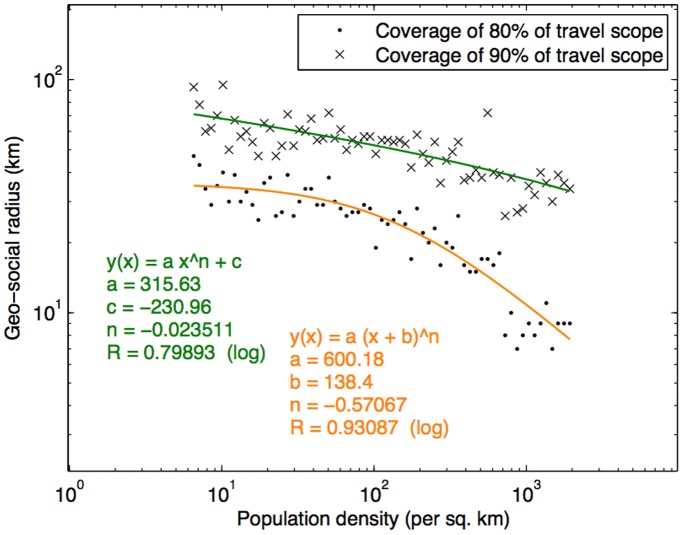
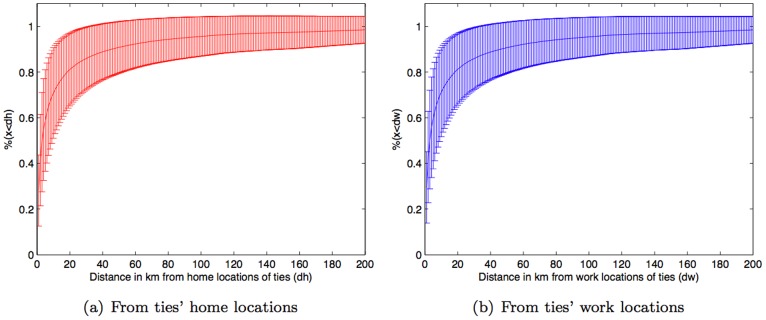
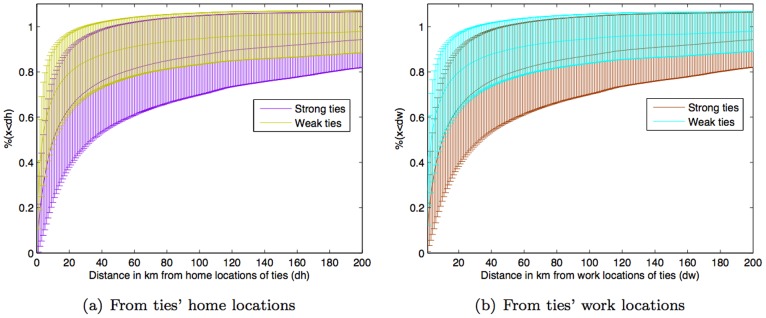
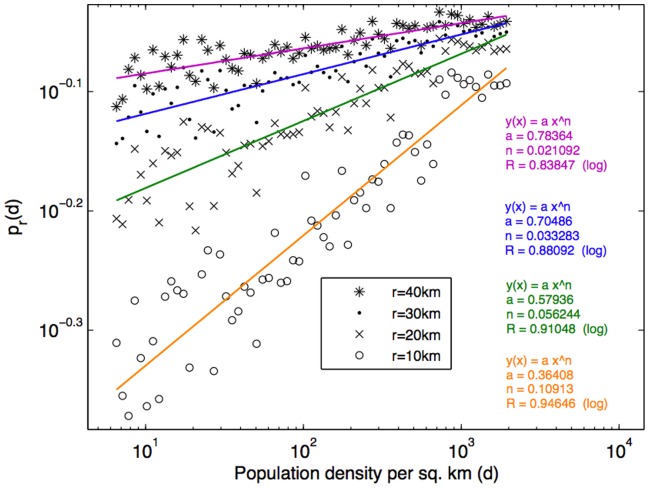
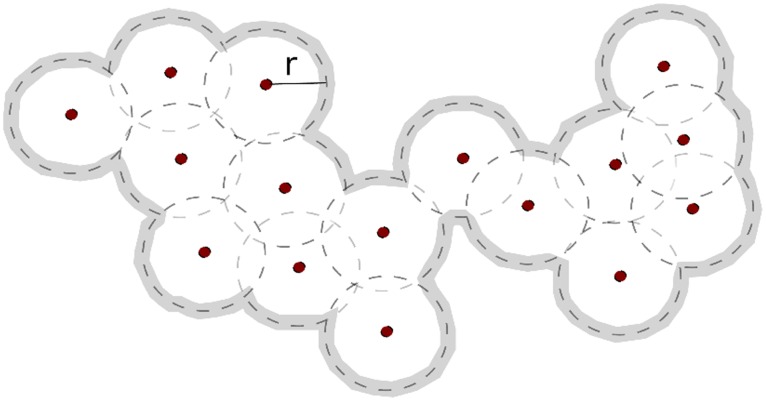
A relationship between people's mobility and their social networks is presented based on an analysis of calling and mobility traces for one year of anonymized call detail records of over one million mobile phone users in Portugal. We find that about 80% of places visited are within just 20 km of their nearest (geographical) social ties' locations. This figure rises to 90% at a 'geo-social radius' of 45 km. In terms of their travel scope, people are geographically closer to their weak ties than strong ties. Specifically, they are 15% more likely to be at some distance away from their weak ties than strong ties. The likelihood of being at some distance from social ties increases with the population density, and the rates of increase are higher for shorter geo-social radii. In addition, we find that area population density is indicative of geo-social radius where denser areas imply shorter radii. For example, in urban areas such as Lisbon and Porto, the geo-social radius is approximately 7 km and this increases to approximately 15 km for less densely populated areas such as Parades and Santa Maria da Feira.
基于对葡萄牙超过 100 万手机用户一年的匿名通话记录详细信息进行分析,展示了人们的流动性与其社交网络之间的关系。我们发现,大约 80%的访问地点都在距离其最近社交关系(地理)位置的 20 公里以内。在 45 公里的“地理社交半径”内,这一数字上升到 90%。就其出行范围而言,人们与弱关系的地理距离比与强关系更近。具体来说,他们距离弱关系的可能性比强关系大 15%。随着人口密度的增加,与社交关系保持一定距离的可能性也会增加,而且较短的地理社交半径的增长率更高。此外,我们发现区域人口密度是地理社交半径的指示性指标,人口密度较高的地区意味着半径较短。例如,在里斯本和波尔图等城市地区,地理社交半径约为 7 公里,而在人口密度较低的地区,如帕拉迪斯和圣玛丽亚达费拉,该半径约为 15 公里。