Pellaton Céline, Nutten Sophie, Thierry Anne-Christine, Boudousquié Caroline, Barbier Nathalie, Blanchard Carine, Corthésy Blaise, Mercenier Annick, Spertini François
R&D Laboratory of the Division of Immunology and Allergy, Centre Hospitalier Universitaire Vaudois, 1011 Lausanne, Switzerland.
Int J Inflam. 2012;2012:686739. doi: 10.1155/2012/686739. Epub 2012 Mar 21.
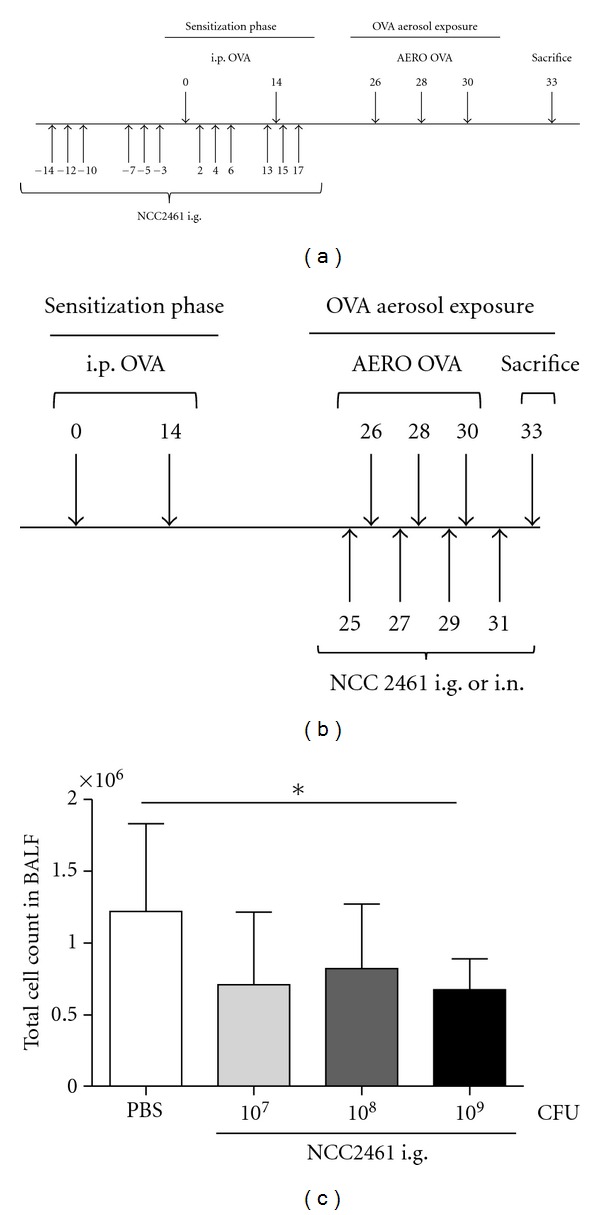
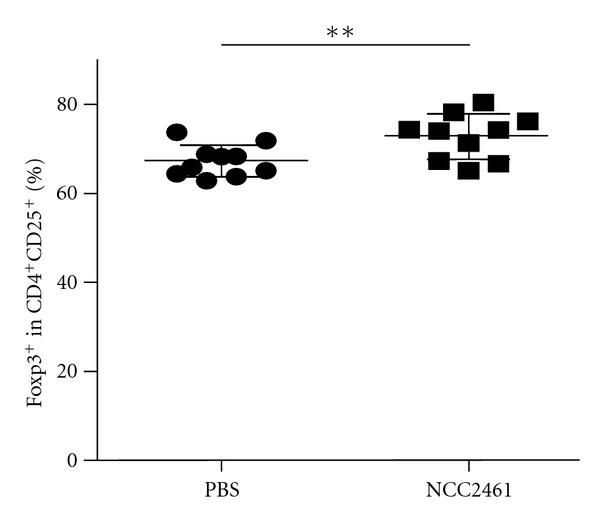
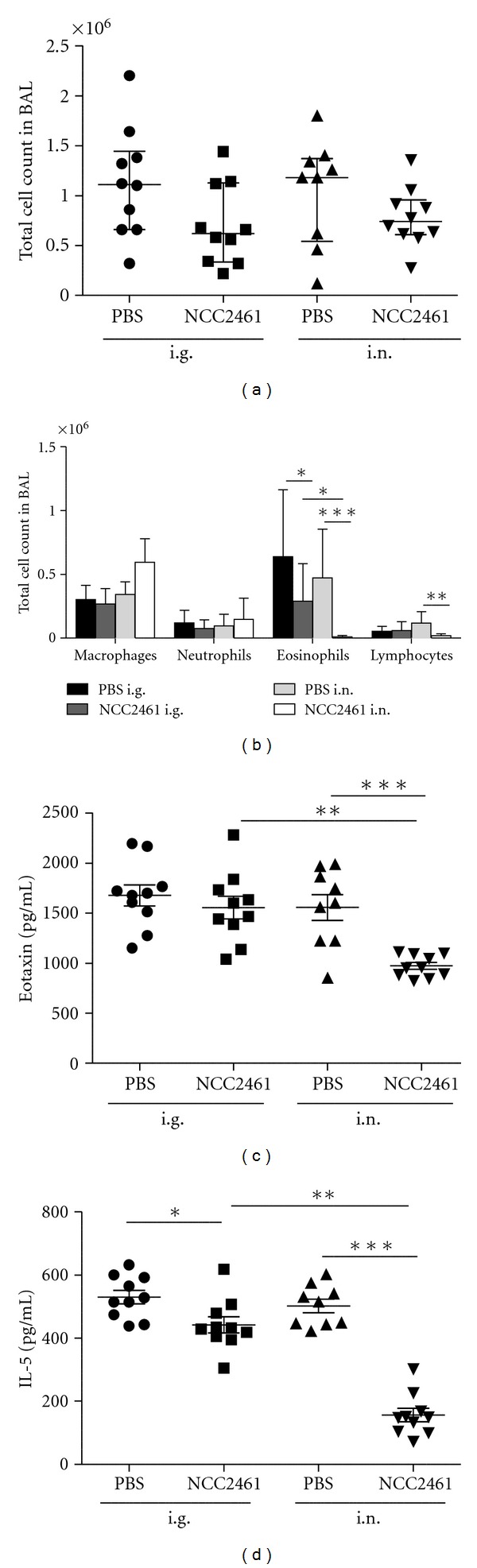
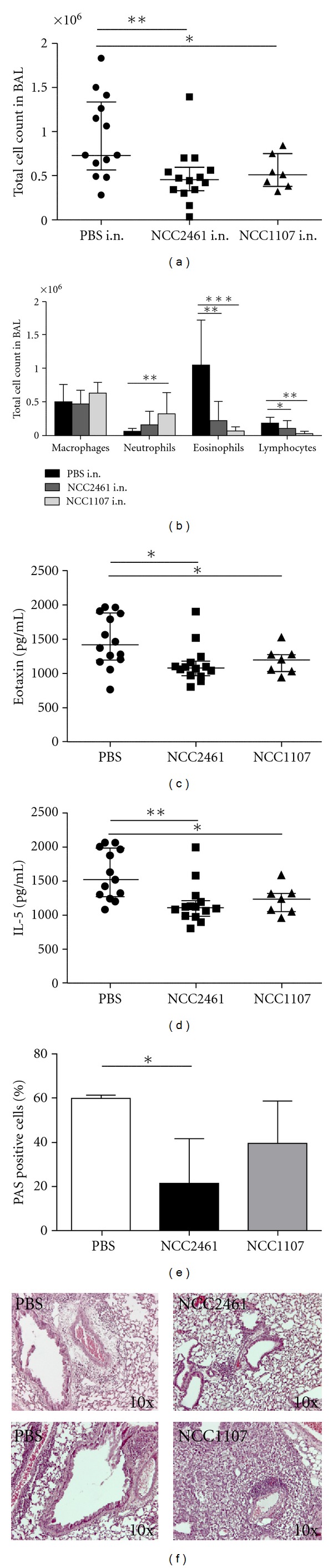
Introduction. Preclinical and clinical evidences for a role of oral probiotics in the management of allergic diseases are emerging. Aim. We aimed at testing the immunomodulatory effects of intranasal versus intragastric administration of Lactobacillus paracasei NCC2461 in a mouse model of allergic airway inflammation and the specificity of different probiotics by comparing L. paracasei NCC2461 to Lactobacillus plantarum NCC1107. Methods. L. paracasei NCC2461 or L. plantarum NCC1107 strains were administered either intragastrically (NCC2461) or intranasally (NCC2461 or NCC1107) to OVA-sensitized mice challenged with OVA aerosols. Inflammatory cell recruitment into BALF, eotaxin and IL-5 production in the lungs were measured. Results. Intranasal L. paracasei NCC2461 efficiently protected sensitized mice upon exposure to OVA aerosols in a dose-dependent manner as compared to control mice. Inflammatory cell number, eotaxin and IL-5 were significantly reduced in BALF. Intranasal supplementation of L. paracasei NCC2461 was more potent than intragastric application in limiting the allergic response and possibly linked to an increase in T regulatory cells in the lungs. Finally, intranasal L. plantarum NCC1107 reduced total and eosinophilic lung inflammation, but increased neutrophilia and macrophages infiltration. Conclusion. A concerted selection of intervention schedule, doses, and administration routes (intranasal versus intragastric) may markedly contribute to modulate airway inflammation in a probiotic strain-specific manner.
引言。口服益生菌在过敏性疾病管理中作用的临床前和临床证据正在不断涌现。目的。我们旨在测试在过敏性气道炎症小鼠模型中,鼻内给药与胃内给药副干酪乳杆菌NCC2461的免疫调节作用,并通过将副干酪乳杆菌NCC2461与植物乳杆菌NCC1107进行比较,研究不同益生菌的特异性。方法。将副干酪乳杆菌NCC2461或植物乳杆菌NCC1107菌株通过胃内给药(NCC2461)或鼻内给药(NCC2461或NCC1107)给予经卵清蛋白(OVA)致敏并接受OVA气雾剂攻击的小鼠。检测炎症细胞向支气管肺泡灌洗液(BALF)中的募集情况以及肺中嗜酸性粒细胞趋化因子和白细胞介素-5的产生。结果。与对照小鼠相比,鼻内给予副干酪乳杆菌NCC2461能以剂量依赖的方式有效保护致敏小鼠免受OVA气雾剂攻击。BALF中的炎症细胞数量、嗜酸性粒细胞趋化因子和白细胞介素-5显著减少。在限制过敏反应方面,鼻内补充副干酪乳杆菌NCC2461比胃内给药更有效,这可能与肺中调节性T细胞的增加有关。最后,鼻内给予植物乳杆菌NCC1107可减轻总的和嗜酸性粒细胞性肺部炎症,但会增加中性粒细胞增多和巨噬细胞浸润。结论。协同选择干预方案、剂量和给药途径(鼻内给药与胃内给药)可能会显著有助于以益生菌菌株特异性的方式调节气道炎症。