Scholey Jonathan M
Department of Molecular and Cell Biology, University of California at Davis, Davis, CA 95616, United States.
Vision Res. 2012 Dec 15;75:44-52. doi: 10.1016/j.visres.2012.06.015. Epub 2012 Jul 5.
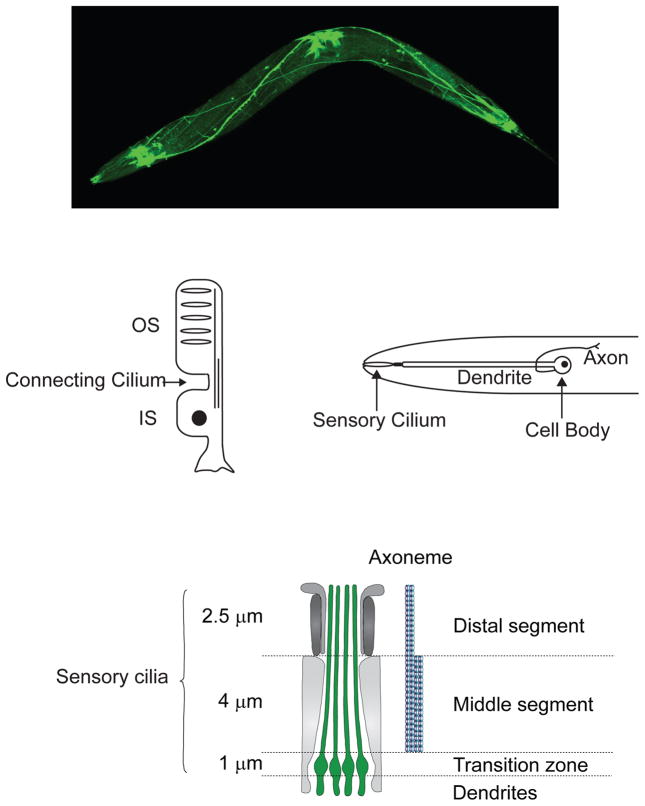
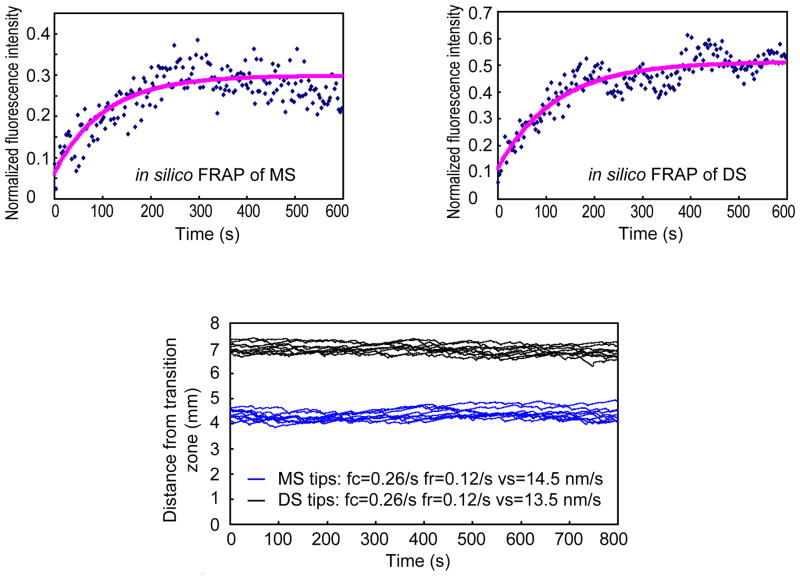
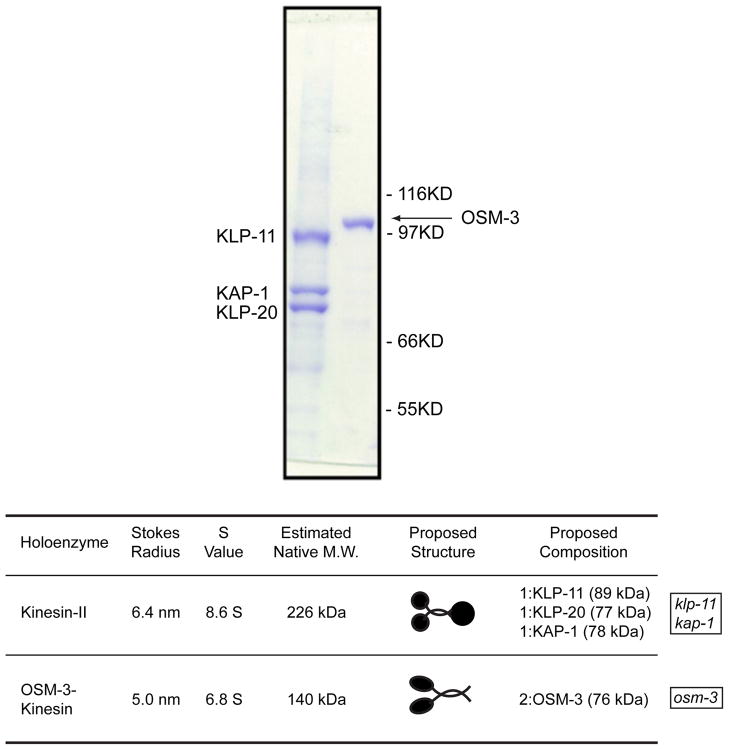
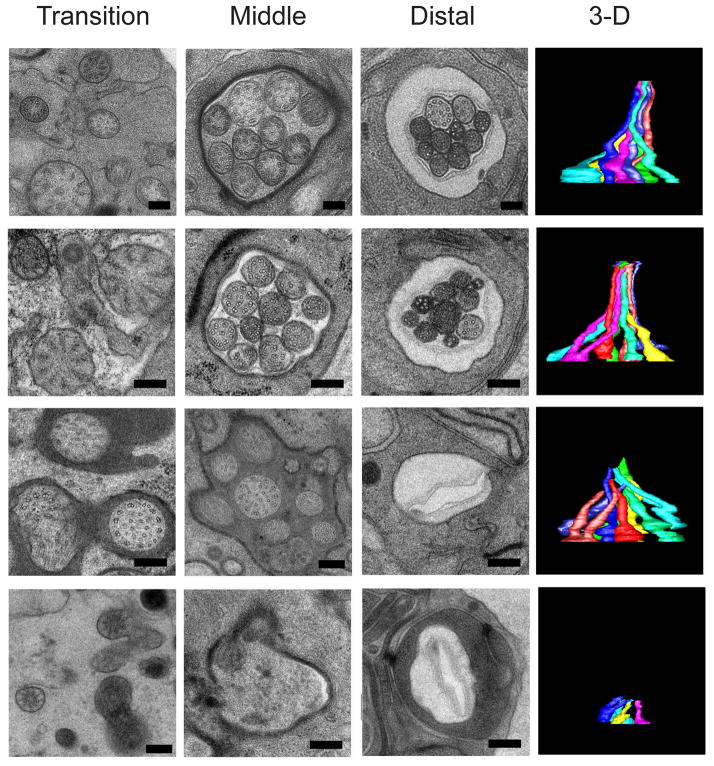
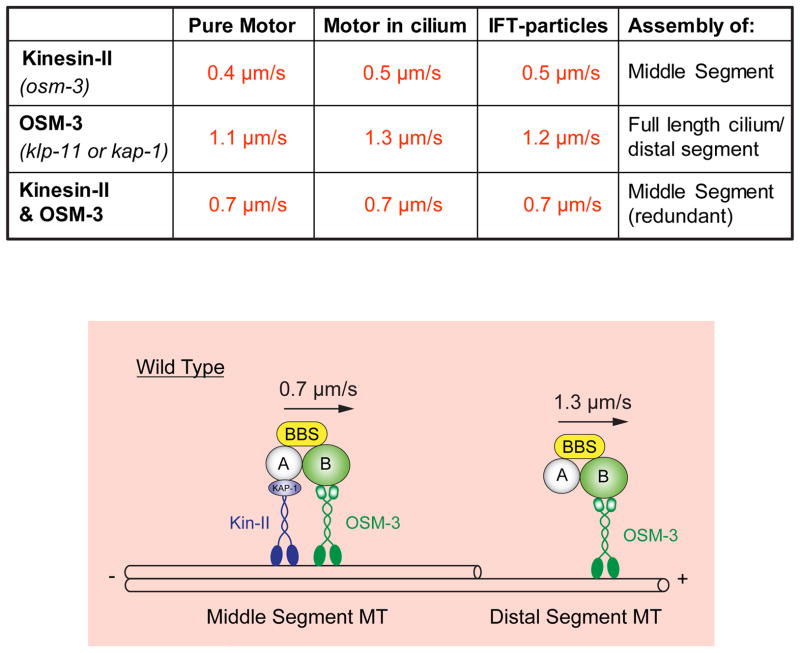
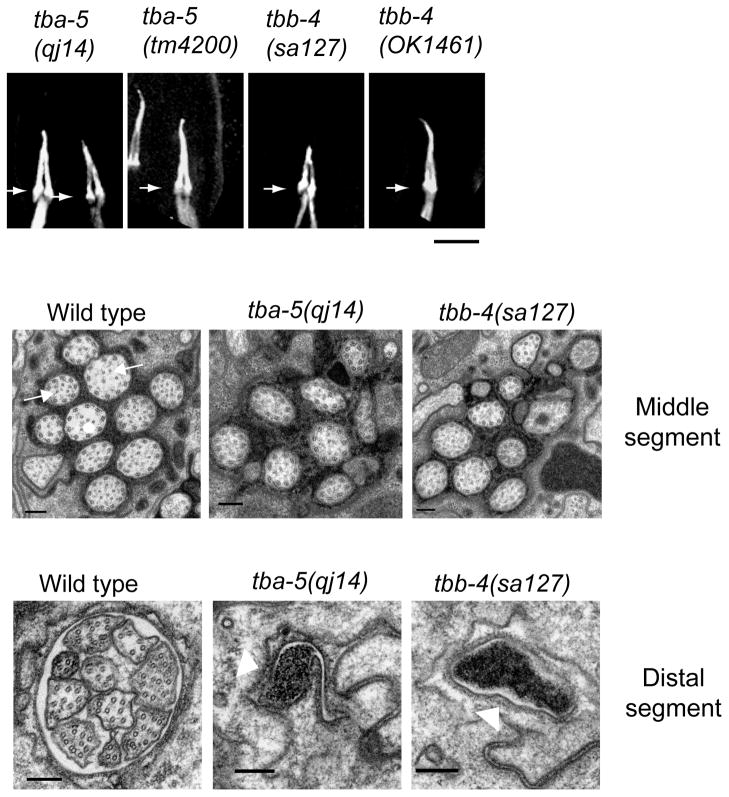
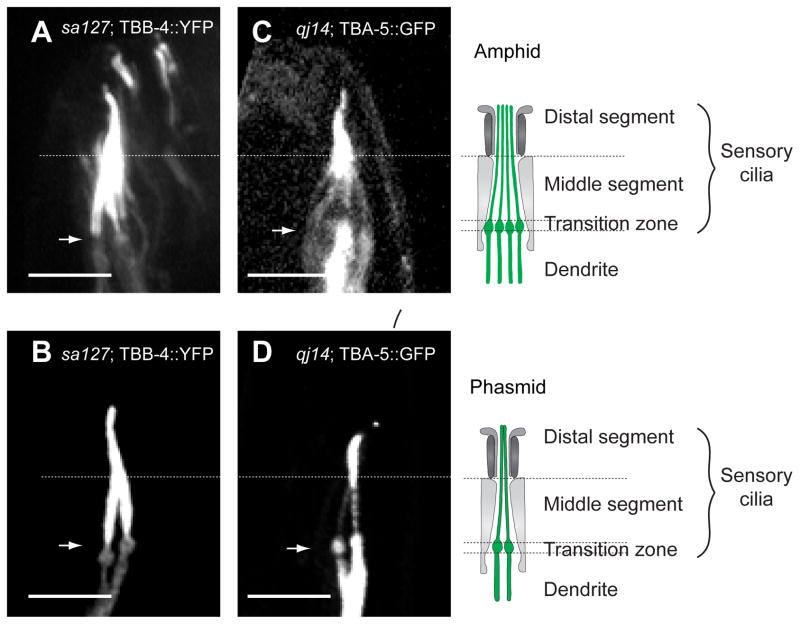
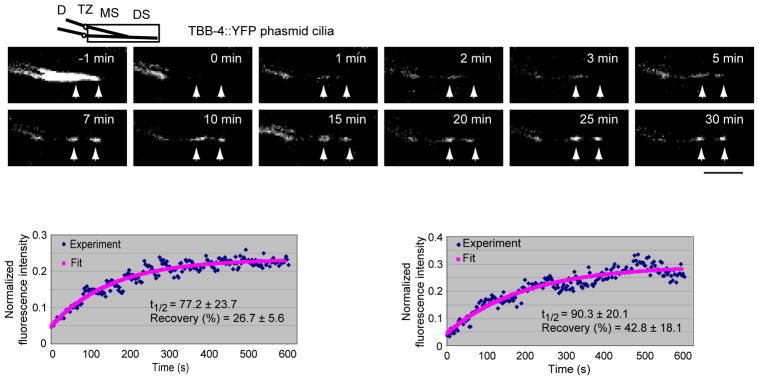
The sensory outer segments (OS) of vertebrate retinal photoreceptors, which detect photons of light, resemble the distal segments of Caenorhabditis elegans sensory cilia, which detect chemical ligands that influence the chemotactic movements of the animal. Based on fluorescence microscopy assays performed in sensory cilia of living, transgenic "wild type" and mutant C. elegans, combined with in vitro motility assays using purified motors, we have proposed that two types of kinesin-2 motor, heterotrimeric kinesin-II and homodimeric OSM-3, cooperate to build amphid and phasmid sensory cilia on chemosensory neurons. Specifically, we propose that these motors function together in a redundant manner to build the axoneme core (aka middle segments (MS)), whereas OSM-3 alone serves to build the distal segments (DS). Furthermore, our data suggest that these motors accomplish this by driving two sequential steps of anterograde transport of cargoes consisting of IFT-particles, retrograde dynein motors, and ciliary tubulin subunits, from the transition zone to the tips of the axonemal microtubules (MTs). Homologs of kinesin-II (KIF3) and OSM-3 (KIF17) are also proposed to contribute to the assembly of vertebrate photoreceptors, although how they do so is currently unclear. Here I review our work on kinesin-2 motors, intraflagellar transport (IFT) and cilium biogenesis in C. elegans sensory cilia, and comment on its possible relevance to current research on vertebrate photoreceptor cilia assembly and function.
脊椎动物视网膜光感受器的感觉外段(OS)负责检测光的光子,它类似于秀丽隐杆线虫感觉纤毛的远端部分,后者能检测影响动物趋化运动的化学配体。基于对活的、转基因“野生型”和突变型秀丽隐杆线虫感觉纤毛进行的荧光显微镜检测,结合使用纯化马达的体外运动检测,我们提出两种类型的驱动蛋白-2马达,即异源三聚体驱动蛋白-II和同型二聚体OSM-3,协同作用于化学感受神经元上构建两性感器和尾感器感觉纤毛。具体而言,我们提出这些马达以冗余方式共同作用来构建轴丝核心(又称中间段(MS)),而单独的OSM-3则用于构建远端段(DS)。此外,我们的数据表明,这些马达通过驱动由IFT颗粒、逆行动力蛋白马达和纤毛微管蛋白亚基组成的货物从过渡区到轴丝微管(MT)尖端的两个顺行运输连续步骤来实现这一点。尽管目前尚不清楚其具体方式,但也有人提出驱动蛋白-II(KIF3)和OSM-3(KIF17)的同源物有助于脊椎动物光感受器的组装。在此,我回顾我们关于秀丽隐杆线虫感觉纤毛中驱动蛋白-2马达、鞭毛内运输(IFT)和纤毛生物发生的研究工作,并评论其与当前脊椎动物光感受器纤毛组装和功能研究的可能相关性。