Centre for the Developing Brain, MRC Clinical Sciences Centre, Imperial College London, Hammersmith Hospital, Du Cane Road, London, W12 0NN, UK.
Neuroimage. 2012 Nov 1;63(2):663-73. doi: 10.1016/j.neuroimage.2012.06.054. Epub 2012 Jul 6.
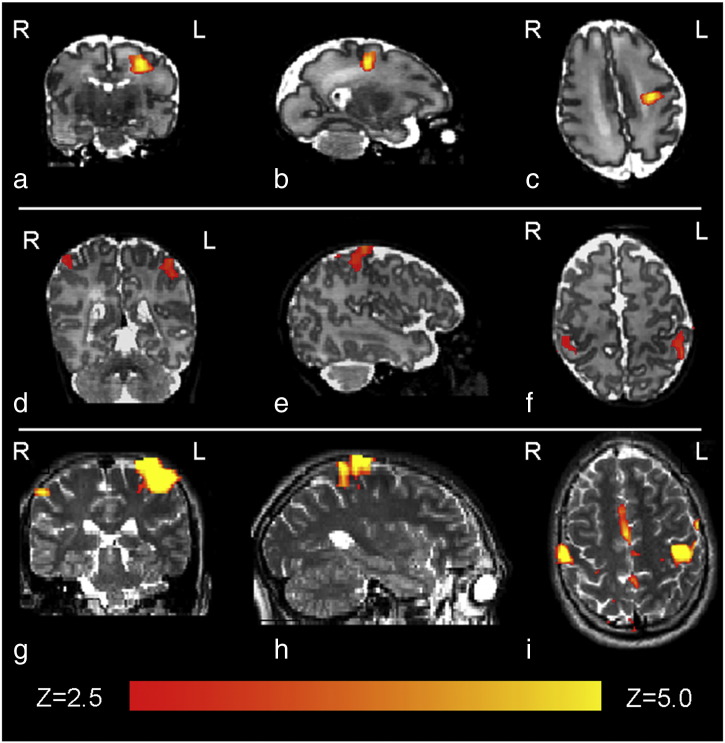
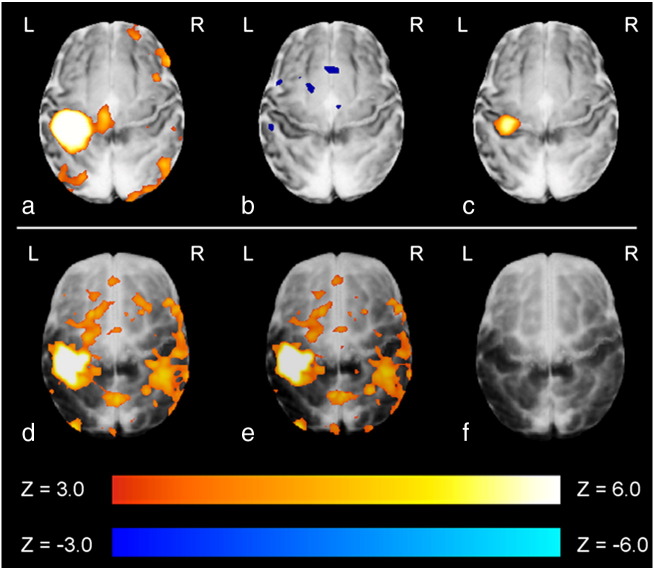
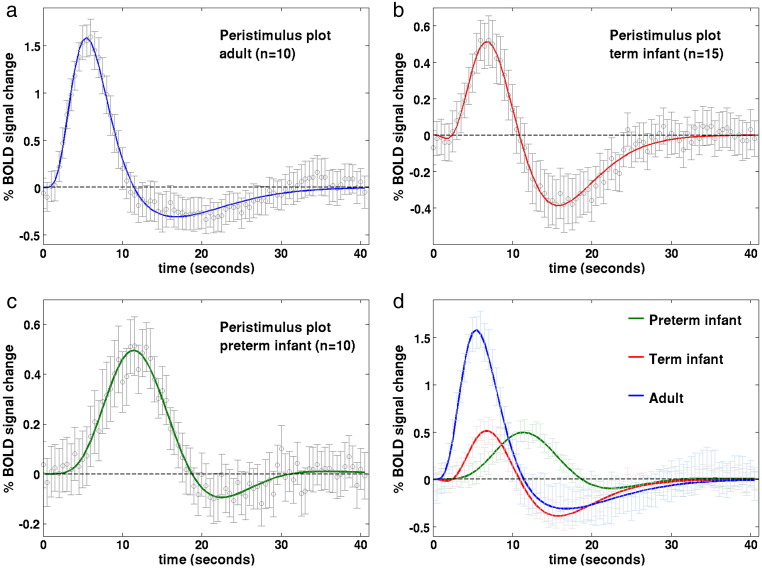
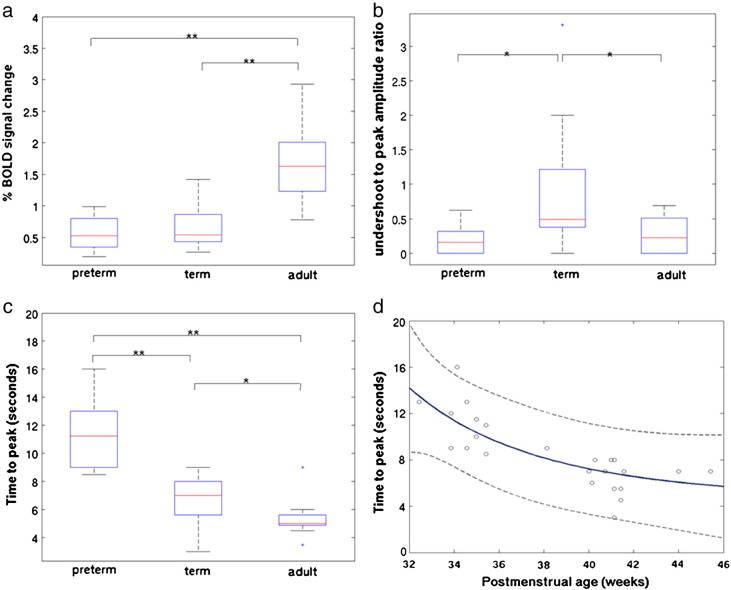
In the rodent brain the hemodynamic response to a brief external stimulus changes significantly during development. Analogous changes in human infants would complicate the determination and use of the hemodynamic response function (HRF) for functional magnetic resonance imaging (fMRI) in developing populations. We aimed to characterize HRF in human infants before and after the normal time of birth using rapid sampling of the blood oxygen level dependent (BOLD) signal. A somatosensory stimulus and an event related experimental design were used to collect data from 10 healthy adults, 15 sedated infants at term corrected post menstrual age (PMA) (median 41+1 weeks), and 10 preterm infants (median PMA 34+4 weeks). A positive amplitude HRF waveform was identified across all subject groups, with a systematic maturational trend in terms of decreasing time-to-peak and increasing positive peak amplitude associated with increasing age. Application of the age-appropriate HRF models to fMRI data significantly improved the precision of the fMRI analysis. These findings support the notion of a structured development in the brain's response to stimuli across the last trimester of gestation and beyond.
在啮齿动物大脑中,对外界短暂刺激的血液动力学反应在发育过程中会发生显著变化。如果人类婴儿也存在类似的变化,将会使功能磁共振成像(fMRI)中血液动力学反应功能(HRF)的确定和使用变得复杂,尤其是在发育中的人群。我们旨在使用血氧水平依赖(BOLD)信号的快速采样,在正常出生时间之前和之后描述人类婴儿的 HRF。使用躯体感觉刺激和事件相关的实验设计,从 10 名健康成年人、15 名足月校正胎龄(PMA)(中位 41+1 周)的镇静婴儿和 10 名早产儿(中位 PMA 34+4 周)中收集数据。在所有受试组中均识别出正向振幅 HRF 波形,随着年龄的增长,与时间至峰值和正向峰值幅度相关的系统成熟趋势逐渐降低。将年龄适当的 HRF 模型应用于 fMRI 数据,可显著提高 fMRI 分析的准确性。这些发现支持了一个观点,即在妊娠最后三个月及之后,大脑对刺激的反应会经历一个结构化的发展过程。