Department of Cardiology, Tangdu Hospital, The Fourth Military Medical University, Xi'an 710032, China.
Mediators Inflamm. 2012;2012:805149. doi: 10.1155/2012/805149. Epub 2012 Jun 20.
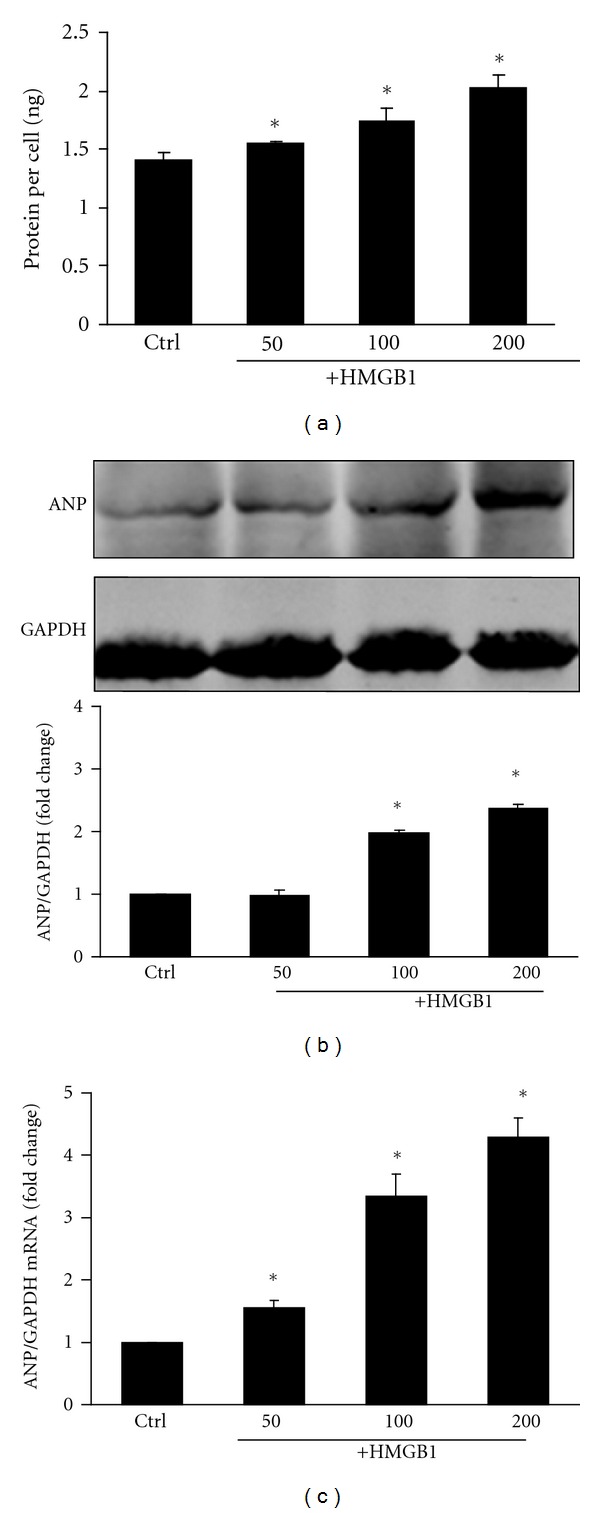
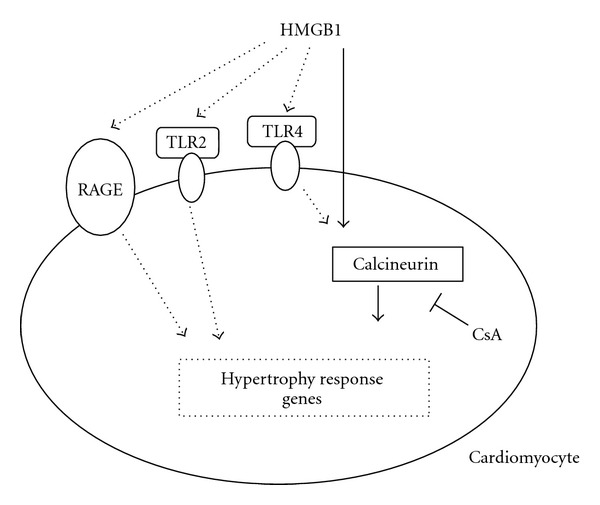
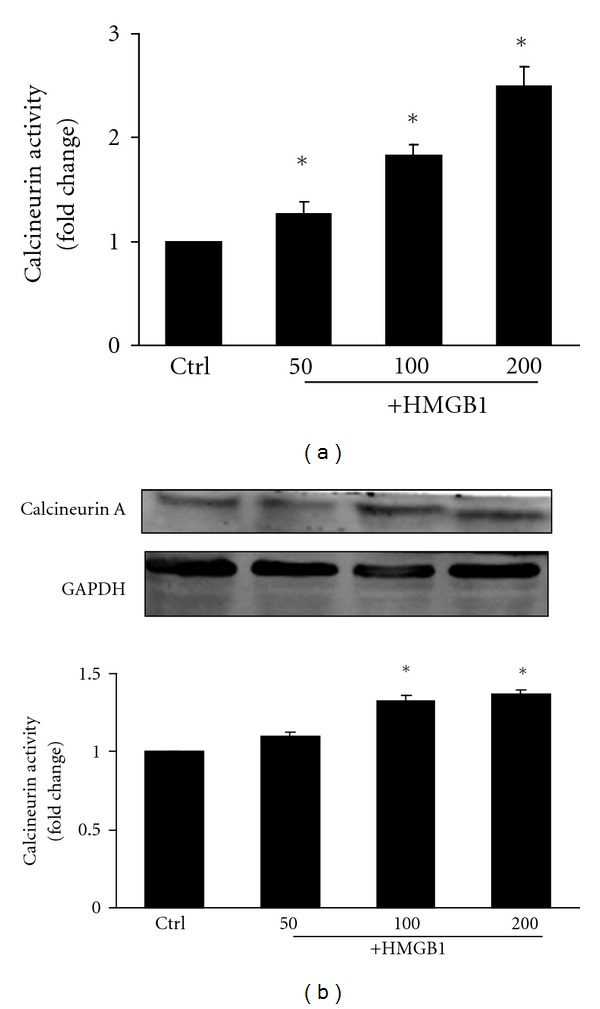
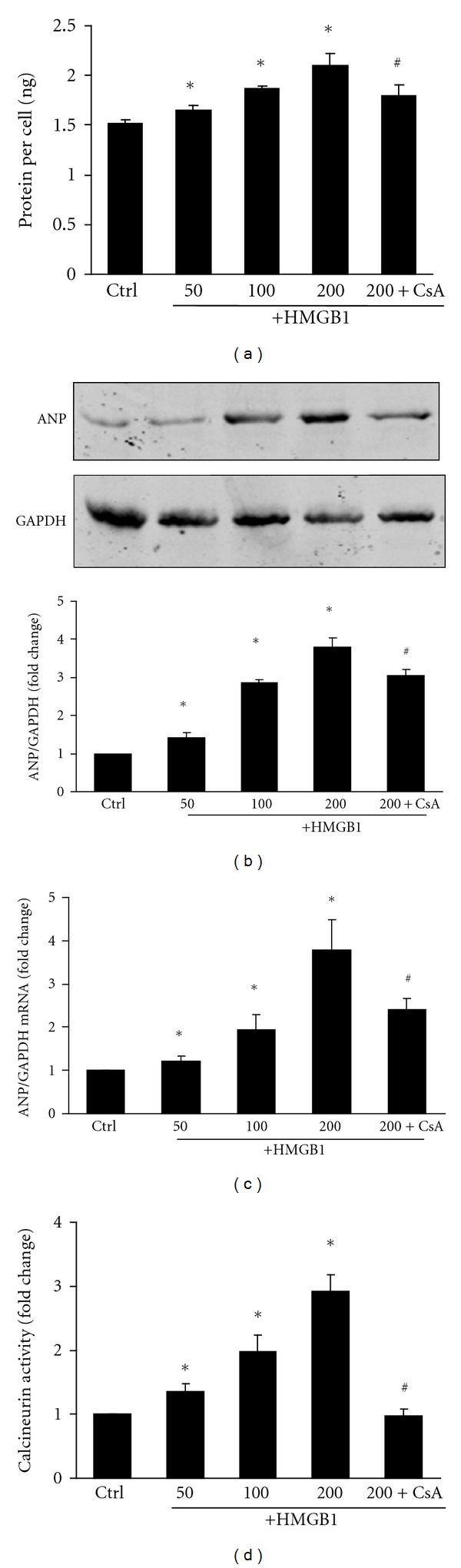
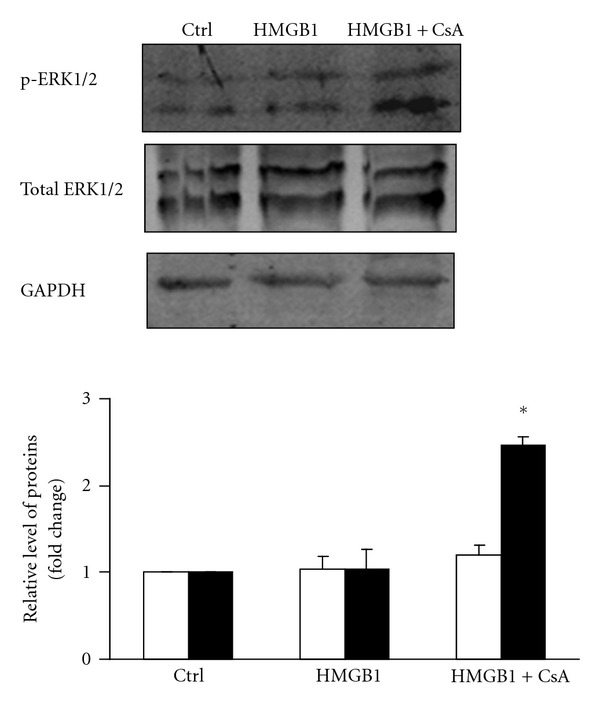
Cardiac hypertrophy is an independent predictor of cardiovascular morbidity and mortality. In recent years, evidences suggest that high-mobility group box 1 (HMGB1) protein, an inflammatory cytokine, participates in cardiac remodeling; however, the involvement of HMGB1 in the pathogenesis of cardiac hypertrophy remains unknown. The aim of this study was to investigate whether HMGB1 is sufficient to induce cardiomyocyte hypertrophy and to identify the possible mechanisms underlying the hypertrophic response. Cardiomyocytes isolated from 1-day-old Sprague-Dawley rats were treated with recombinant HMGB1, at concentrations ranging from 50 ng/mL to 200 ng/mL. After 24 hours, cardiomyocytes were processed for the evaluation of atrial natriuretic peptide (ANP) and calcineurin A expression. Western blot and real-time RT-PCR was used to detect protein and mRNA expression levels, respectively. The activity of calcineurin was also evaluated using a biochemical enzyme assay. HMGB1 induced cardiomyocyte hypertrophy, characterized by enhanced expression of ANP, and increased protein synthesis. Meanwhile, increased calcineurin activity and calcineurin A protein expression were observed in cardiomyocytes preconditioned with HMGB1. Furthermore, cyclosporin A pretreatment partially inhibited the HMGB1-induced cardiomyocyte hypertrophy. Our findings suggest that HMGB1 leads to cardiac hypertrophy, at least in part through activating calcineurin.
心肌肥厚是心血管发病率和死亡率的独立预测因子。近年来,有证据表明高迁移率族蛋白 B1(HMGB1)蛋白作为一种炎症细胞因子,参与了心脏重构;然而,HMGB1 在心梗肥厚发病机制中的参与仍不清楚。本研究旨在探讨 HMGB1 是否足以诱导心肌细胞肥大,并确定导致心肌肥厚反应的可能机制。从 1 日龄的 Sprague-Dawley 大鼠中分离出心肌细胞,用浓度范围为 50ng/ml 至 200ng/ml 的重组 HMGB1 处理 24 小时。之后,处理心肌细胞以评估心房利钠肽(ANP)和钙调神经磷酸酶 A 的表达。Western blot 和实时 RT-PCR 分别用于检测蛋白和 mRNA 表达水平。通过生化酶测定评估钙调神经磷酸酶的活性。HMGB1 诱导心肌细胞肥大,表现为 ANP 表达增强和蛋白质合成增加。同时,在 HMGB1 预处理的心肌细胞中观察到钙调神经磷酸酶活性和钙调神经磷酸酶 A 蛋白表达增加。此外,环孢菌素 A 预处理部分抑制了 HMGB1 诱导的心肌细胞肥大。我们的研究结果表明,HMGB1 至少部分通过激活钙调神经磷酸酶导致心肌肥厚。