Liu Yi, Lependu Paea, Iyer Srinivasan, Shah Nigam H
Stanford University, Stanford, CA.
AMIA Jt Summits Transl Sci Proc. 2012;2012:47-56. Epub 2012 Mar 19.
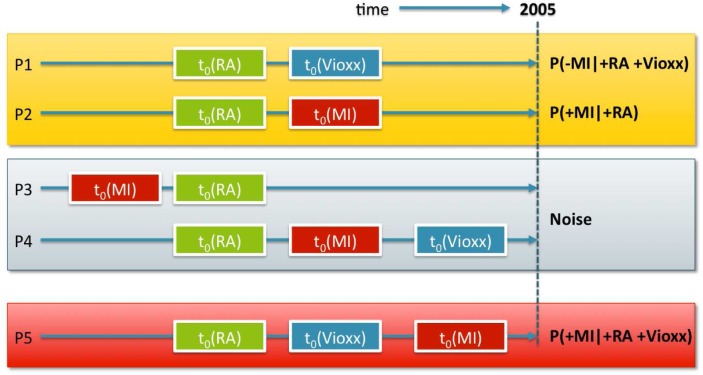
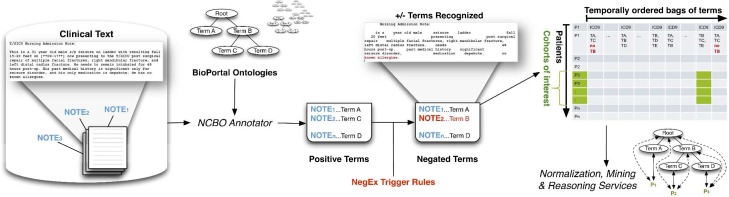
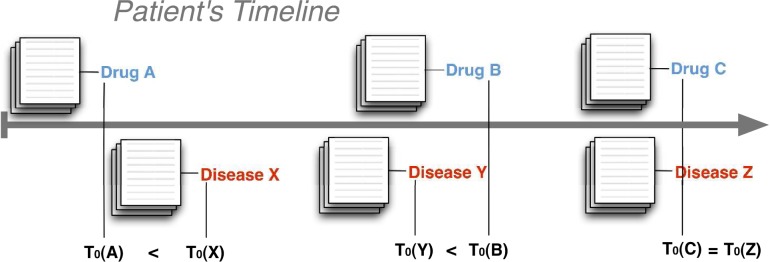
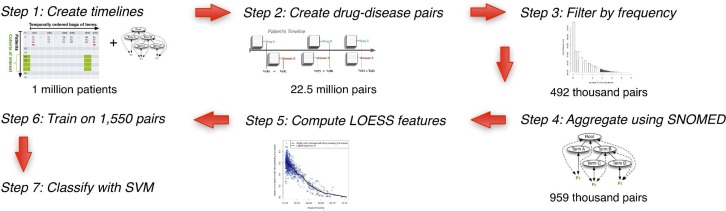
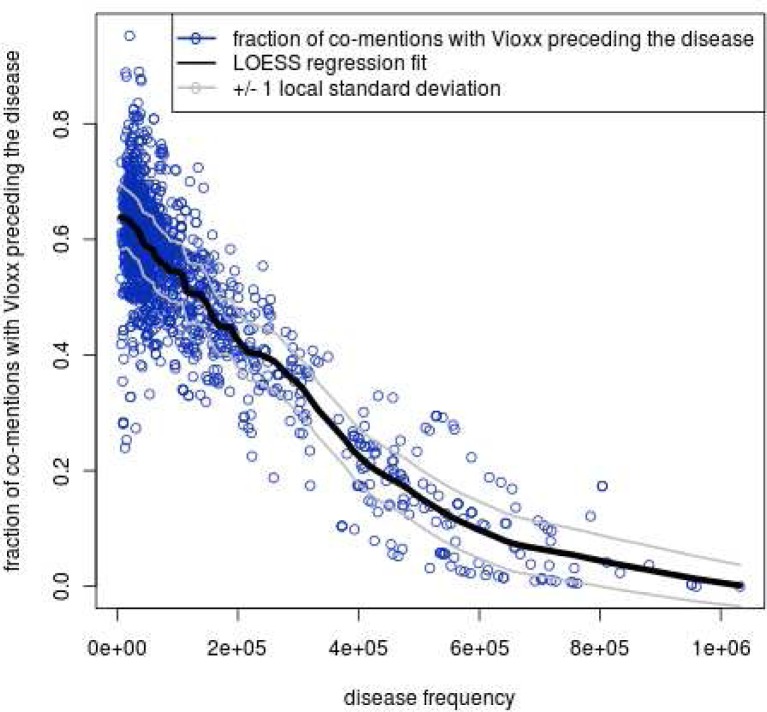
Researchers estimate that electronic health record systems record roughly 2-million ambulatory adverse drug events and that patients suffer from adverse drug events in roughly 30% of hospital stays. Some have used structured databases of patient medical records and health insurance claims recently-going beyond the current paradigm of using spontaneous reporting systems like AERS-to detect drug-safety signals. However, most efforts do not use the free-text from clinical notes in monitoring for drug-safety signals. We hypothesize that drug-disease co-occurrences, extracted from ontology-based annotations of the clinical notes, can be examined for statistical enrichment and used for drug safety surveillance. When analyzing such co-occurrences of drugs and diseases, one major challenge is to differentiate whether the disease in a drug-disease pair represents an indication or an adverse event. We demonstrate that it is possible to make this distinction by combining the frequency distribution of the drug, the disease, and the drug-disease pair as well as the temporal ordering of the drugs and diseases in each pair across more than one million patients.
研究人员估计,电子健康记录系统记录了约200万起门诊药物不良事件,并且在大约30%的住院期间患者会遭遇药物不良事件。一些人最近利用患者病历和健康保险理赔的结构化数据库——超越了目前使用如AERS等自发报告系统的模式——来检测药物安全信号。然而,大多数努力并未在监测药物安全信号时使用临床记录中的自由文本。我们假设,从基于本体的临床记录注释中提取的药物-疾病共现情况,可以进行统计富集检查并用于药物安全监测。在分析此类药物和疾病的共现情况时,一个主要挑战是区分药物-疾病对中的疾病是代表适应症还是不良事件。我们证明,通过结合药物、疾病以及药物-疾病对的频率分布,以及超过100万名患者中每对药物和疾病的时间顺序,可以做出这种区分。