Department of Pediatrics, Baylor College of Medicine, Houston, Texas, United States of America.
PLoS One. 2012;7(7):e40374. doi: 10.1371/journal.pone.0040374. Epub 2012 Jul 6.
In experimental models of West Nile virus (WNV) infection, animals develop chronic kidney infection with histopathological changes in the kidney up to 8-months post-infection. However, the long term pathologic effects of acute infection in humans are largely unknown. The purpose of this study was to assess renal outcomes following WNV infection, specifically the development of chronic kidney disease (CKD).
In a cohort of 139 study participants with a previous diagnosis of WNV infection, we investigated the prevalence of CKD using the Kidney Disease Outcomes Quality Initiative (KDOQI) criteria based on the Modification of Diet in Renal Disease (MDRD) formula and urinary abnormalities, and assessed various risk factors and biomarkers.
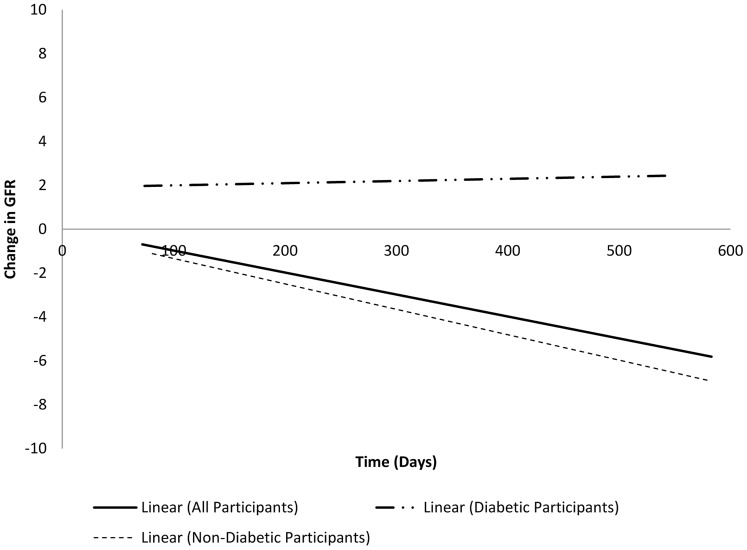
Study participants were primarily male (60%) and non-Hispanic white (86%) with a mean age of 57 years. Most (83%) were four to nine years post-infection at the time of this study. Based on the KDOQI definition, 40% of participants had evidence of CKD, with 10% having Stage III or greater and 30% having Stage I-II. By urinary dipstick testing, 26% of patients had proteinuria and 23% had hematuria. Plasma NGAL levels were elevated in 14% of participants while MCP-1 levels were increased in 12%. Over 1.5 years, the average change in eGFR was -3.71 mL/min/1.73 m(2). Only a history of Neuroinvasive WNV disease was independently associated with CKD following multivariate analysis.
We found a high prevalence of CKD after long term follow-up in a cohort of participants previously infected with WNV. The majority of those with CKD are in Stage I-II indicating early stages of renal disease. Traditional risk factors were not associated with the presence of CKD in this population. Therefore, clinicians should regularly evaluate all patients with a history of WNV for evidence of CKD.
在西尼罗河病毒(WNV)感染的实验模型中,动物在感染后长达 8 个月会出现肾脏慢性感染,并伴有肾脏组织病理学变化。然而,人类急性感染的长期病理影响在很大程度上仍是未知的。本研究的目的是评估 WNV 感染后的肾脏结局,特别是慢性肾脏病(CKD)的发展。
在一组 139 名曾被诊断为 WNV 感染的研究参与者中,我们使用基于肾脏病饮食改良公式(MDRD)的肾脏疾病预后质量倡议(KDOQI)标准来调查 CKD 的患病率,并通过尿液异常来评估各种危险因素和生物标志物。
研究参与者主要为男性(60%)和非西班牙裔白人(86%),平均年龄为 57 岁。大多数(83%)参与者在这项研究时距感染后 4 到 9 年。根据 KDOQI 定义,40%的参与者有 CKD 的证据,其中 10%为 III 期或更严重,30%为 I-II 期。通过尿液试纸检测,26%的患者有蛋白尿,23%的患者有血尿。14%的参与者的血浆 NGAL 水平升高,12%的参与者的 MCP-1 水平升高。在超过 1.5 年的时间里,eGFR 的平均变化为-3.71mL/min/1.73m(2)。只有神经侵袭性 WNV 疾病史与多变量分析后的 CKD 独立相关。
我们在一组曾感染过 WNV 的参与者中进行了长期随访,发现 CKD 的患病率很高。大多数患有 CKD 的患者处于 I-II 期,表明肾脏疾病处于早期阶段。在该人群中,传统的危险因素与 CKD 的存在无关。因此,临床医生应定期评估所有有 WNV 病史的患者是否有 CKD 的证据。