Department of Pharmacology, Institute of Health Biosciences, The University of Tokushima Graduate School, Tokushima, Japan.
PLoS One. 2012;7(7):e40465. doi: 10.1371/journal.pone.0040465. Epub 2012 Jul 11.
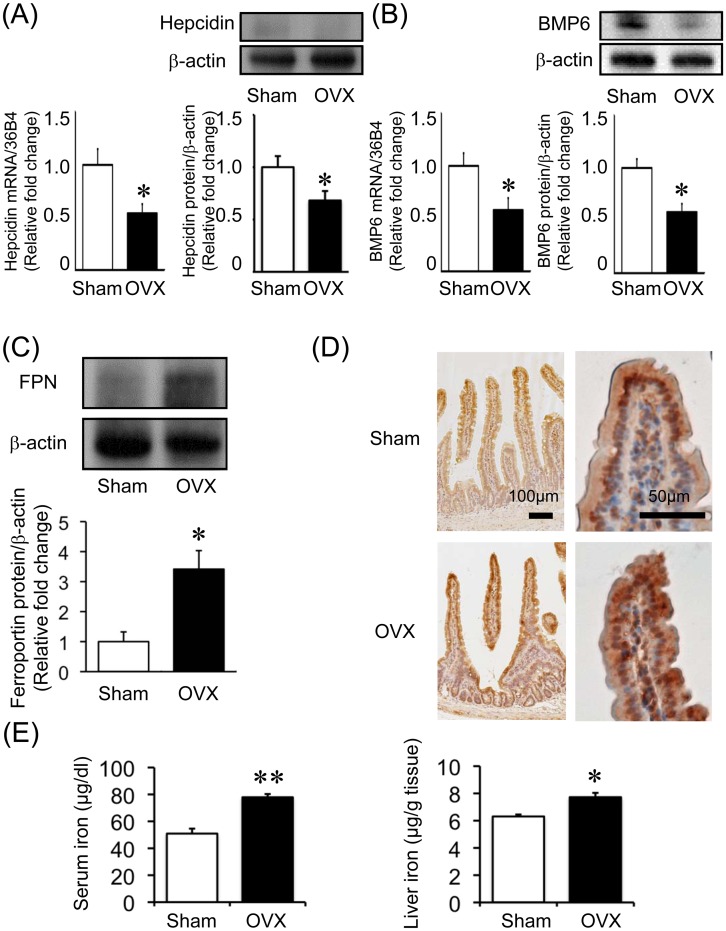
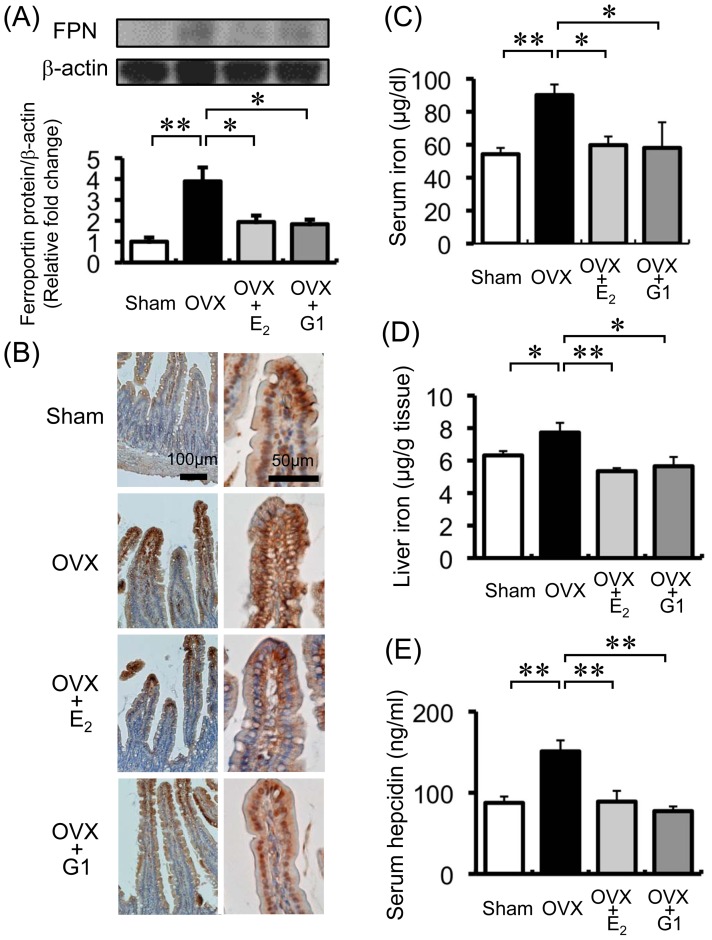
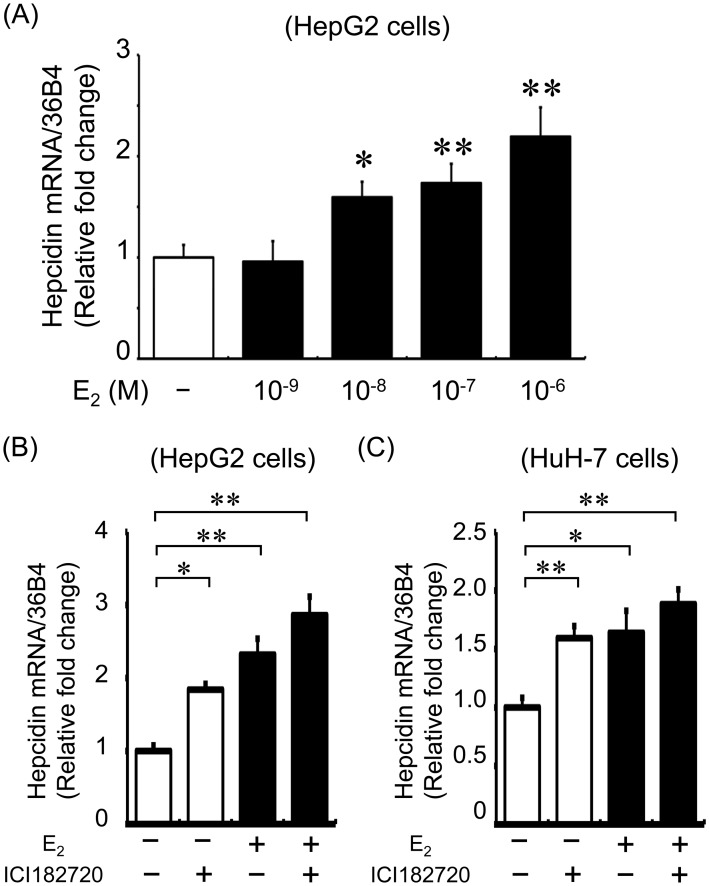
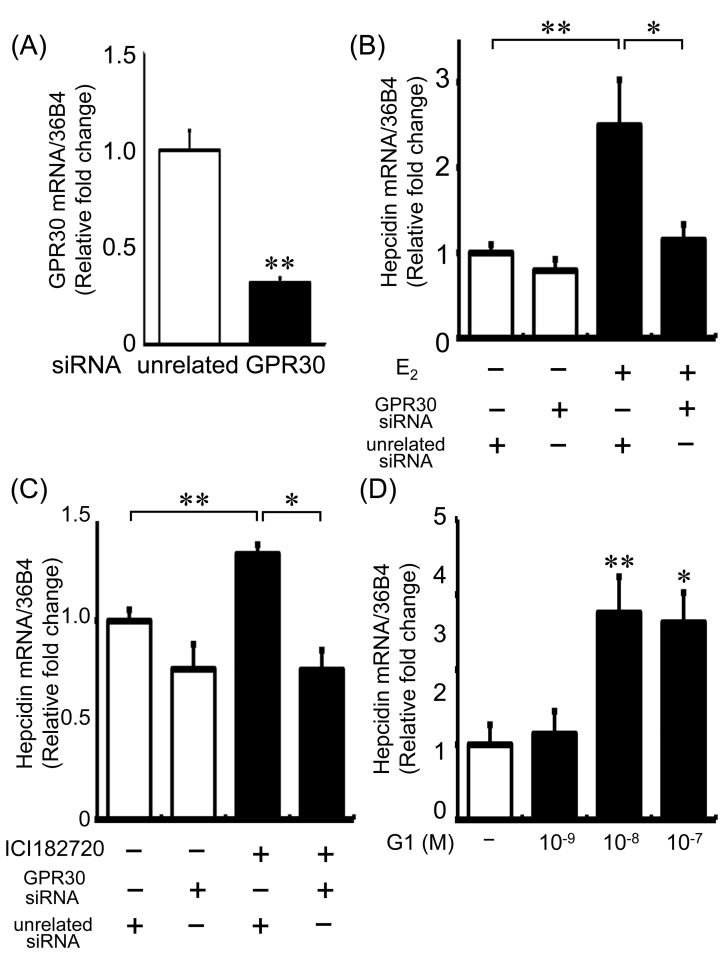
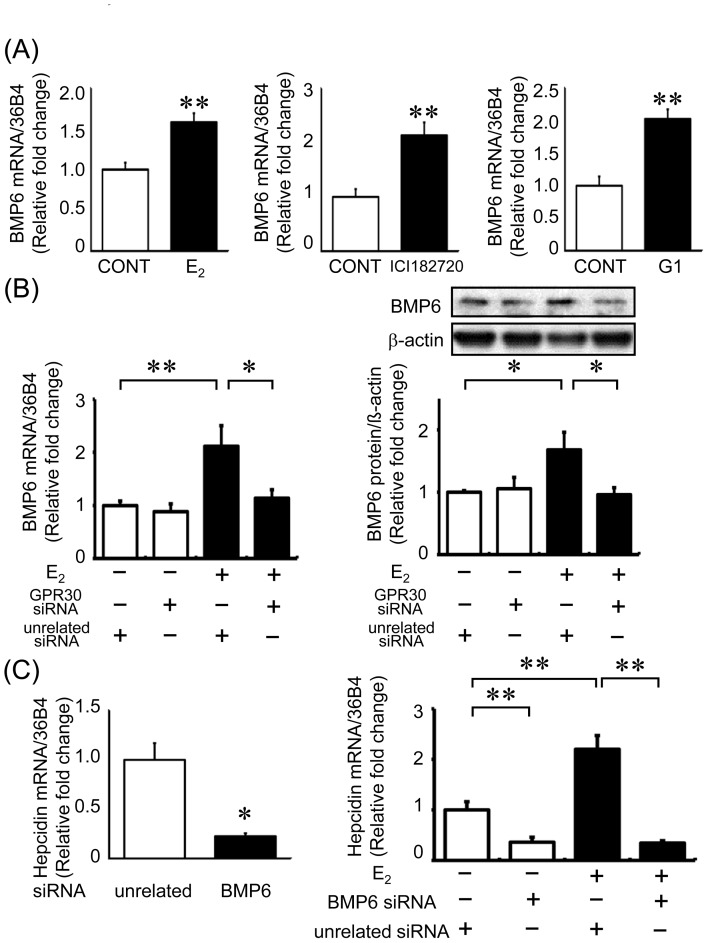
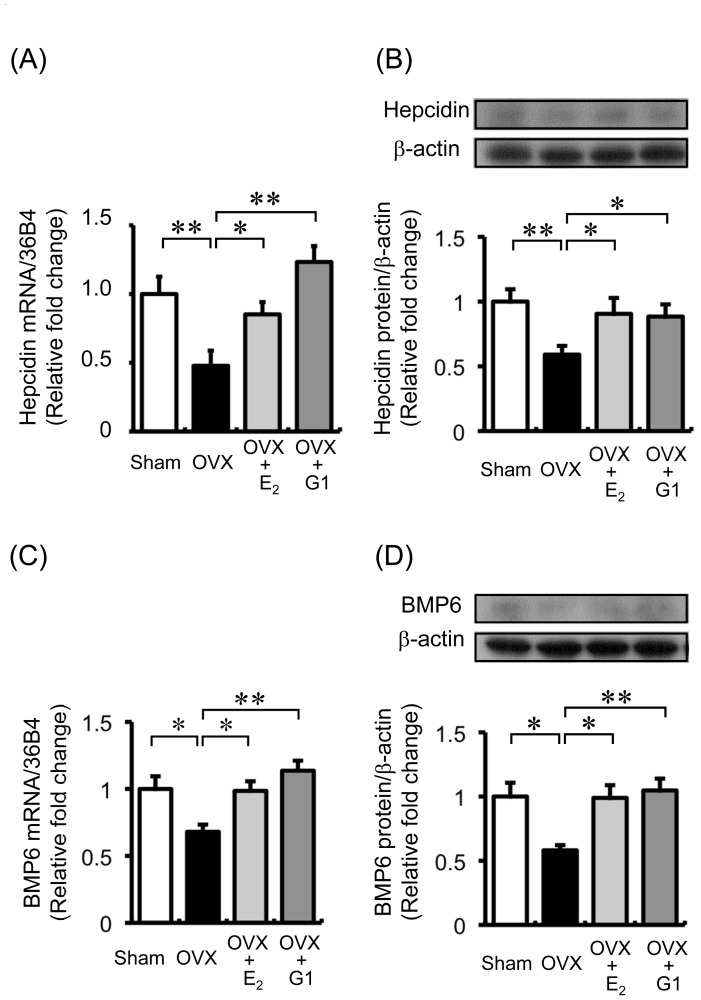
Hepcidin, a liver-derived iron regulatory protein, plays a crucial role in iron metabolism. It is known that gender differences exist with respect to iron storage in the body; however, the effects of sex steroid hormones on iron metabolism are not completely understood. We focused on the effects of the female sex hormone estrogen on hepcidin expression. First, ovariectomized (OVX) and sham-operated mice were employed to investigate the effects of estrogen on hepcidin expression in an in vivo study. Hepcidin expression was decreased in the livers of OVX mice compared to the sham-operated mice. In OVX mice, bone morphologic protein-6 (BMP6), a regulator of hepcidin, was also found to be downregulated in the liver, whereas ferroportin (FPN), an iron export protein, was upregulated in the duodenum. Both serum and liver iron concentrations were elevated in OVX mice relative to their concentrations in sham-operated mice. In in vitro studies, 17β-estradiol (E(2)) increased the mRNA expression of hepcidin in HepG2 cells in a concentration-dependent manner. E(2)-induced hepatic hepcidin upregulation was not inhibited by ICI 182720, an inhibitor of the estrogen receptor; instead, hepcidin expression was increased by ICI 182720. E(2) and ICI 182720 exhibit agonist actions with G-protein coupled receptor 30 (GPR30), the 7-transmembrane estrogen receptor. G1, a GPR30 agonist, upregulated hepcidin expression, and GPR30 siRNA treatment abolished E(2)-induced hepcidin expression. BMP6 expression induced by E(2) was abolished by GPR30 silencing. Finally, both E(2) and G1 supplementation restored reduced hepatic hepcidin and BMP6 expression and reversed the augmentation of duodenal FPN expression in the OVX mice. In contrast, serum hepcidin was elevated in OVX mice, which was reversed in these mice with E(2) and G1. Thus, estrogen is involved in hepcidin expression via a GPR30-BMP6-dependent mechanism, providing new insight into the role of estrogen in iron metabolism.
亚铁调素是一种肝脏来源的铁调节蛋白,在铁代谢中发挥着关键作用。众所周知,体内铁储存存在性别差异;然而,性激素对铁代谢的影响尚不完全清楚。我们专注于研究女性性激素雌激素对亚铁调素表达的影响。首先,我们采用卵巢切除(OVX)和假手术小鼠进行体内研究,以探究雌激素对亚铁调素表达的影响。与假手术小鼠相比,OVX 小鼠肝脏中的亚铁调素表达降低。在 OVX 小鼠中,肝脏中骨形态发生蛋白 6(BMP6),一种亚铁调素的调节因子,也被发现下调,而十二指肠中铁输出蛋白铁蛋白(FPN)上调。与假手术小鼠相比,OVX 小鼠的血清和肝脏铁浓度升高。在体外研究中,17β-雌二醇(E2)以浓度依赖性方式增加 HepG2 细胞中铁调素的 mRNA 表达。E2 诱导的肝内亚铁调素上调不受雌激素受体抑制剂 ICI 182720 的抑制;相反,ICI 182720 增加了亚铁调素的表达。E2 和 ICI 182720 与 G 蛋白偶联受体 30(GPR30),即 7 跨膜雌激素受体,具有激动剂作用。G1,一种 GPR30 激动剂,上调亚铁调素表达,而 GPR30 siRNA 处理消除了 E2 诱导的亚铁调素表达。E2 诱导的 BMP6 表达被 GPR30 沉默所消除。最后,E2 和 G1 的补充恢复了 OVX 小鼠肝脏中铁调素和 BMP6 表达的降低,并逆转了十二指肠 FPN 表达的增加。相反,OVX 小鼠的血清亚铁调素升高,而这些小鼠用 E2 和 G1 治疗后得到逆转。因此,雌激素通过 GPR30-BMP6 依赖性机制参与亚铁调素表达,为雌激素在铁代谢中的作用提供了新的见解。