Emory Transplant Center and Department of Surgery, Emory University, Atlanta, Georgia, United States of America.
PLoS One. 2012;7(7):e40559. doi: 10.1371/journal.pone.0040559. Epub 2012 Jul 5.
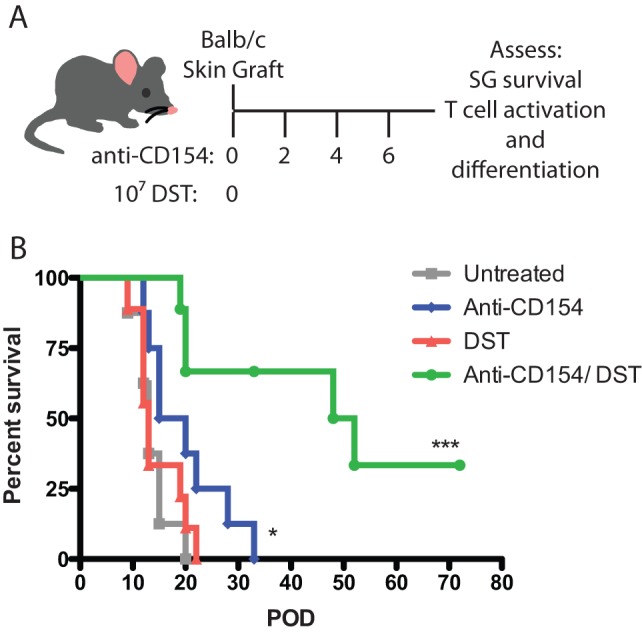
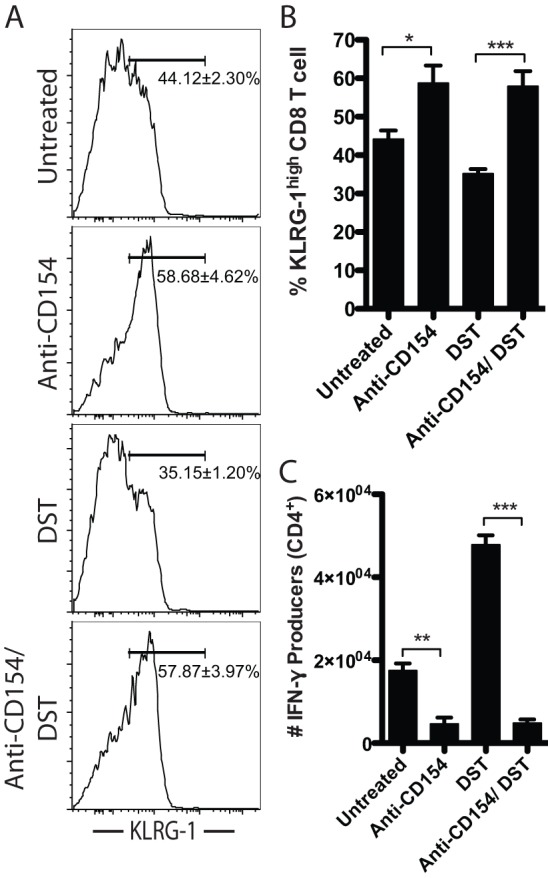
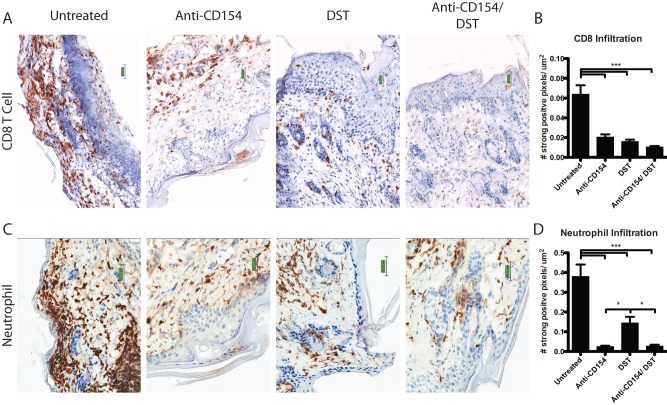
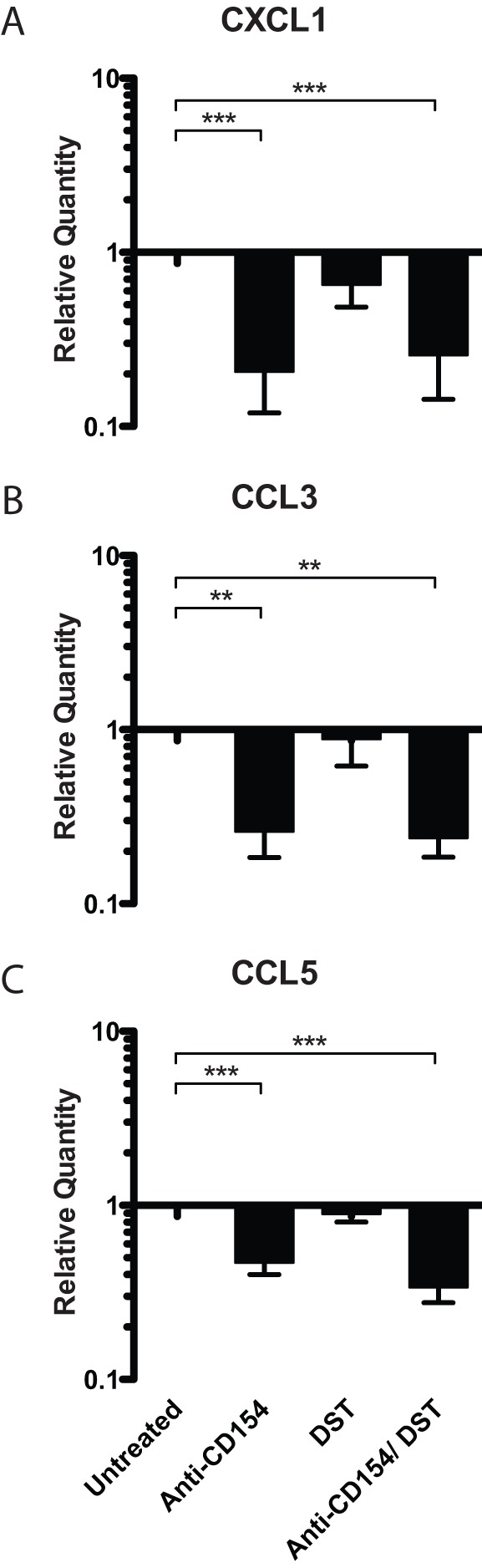
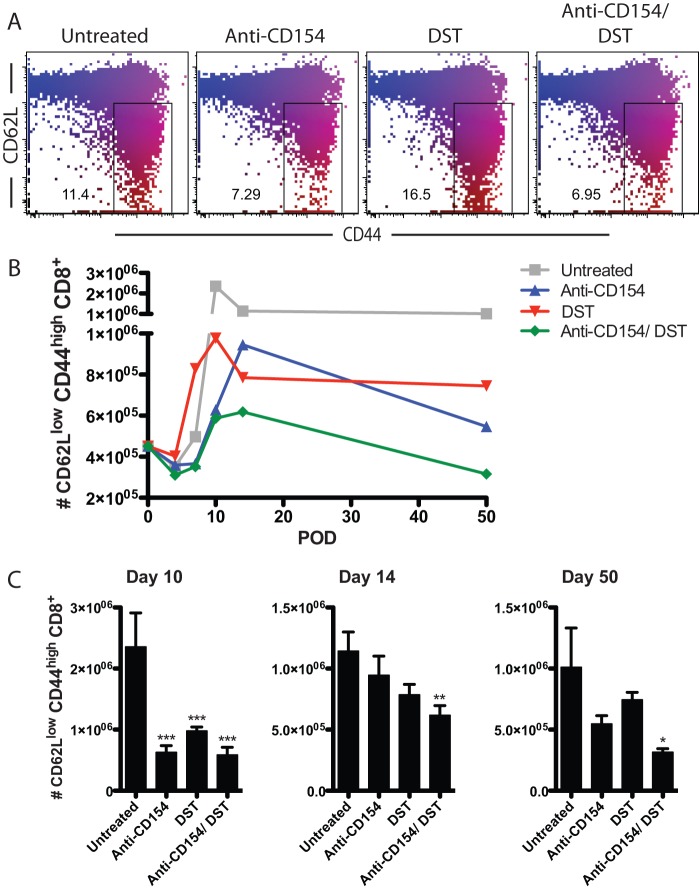
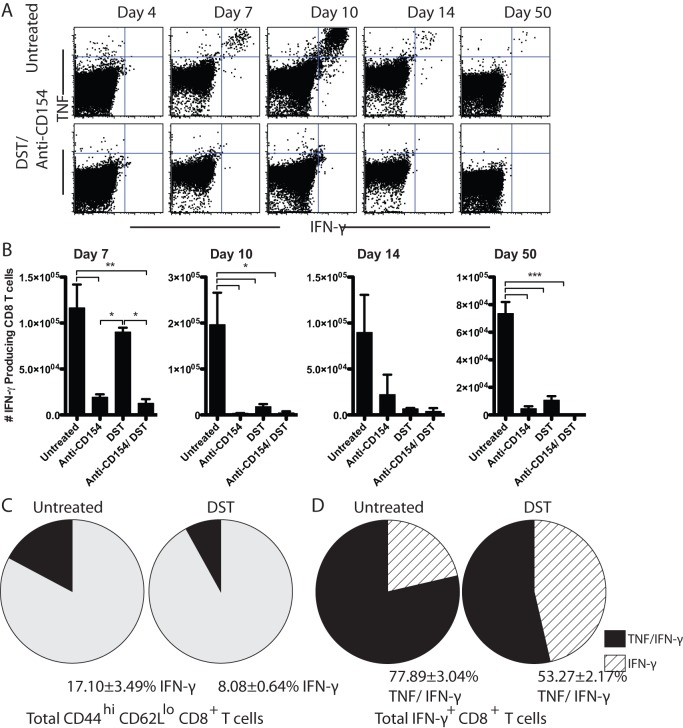
CD154/CD40 blockade combined with donor specific transfusion remains one of the most effective therapies in prolonging allograft survival. Despite this, the mechanisms by which these pathways synergize to prevent rejection are not completely understood. Utilizing a BALB/c (H2-K(d)) to B6 (H2-K(b)) fully allogeneic skin transplant model system, we performed a detailed longitudinal analysis of the kinetics and magnitude of CD8(+) T cell expansion and differentiation in the presence of CD154/CD40 pathway blockade. Results demonstrated that treatment with anti-CD154 vs. DST had distinct and opposing effects on activated CD44(high) CD62L(low) CD8(+) T cells in skin graft recipients. Specifically, CD154 blockade delayed alloreactive CD8(+) T cell responses, while DST accelerated them. DST inhibited the differentiation of alloreactive CD8(+) T cells into multi-cytokine producing effectors, while CD40/CD154 blockade led to the diminution of the KLRG-1(low) long-lived memory precursor population compared with either untreated or DST treated animals. Moreover, only CD154 blockade effectively inhibited CXCL1 expression and neutrophil recruitment into the graft. When combined, anti-CD154 and DST acted synergistically to profoundly diminish the absolute number of IFN-γ producing alloreactive CD8(+) T cells, and intra-graft expression of inflammatory chemokines. These findings demonstrate that the previously described ability of anti-CD154 and DST to result in alloreactive T cell deletion involves both delayed kinetics of T cell expansion and differentiation and inhibited development of KLRG-1(low) memory precursor cells.
CD154/CD40 阻断联合供者特异性输血仍然是延长移植物存活时间的最有效治疗方法之一。尽管如此,这些途径协同作用以防止排斥的机制尚未完全了解。利用 BALB/c(H2-K(d))到 B6(H2-K(b))完全同种异体皮肤移植模型系统,我们对 CD154/CD40 通路阻断时 CD8(+)T 细胞扩增和分化的动力学和幅度进行了详细的纵向分析。结果表明,与 DST 相比,抗 CD154 治疗对皮肤移植物受者中激活的 CD44(high) CD62L(low) CD8(+)T 细胞具有明显的、相反的影响。具体而言,CD154 阻断延迟了同种反应性 CD8(+)T 细胞的反应,而 DST 加速了它们的反应。DST 抑制了同种反应性 CD8(+)T 细胞分化为多细胞因子产生效应器,而 CD40/CD154 阻断导致与未处理或 DST 处理的动物相比,KLRG-1(low)长寿命记忆前体群体减少。此外,只有 CD154 阻断可有效抑制 CXCL1 表达和中性粒细胞向移植物的募集。当联合使用时,抗 CD154 和 DST 协同作用,可显著减少 IFN-γ 产生的同种反应性 CD8(+)T 细胞的绝对数量,以及移植物内炎症趋化因子的表达。这些发现表明,先前描述的抗 CD154 和 DST 导致同种反应性 T 细胞删除的能力涉及 T 细胞扩增和分化的延迟动力学以及抑制 KLRG-1(low)记忆前体细胞的发育。