Roh Seon Ae, Choi Eun Young, Cho Dong Hyung, Yoon Yong Sik, Kim Tae Won, Kim Yong Sung, Kim Jin Cheon
Department of Surgery, Asan Medical Center, University of Ulsan College of Medicine, Seoul, Korea.
J Korean Surg Soc. 2012 Jul;83(1):21-9. doi: 10.4174/jkss.2012.83.1.21. Epub 2012 Jun 26.
Identification of subgroups of patients who differ in their response to treatment could help to establish which of the best available chemotherapeutic options are best, based on biological activity. In metastatic colorectal cancer (CRC), novel molecular-targeted agents that act on pathways that regulate cell growth, the cell cycle, apoptosis, angiogenesis, and invasion are being developed. Here, we employed an in vitro chemosensitivity assay to evaluate the biological efficacy of conventional monotherapies and combination chemotherapy with targeted drugs.
The chemosensitivities of 12 CRC cell lines to the established regimens FOLFOX (5-fluorouracil [5-FU] + leucovorin + oxaliplatin) and FOLFIRI (5-FU + leucovorin + irinotecan) and to therapy with these regimens in combination with the biologically targeted drugs bevacizumab or cetuximab were comparatively evaluated for their effects on apoptotic and autophagic cell death processes, angiogenesis, and invasion.
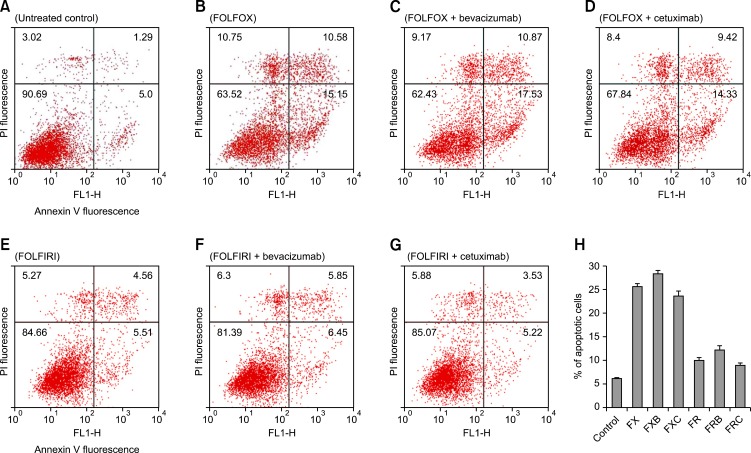
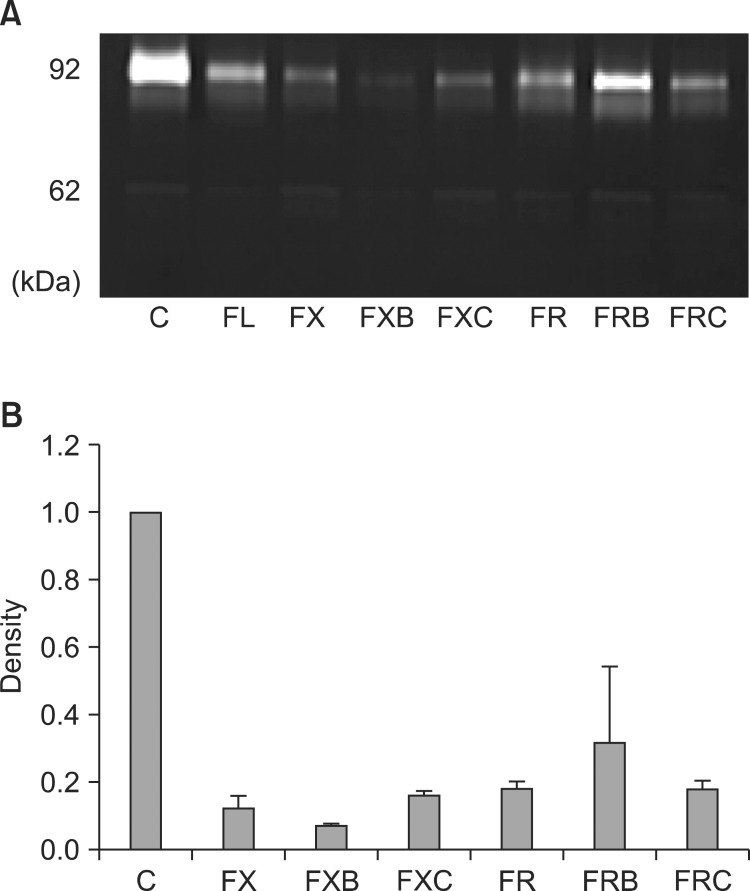
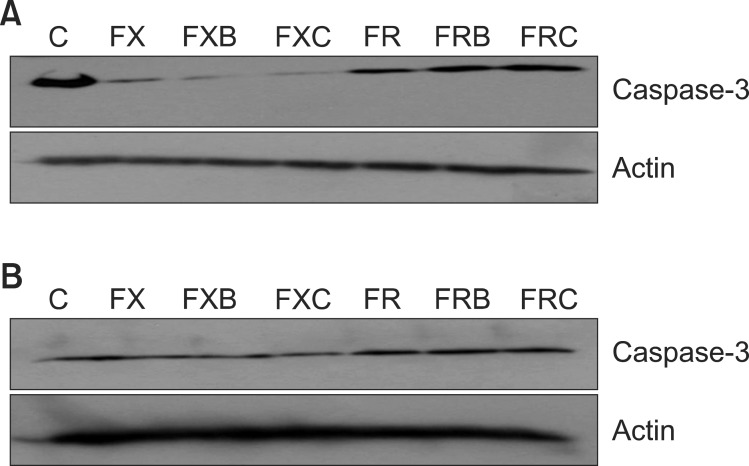
Each of the chemotherapeutic regimens promoted apoptotic cell death and invasion. All drug regimens caused significantly greater apoptotic cell death with activation of caspase-3 in SW480 cells compared to other cells, effects that were associated with a remarkable reduction in matrix metalloproteinase-9 activity. The FOLFOX regimen more effectively promoted apoptotic cell death, angiogenesis, and invasion than the FOLFIRI regimen. Combination therapy with FOLFOX/FOLFIRI regimen and bevacizumab produced a moderate angiogenesis-blocking effect in most cell lines.
The results validate our in vitro chemosensitivity assay, and suggest that it may be applied to help determine adequate regimens in individual CRC patients based on the biological characteristics of their tumors.
识别对治疗反应不同的患者亚组,有助于根据生物学活性确定现有最佳化疗方案中哪种是最优的。在转移性结直肠癌(CRC)中,作用于调节细胞生长、细胞周期、凋亡、血管生成和侵袭途径的新型分子靶向药物正在研发中。在此,我们采用体外化学敏感性试验来评估传统单一疗法以及靶向药物联合化疗的生物学疗效。
比较评估12种CRC细胞系对既定方案FOLFOX(5-氟尿嘧啶[5-FU]+亚叶酸钙+奥沙利铂)和FOLFIRI(5-FU+亚叶酸钙+伊立替康)以及这些方案与生物靶向药物贝伐单抗或西妥昔单抗联合治疗对凋亡和自噬性细胞死亡过程、血管生成和侵袭的影响。
每种化疗方案均促进凋亡性细胞死亡和侵袭。与其他细胞相比,所有药物方案在SW480细胞中均通过激活半胱天冬酶-3导致显著更多的凋亡性细胞死亡,这些效应与基质金属蛋白酶-9活性的显著降低相关。FOLFOX方案比FOLFIRI方案更有效地促进凋亡性细胞死亡、血管生成和侵袭。FOLFOX/FOLFIRI方案与贝伐单抗联合治疗在大多数细胞系中产生中等程度的血管生成阻断作用。
结果验证了我们的体外化学敏感性试验,并表明该试验可用于根据个体CRC患者肿瘤的生物学特征帮助确定合适的治疗方案。