University of California, San Francisco, USA.
Osteoporos Int. 2012 Oct;23(10):2425-33. doi: 10.1007/s00198-012-2049-z. Epub 2012 Jul 14.
This position paper reviews how the National Bone Health Alliance (NBHA) will execute a project to help assure health professionals of the clinical utility of bone turnover markers; the current clinical approaches concerning osteoporosis and the status and use of bone turnover markers in the USA; the rationale for focusing this effort around two specific bone turnover markers; the need to standardize bone marker sample collection procedures, reference ranges, and bone turnover marker assays in clinical laboratories; and the importance of harmonization for future research of bone turnover markers.
Osteoporosis is a major global health problem, with the prevalence and incidence of osteoporosis for at-risk populations estimated to be 44 million Americans. The potential of bone markers as an additional tool for health care professionals to improve patient outcomes and impact morbidity and mortality is crucial in providing better health care and addressing rising health care costs. This need to advance the field of bone turnover markers has been recognized by a number of organizations, including the International Osteoporosis Foundation (IOF), National Osteoporosis Foundation, International Federation of Clinical Chemistry, and Laboratory Medicine (IFCC), and the NBHA.
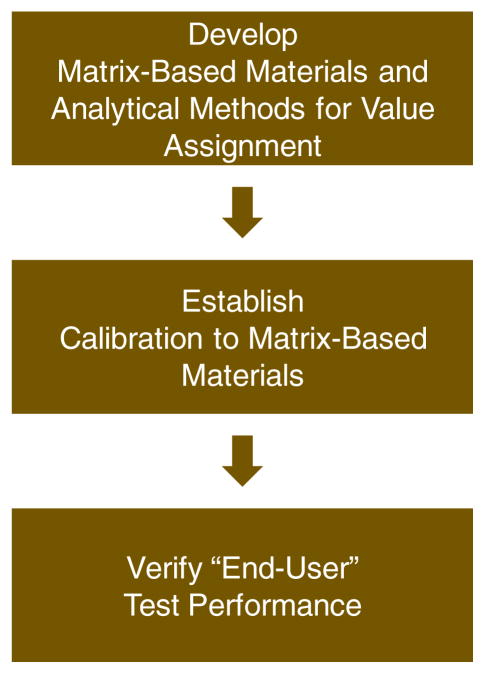
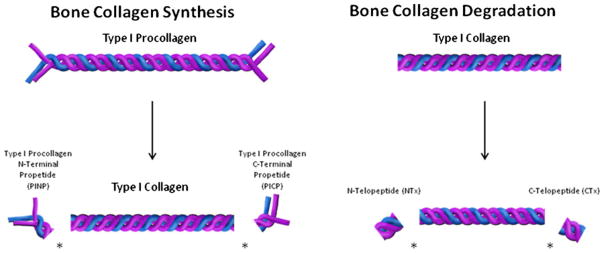
This position paper elucidates how this project will standardize bone turnover marker sample collection procedures in the USA, establish a USA reference range for one bone formation (serum procollagen type I N propeptide, s-PINP) and one bone resorption (serum C-terminal telopeptide of type I collagen, s-CTX) marker, and standardize bone turnover marker assays used in clinical laboratories. This effort will allow clinicians from the USA to have confidence in their use of bone turnover markers to help monitor osteoporosis treatment and assess future fracture risk. This project builds on the recommendations of the IOF/IFCC Bone Marker Standards Working Group by developing USA reference standards for s-PINP and s-CTX, the markers identified as most promising for use as reference markers.
The goals of this project will be realized through the NBHA and will include its governmental, academic, for-profit, and non-profit sector stakeholders as well as major academic and commercial laboratories. Upon completion, a parallel effort will be pursued to make bone turnover marker measurements reliable and accepted by all health care professionals for facilitating treatment decisions and ultimately be reimbursed by all health insurance payers.
Successful completion of this project will help assure health professionals from the USA of the clinical utility of bone turnover markers and ties in with the parallel effort of the IOF/IFCC to develop worldwide bone turnover reference ranges.
本立场文件旨在介绍美国国家骨骼健康联盟(NBHA)如何执行一个项目,以帮助确保医疗保健专业人员了解骨转换标志物的临床应用价值;目前美国针对骨质疏松症的临床方法以及骨转换标志物的现状和应用;将这一工作重点放在两个特定的骨转换标志物上的基本原理;在临床实验室中标准化骨标志物样本采集程序、参考范围和骨转换标志物检测的必要性;以及为未来的骨转换标志物研究进行协调的重要性。
骨质疏松症是一个全球性的主要健康问题,据估计,高危人群中骨质疏松症的患病率和发病率为 4400 万美国人。骨标志物作为医疗保健专业人员改善患者预后、降低发病率和死亡率的额外工具的潜力,对于提供更好的医疗保健和应对不断上升的医疗保健成本至关重要。这一推进骨转换标志物领域的需求已得到多个组织的认可,包括国际骨质疏松基金会(IOF)、美国国家骨质疏松基金会、国际临床化学和实验室医学联合会(IFCC)以及 NBHA。
本立场文件阐述了该项目如何在美国标准化骨转换标志物样本采集程序,建立一个美国骨形成标志物(血清Ⅰ型前胶原 N 端前肽,s-PINP)和一个骨吸收标志物(血清Ⅰ型胶原 C 端肽,s-CTX)的参考范围,并标准化临床实验室中使用的骨转换标志物检测。这一努力将使来自美国的临床医生能够有信心使用骨转换标志物来帮助监测骨质疏松症的治疗效果和评估未来的骨折风险。该项目建立在 IOF/IFCC 骨标志物标准化工作组的建议基础上,为 s-PINP 和 s-CTX 开发美国参考标准,这两种标志物被认为是最有希望作为参考标志物使用。
该项目的目标将通过 NBHA 及其政府、学术、营利和非营利部门的利益相关者以及主要的学术和商业实验室来实现。项目完成后,将开展一项平行工作,使骨转换标志物的测量结果得到所有医疗保健专业人员的认可和接受,以促进治疗决策,并最终由所有医疗保险支付方报销。
成功完成该项目将有助于确保美国医疗保健专业人员了解骨转换标志物的临床应用价值,并与 IOF/IFCC 开发全球骨转换参考范围的平行工作相吻合。