The Solomon H. Snyder Department of Neuroscience, Baltimore, MD, USA.
Mol Psychiatry. 2013 May;18(5):557-67. doi: 10.1038/mp.2012.97. Epub 2012 Jul 17.
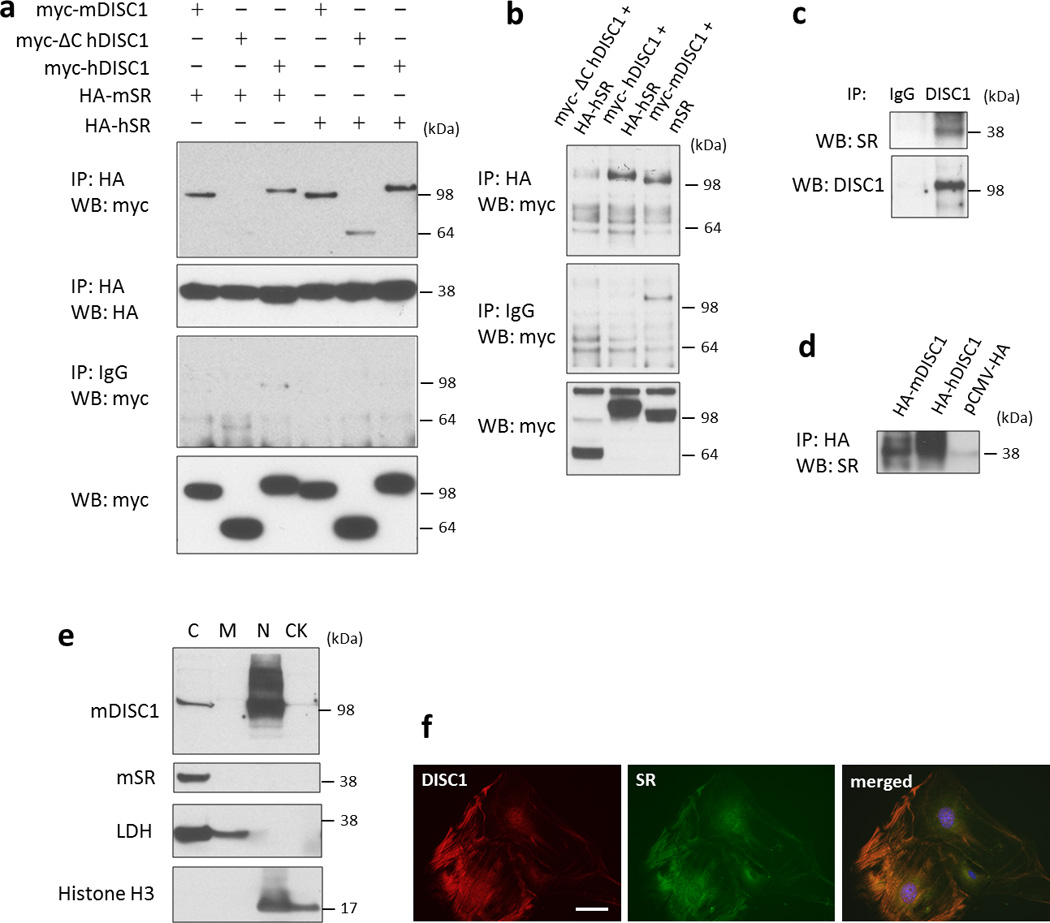
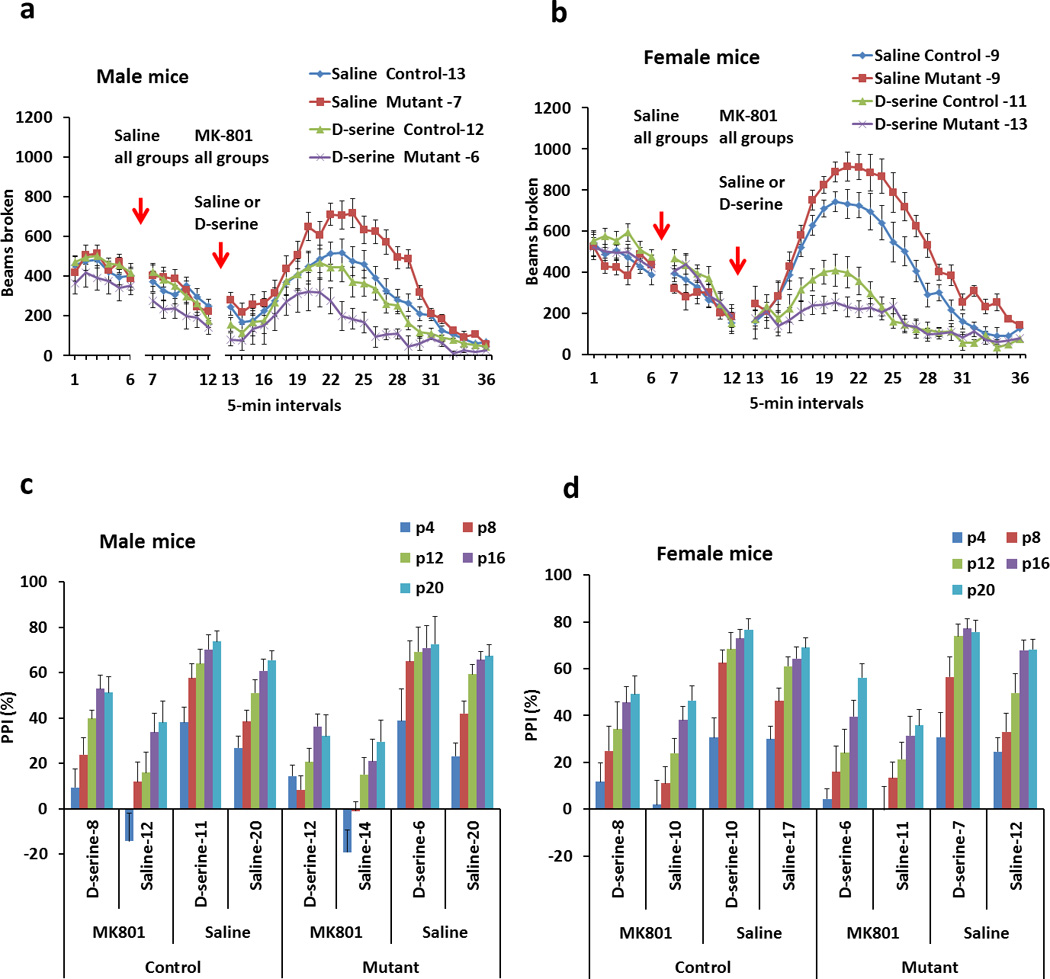
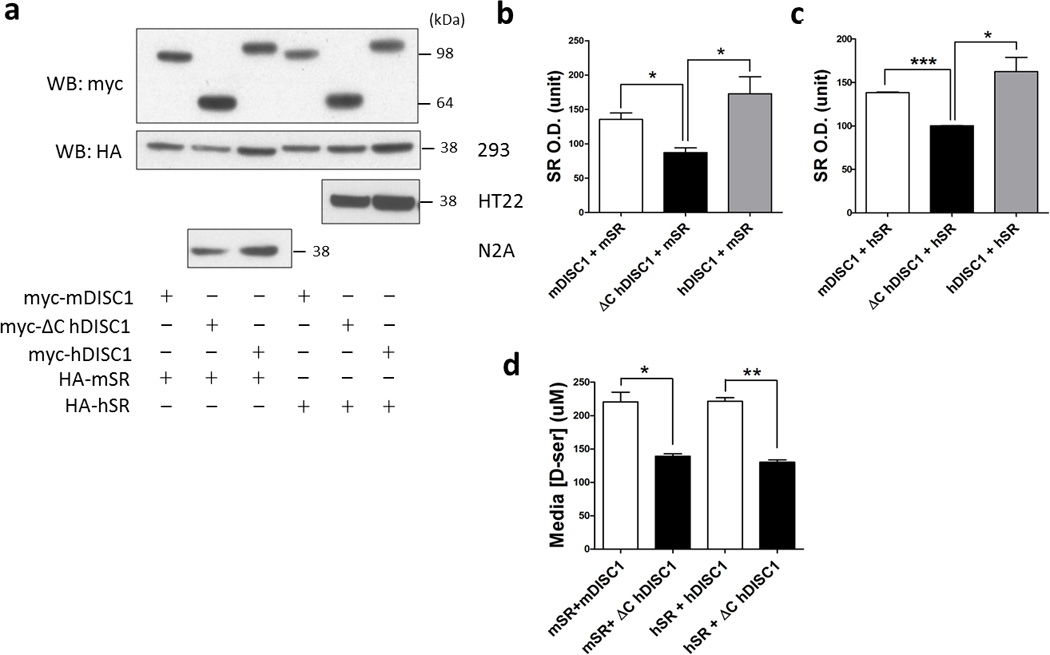
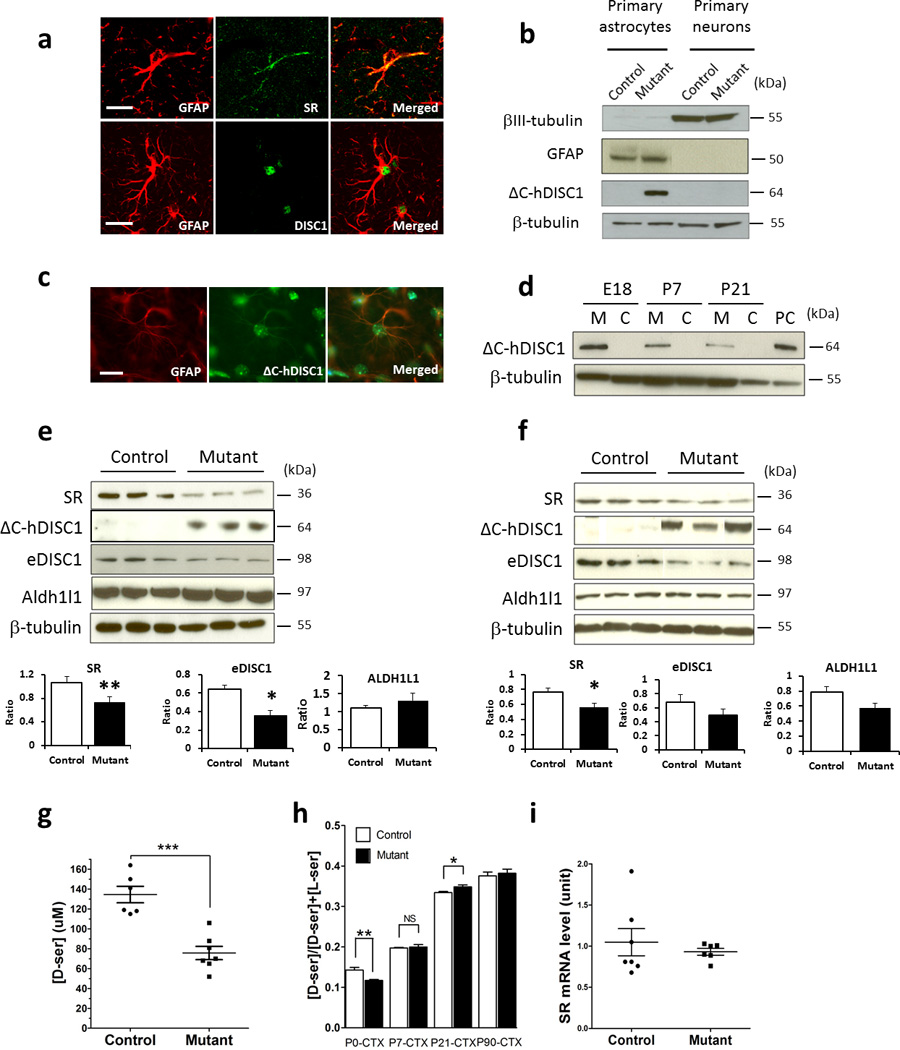
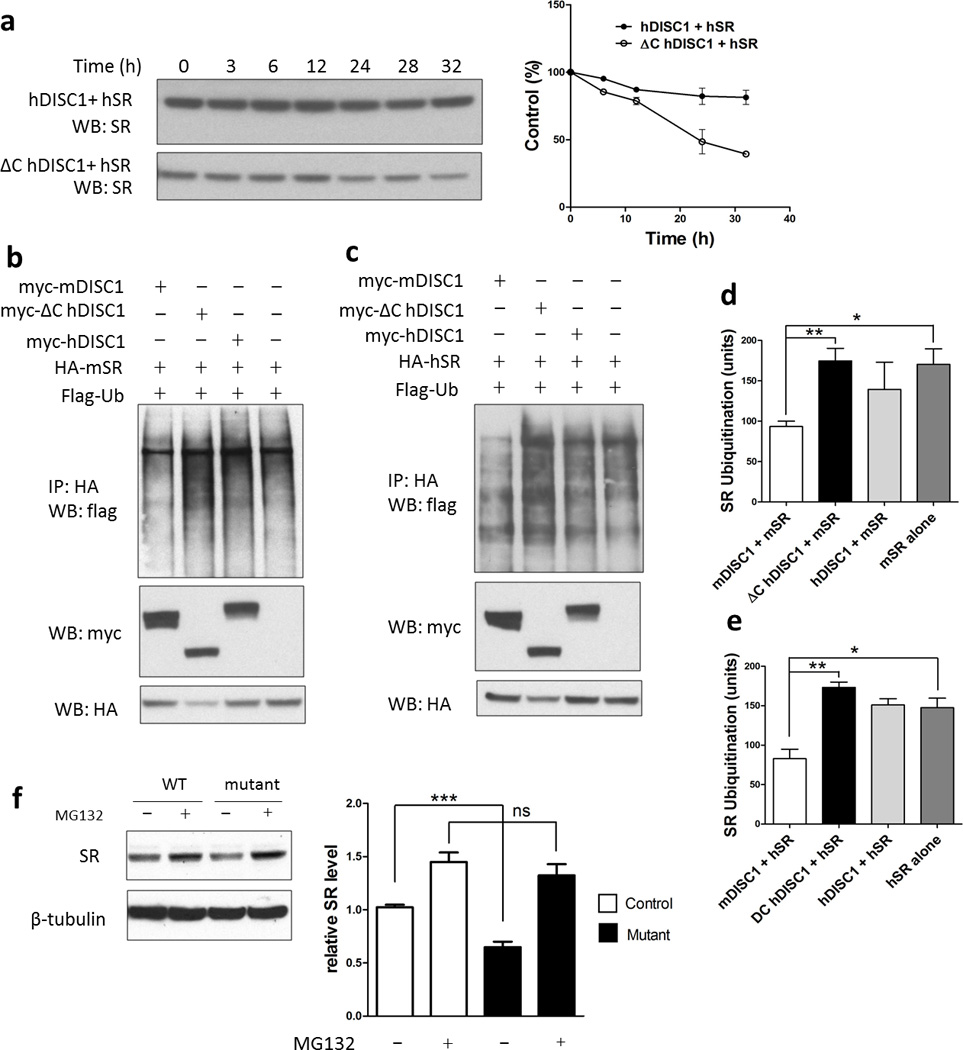
Perturbation of Disrupted-In-Schizophrenia-1 (DISC1) and D-serine/NMDA receptor hypofunction have both been implicated in the pathophysiology of schizophrenia and other psychiatric disorders. In the present study, we demonstrate that these two pathways intersect with behavioral consequences. DISC1 binds to and stabilizes serine racemase (SR), the enzyme that generates D-serine, an endogenous co-agonist of the NMDA receptor. Mutant DISC1 fails to bind to SR, facilitating ubiquitination and degradation of SR and a decrease in D-serine production. To elucidate DISC1-SR interactions in vivo, we generated a mouse model of selective and inducible expression of mutant DISC1 in astrocytes, the main source of D-serine in the brain. Expression of mutant DISC1 downregulates endogenous DISC1 and decreases protein but not mRNA levels of SR, resulting in diminished production of D-serine. In contrast, mutant DISC1 does not alter levels of ALDH1L1, connexins, GLT-1 or binding partners of DISC1 and SR, LIS1 or PICK1. Adult male and female mice with lifelong expression of mutant DISC1 exhibit behavioral abnormalities consistent with hypofunction of NMDA neurotransmission. Specifically, mutant mice display greater responses to an NMDA antagonist, MK-801, in open field and pre-pulse inhibition of the acoustic startle tests and are significantly more sensitive to the ameliorative effects of D-serine. These findings support a model wherein mutant DISC1 leads to SR degradation via dominant negative effects, resulting in D-serine deficiency that diminishes NMDA neurotransmission thus linking DISC1 and NMDA pathophysiological mechanisms in mental illness.
精神分裂症相关蛋白 1(DISC1)的紊乱和 D-丝氨酸/N-甲基-D-天冬氨酸(NMDA)受体功能低下均与精神分裂症和其他精神疾病的病理生理学有关。在本研究中,我们证明这两个途径与行为后果相交。DISC1 与丝氨酸消旋酶(SR)结合并稳定其活性,SR 是生成 D-丝氨酸的酶,D-丝氨酸是 NMDA 受体的内源性共激动剂。突变型 DISC1 不能与 SR 结合,从而促进 SR 的泛素化和降解以及 D-丝氨酸生成减少。为了阐明体内 DISC1-SR 相互作用,我们生成了一个在星形胶质细胞中选择性和诱导性表达突变型 DISC1 的小鼠模型,星形胶质细胞是大脑中 D-丝氨酸的主要来源。突变型 DISC1 的表达下调内源性 DISC1,降低 SR 的蛋白但不降低其 mRNA 水平,导致 D-丝氨酸生成减少。相反,突变型 DISC1 不改变 ALDH1L1、连接蛋白、GLT-1 或 DISC1 和 SR 的结合蛋白 LIS1 或 PICK1 的水平。具有终生表达突变型 DISC1 的雄性和雌性成年小鼠表现出与 NMDA 神经传递功能低下一致的行为异常。具体而言,突变型小鼠在开放场和听觉惊跳反射的前脉冲抑制测试中对 NMDA 拮抗剂 MK-801 的反应更大,并且对 D-丝氨酸的改善作用更敏感。这些发现支持了一种模型,即突变型 DISC1 通过显性负效应导致 SR 降解,导致 D-丝氨酸缺乏,从而减少 NMDA 神经传递,从而将 DISC1 与 NMDA 病理生理机制联系起来,导致精神疾病。